



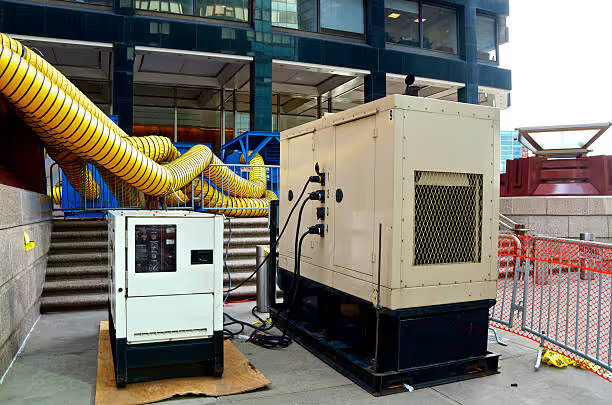
Generator in Niagara Falls, ON
When winter ice storms, lake effect snow, or summer thunderstorms cut power across the Niagara Region, a properly specified and professionally installed generator protects your home, family, and business. Niagara heating brings more than 15 years of HVAC and power continuity experience to generator site assessment, installation, maintenance, repairs, and emergency power planning for homeowners and commercial clients in Niagara Falls, ON.
Why backup power matters in Niagara Falls, ON
Niagara Falls experiences a range of weather that increases the risk of outages: heavy snow and ice events in winter, strong lake-effect snow bands, summer thunderstorms and occasional windstorms, and utility interruptions during extreme cold or infrastructure work. Extended outages can damage HVAC systems, plumbing (frozen pipes), refrigeration, lighting, and safety systems. For businesses, downtime means lost revenue and reputational risk; for homes, it can mean compromised safety and comfort. A well-chosen generator provides continuous power when you need it most and reduces the long-term costs associated with repeated emergency repairs and spoiled goods.
Types of generator services we provide in Niagara Falls, ON
- Standby generator site assessment and sizing: Evaluation of electrical load, fuel type (natural gas, propane), siting requirements, local code compliance, and recommended unit sizing.
- Professional installation and transfer switch setup: Permits, concrete pads or mounting, fuel hookups, automatic transfer switch (ATS) integration with your electrical panel, and commissioning.
- Portable generator services: Selection guidance for portable units, safe connection best practices using approved transfer switches or inlet boxes, and fuel storage safety.
- Routine maintenance programs: Seasonal inspections, oil and filter changes, battery checks, load testing, and software firmware updates.
- Quick-response repair services: Diagnostics, parts replacement, and emergency on-site repair for generators that fail to start or have electrical faults.
- Emergency power planning: Critical circuit prioritization, load shedding strategy, and integration with whole-home automation or monitored systems.
- Financing and package options: Bundled installation and maintenance plans, extended warranty options, and financing to spread costs over time.
Common generator types and which Niagara Falls properties need them
Standby generators
- Description: Permanently installed systems with automatic transfer switches that start and transfer power within seconds of outage detection.
- Best for: Whole-home backup, critical loads (furnaces, sump pumps, medical devices), and businesses that need continuous power for operations.
- Fuel options: Natural gas, propane. Natural gas is common in many Niagara Falls neighbourhoods for its convenience and continuous supply, while propane provides reliability where natural gas service is not available
Portable generators
- Description: Moveable units that provide temporary power and require manual setup and safe connection methods.
- Best for: Short-term outages, supplemental power for select circuits, job sites, or as a lower-cost interim solution.
- Considerations: Requires proper ventilation and safe fueling procedures; not suitable for indoor use.
Hybrid and inverter generators
- Description: More efficient, quieter units ideal for sensitive electronics, with better fuel economy and lower noise profiles.
- Best for: Smaller homes or where quieter operation and cleaner power are priorities.
Common generator issues seen in Niagara Falls, ON homes and businesses
- Failed auto-start during outage: Often due to weak batteries, fuel supply issues, or control module faults.
- Fuel delivery problems: Propane tank depletion or interruptions in natural gas pressure can prevent generator operation.
- Corrosion and moisture-related damage: Niagara’s humid summers and winter road salt can accelerate corrosion on external components if not properly protected.
- Lack of routine maintenance: Neglected oil changes, infrequent exercise cycles, and dirty filters reduce reliability and shorten generator life.
- Transfer switch failures: Worn contacts or misconfigured wiring can cause unsafe backfeeding or prevent transfer of power.
- Overloading: Incorrectly sized generators or improper load management can trip breakers or damage equipment.
Site assessment and accurate sizing: the foundation of reliable backup power
Accurate sizing and site assessment are non-negotiable for dependable performance. Niagara Falls homes and businesses vary widely in electrical demand, so a one-size-fits-all approach risks undersizing (leading to overloaded systems) or oversizing (adding unnecessary cost). A thorough site assessment includes:
- Complete electrical load audit: Identification of essential loads (heating equipment, sump pumps, critical refrigeration, medical devices, lighting, security systems) and optional loads.
- Fuel source evaluation: Confirmation of natural gas availability and line capacity, or propane tank sizing and placement.
- Physical site evaluation: Best location for the generator regarding noise, exhaust routing, frost heave protection, and municipal setbacks.
- Venting and environmental considerations: Ensuring exhaust is directed safely away from windows and intakes; evaluating cold-weather starting aids for Niagara winters.
- Local code and permit checklist: Verification of municipal requirements, HOA restrictions, and interconnection rules.
Professional installation and transfer switch setup
A safe and code-compliant installation ensures the generator operates reliably and avoids dangerous conditions such as backfeeding. Key elements of a professional installation include:
- Proper transfer switch selection: Automatic transfer switches (ATS) for standby systems; manual transfer switches or inlet box installations for portable solutions. ATS sizing matched to generator output and the service panel.
- Electrical integration: Professional wiring from ATS to main service panel, isolation of generator circuits, and ensuring load balance across phases where applicable.
- Fuel system installation: Secure natural gas connections with pressure testing or certified propane tank placement with proper regulators and safety valves.
- Mounting and pad work: Concrete pads or vibration-damping mounts to prevent movement during freeze-thaw cycles and to comply with local setbacks.
- Exhaust and sound mitigation: Use of approved exhaust kits and placement strategies to reduce noise impact on neighbouring properties while maintaining safe exhaust clearances.
- Commissioning: Engine run-in, automatic transfer verification, load testing with actual loads, and calibration of control settings for cold-weather operation.
- Documentation: Installation records, as-built diagrams, and user guidance on basic operation and safety.
Routine maintenance programs for peak reliability
Routine maintenance is essential in Niagara Falls where seasonal extremes test system readiness. A structured maintenance program typically includes:
- Scheduled inspections: Visual checks of fuel lines, electrical connections, battery condition, and enclosure integrity every 6 to 12 months.
- Engine maintenance: Oil and filter changes per manufacturer recommendations, spark plug replacement, and air filter inspections.
- Battery service: Load testing and replacement scheduling to ensure reliable starts during winter cold.
- Exercise and load testing: Running the generator under load periodically to verify performance and prevent fuel system stagnation.
- Transfer switch inspection: Cleaning contact points and verifying proper operation to avoid transfer failures.
- Corrosion control and weatherproofing: Treatments and replacement of components exposed to salt or moisture to extend life.
- Maintenance documentation and reminders: Keeping a record of performed services and recommended next steps.
Quick-response repair services and parts availability
When a generator fails unexpectedly, rapid diagnostics and repair minimize outage impacts. Effective repair services include:
- Fast onsite diagnostics: Skilled technicians who can quickly isolate the fault—battery, fuel, controls, or mechanical—and recommend repair or replacement.
- Stocked parts inventory: Common service parts such as starters, batteries, solenoids, filters, and belts kept on hand to reduce downtime.
- Seasonal troubleshooting: Addressing cold-weather specific issues like fuel gelling, battery capacity reduction, and choke system performance.
- Safety-first repairs: Ensuring all repairs meet local electrical and fuel codes and that any temporary fixes are safe and appropriately scheduled for permanent repair.
Emergency power planning tailored to Niagara Falls properties
A generator is only part of an effective emergency power strategy. Planning ensures you use backup power wisely and maintain essential systems for as long as needed. Emergency power planning typically covers:
- Critical load prioritization: Determining which circuits and appliances are essential during an outage and how long they must be sustained.
- Load sequencing and shedding: Programming automatic or manual transfer switches to manage starting currents and extend runtime by shedding nonessential loads.
- Fuel management planning: Ensuring propane tank refills and verifying natural gas line capacity for extended outages.
- Integration with HVAC and plumbing: Coordinating generator support for heating systems, well pumps, sump pumps, and water heaters to prevent freeze and flood damage.
- Communication and monitoring: Options for remote monitoring and alarm notifications to know when the generator is operating or needs attention.
- Safety protocols: Clear guidance on carbon monoxide risks, safe fueling, and proper ventilation for portable units.
Financing and package options for Niagara Falls customers
Understanding the cost of installation, equipment, and long-term maintenance helps clients make informed decisions. Financing and package options can make standby systems accessible while protecting the investment over time. Typical offerings include:
- Bundled packages: Equipment, installation, and initial maintenance bundled for predictable project scope and results.
- Maintenance contract add-ons: Annual or multi-year maintenance plans that include scheduled visits and priority service.
- Warranty extensions: Manufacturer-backed warranty options and extended service agreements.
- Financing plans: Structured payment options to spread equipment and installation costs over time for manageable monthly commitments.
Why Niagara heating is a sensible choice for generator services in Niagara Falls, ON
- Local experience: Familiarity with Niagara Falls weather patterns, municipal permitting, and common local electrical configurations ensures practical, code-compliant installations.
- Professional technicians: Technicians trained in HVAC and generator systems who respect your home or business and prioritize clean, efficient workmanship.
- Fast and reliable service: Local presence and field-ready vans with commonly used parts speed response for installations and repairs.
- Commitment to value and integrity: Honest assessments, transparent recommendations for system sizing and long-term operation, and solutions designed to avoid unnecessary expense.
Real-world considerations for Niagara Falls properties
- Cold-start enhancements: Battery warmers, block heaters, and cold-weather control modules are recommended for properties that experience deep freezes.
- Noise and residential zoning: Proper siting and muffler selection to meet neighbourhood noise expectations while complying with local by-laws.
- Flood risk planning: For low-lying properties near the Niagara River or tributaries, elevating the unit or selecting higher mounting options protects the generator during localized flooding events.
- Seasonal access: Ensuring the generator pad and surrounding area remain accessible in winter, including salt and snow management strategies that minimize corrosion and keep service access clear.
Maintenance tips every homeowner should know
- Run your generator monthly under load for at least 20 minutes to ensure fuel and lubrication systems remain active.
- Keep spare engine oil, air filters, and a recommended tool kit on hand.
- Check and clean the transfer switch area of debris and moisture after storms.
- Monitor fuel levels for propane tanks before a season of high outage risk, and verify natural gas service pressures if relying on that fuel source.
- Replace the battery every 3 to 5 years or sooner if load testing indicates reduced capacity.
Common questions we see at the decision stage
Q: What size standby generator do I need for my Niagara Falls home?
A: Size depends on which circuits and appliances you need to run simultaneously. A site-specific load audit identifies mandatory loads—furnace, sump pump, refrigerator, lighting, and critical outlets—and calculates starting currents for motors. Many full-home systems range from 14 kW to 22 kW for typical single-family homes, while partial backup systems can be smaller. Proper sizing prevents overload and maximizes efficiency.
Q: Can a portable generator be safely used to power my house?
A: Portable generators can power selected circuits if connected through a properly installed transfer switch or inlet box and using heavy-duty cords to safe receptacles. Portable units must always be located outdoors with adequate ventilation to avoid carbon monoxide buildup and should never be connected directly to household wiring without an approved transfer device.
Q: How often should a standby generator be serviced in Niagara Falls?
A: At least once a year for standard preventative maintenance, with additional checks recommended before winter and summer seasons given local weather extremes. Batteries and oil typically need more frequent monitoring to ensure reliable starts during cold snaps.
Q: What fuel is best for a Niagara Falls standby generator: natural gas or propane?
A: Natural gas offers continuous supply and is convenient when available and if the utility line capacity is sufficient. Propane is an excellent choice where natural gas is not present or when you prefer an on-site stored fuel source. Each has trade-offs in runtime, cost, and infrastructure needs; a site assessment clarifies the best option.
Q: Does a standby generator require permits in Niagara Falls, ON?
A: Yes, local permits and inspections are typically required for permanent standby installations. Professional installations include permit coordination and inspection readiness to ensure compliance with municipal codes.
Q: How long will a standby generator run during an outage?
A: Runtime depends on fuel source and consumption. Natural gas-driven systems can run indefinitely if supply is uninterrupted. Propane runtime depends on tank size and load. Efficient load management and proper sizing can significantly extend runtime.
Q: What safety precautions are necessary for generator use?
A: Ensure proper ventilation for exhaust, use approved transfer switch installations to prevent back feeding, avoid indoor operation of portable units, store fuel safely, and keep carbon monoxide detectors functional inside the property.
Q: Can my HVAC system run on generator power?
A: Yes, furnaces, boilers, and heat pumps can be powered by a properly sized generator. Large HVAC systems with high starting currents may require larger generators or staged load management to avoid overload.
Q: What happens during transfer switch failure?
A: A faulty transfer switch can prevent power transfer or create unsafe back feeding. Regular inspections and preventative maintenance reduce this risk. If failure occurs, professional shutdown and repair are required to restore safe operation.
Q: Are there quieter generator options for residential neighborhoods?
A: Inverter-based and sound-attenuated standby generators offer lower noise profiles. Proper siting and sound enclosures can further reduce noise to meet neighborhood expectations.
Types of generators: standby vs portable
- Standby generators
- Permanently installed outside the building and connected to the electrical system through an automatic transfer switch (ATS).
- Run on natural gas, propane or diesel. Natural gas offers seamless fuel supply where municipal lines exist; propane and diesel require tanks and fuel management.
- Automatically start within seconds of an outage, powering predefined essential circuits or whole-house loads.
- Best for homeowners and businesses needing seamless, long-duration backup and automatic operation.
- Portable generators
- Mobile units used for temporary power, typically fueled by gasoline or propane.
- Require manual setup and a manual transfer method or interlock kit to feed selected circuits.
- Lower upfront cost and flexible for job sites or intermittent use.
- Ideal for those who need occasional emergency power for limited loads.
Common generator services and typical issues in Niagara Falls
- System selection and load planning for homes, cottages and commercial sites
- Professional installation and transfer switch setup to meet code and safety requirements
- Fuel system configuration: natural gas tie-ins, propane tank sizing and diesel storage recommendations
- Routine maintenance and seasonal testing to ensure reliability during extreme weather
- Troubleshooting and timely repairs for starting failures, low output, battery problems, control board faults and fuel contamination
- Noise attenuation and site placement to meet local bylaws and neighbor considerations
Sizing and load calculations what a professional will evaluate
Accurate sizing is the single most important step to ensure a generator meets your needs.
- Identify essential loads: heating systems (furnaces/boilers), refrigerators and freezers, sump and well pumps, lighting, communications, medical equipment, and critical business equipment.
- Calculate running watts and starting watts. Motors (compressors, pumps) require higher starting current. A generator must accommodate both.
- Consider load diversity: not everything runs at full capacity simultaneously. Professionals apply diversity factors to avoid oversizing excessively while still achieving reliability.
- Add a buffer: plan for 20 to 30 percent headroom to account for future needs and to avoid overloading.
- Choose fuel type based on site: natural gas is convenient if connected to the municipal supply; propane is a good off-grid option; diesel provides high energy density for longer runtimes but requires secure storage.
Professional installation and transfer switch setup
Proper installation protects people and property and ensures code compliance.
- Site assessment: evaluate ventilation, clearances, noise, and frost heave considerations for outdoor pads in cold climates.
- Foundation and weatherproofing: concrete pad or engineered mounting; proper elevation to avoid pooling water.
- Transfer switch options:
- Automatic transfer switch (ATS) for standby units provides seamless, automatic switching back and forth between utility and generator.
- Manual transfer switch or interlock kit for portable setups requires manual intervention and safe isolation from utility lines.
- Electrical integration: correct breaker sizing, subpanel planning for essential circuits, bonding/grounding to local code.
- Permits and inspections: installations commonly require municipal permits, utility notifications and final inspections to comply with codes and interconnection rules.
Maintenance and testing plans that prevent failure
Routine maintenance keeps a generator ready when you need it most.
- Typical schedule for standby generators:
- Weekly or monthly automatic exercise cycles to keep the engine and alternator in working order.
- Annual professional service: oil and filter change, fuel filter replacement, battery test and replacement as needed, coolant check, spark plugs, belts and hoses inspection.
- Load bank testing every 2 to 5 years for systems that rarely run under full load to prevent wet-stacking and ensure alternator health.
- Portable generator care:
- Run monthly for 20 to 30 minutes under light load, change oil and filters as recommended by the manufacturer, and winterize fuel if stored long term.
- Record keeping: log runtime hours, maintenance actions and any fault codes to track component life and warranty conditions.
Troubleshooting and common repair solutions
Recognizing early warning signs helps avoid complete failures.
- Symptoms and likely causes:
- Won’t start: weak or dead battery, clogged fuel filter, stale fuel, failed starter or control module.
- Starts but won’t transfer: faulty transfer switch, wiring issue, or control board fault.
- Frequent tripping or reduced output: overloaded circuits, failing alternator, voltage regulator problems.
- Excessive smoke or rough running: fuel contamination, poor combustion, air intake or exhaust blockage.
- Unusual noises: bearing failure, loose mounts, or failing engine components.
- Typical repairs:
- Battery replacement and charging system repairs
- Fuel system cleaning, injector or carburetor work, and fuel filter replacement
- Voltage regulator or AVR replacement, alternator repairs
- Transfer switch diagnostics and control board replacement
- Engine tune-ups: spark plugs, filters, belts and coolant system service
Benefits of timely action and long-term care
- Reduced risk of property damage from frozen pipes, food spoilage or equipment loss during outages.
- Greater peace of mind for homeowners with medical devices or remote properties such as cottages and farms.
- Minimized downtime and revenue loss for commercial operations that depend on refrigeration, food service, manufacturing, or IT systems.
- Longer generator lifespan, improved fuel efficiency and fewer emergency repair costs when maintenance is performed regularly.
Final considerations for Niagara Falls properties
- Fuel selection should reflect local infrastructure: natural gas for urban/city-supplied properties, propane for properties without reliable gas lines, diesel for sites that may need long runtime and have secure fuel storage.
- Noise and placement must account for neighborhood bylaws and cold-weather protection to prevent frost or snow buildup around the unit.
- Permit and inspection requirements vary across municipalities in the Niagara Region. A professional installation ensures compliance and safe interconnection with the utility.
This overview covers the key decisions and service steps for generator systems in Niagara Falls, ON. Proper sizing, professional installation of transfer equipment, a scheduled maintenance plan and prompt troubleshooting are the foundation of reliable backup power for both residential and commercial customers in the Niagara Region.

Customer Testimonials

I called John today at 2:pm as my AC was not working and I wasn’t expecting even a call back as I knew with this hot weather we have had he would be swamped with calls. Well he called me back and showed at 8:pm on the same day to fix my AC. That is just incredible service and how much John really cares about his clients. Thank you John !

Very efficient company. I needed an old solar water heater removed from my roof. They were quick to book an appointment for the next day after I sent photos. They were very knowledgeable of the issue. The 2 guys that came were friendly and competent with the job, including removal of all parts.
We had an amazing experience getting our new furnace installed with Niagara Home Heating. The owner was very helpful, their quote was more then competitive and the technician who installed the unit was professional and friendly. I would recommend their services.
Lifesavers!! The AC in our house decided to quit the day we were passing the keys to the new owners!! Instead of making a service call to the house, John coached me through the minor repair over the phone, saving me the money and time waiting for a repair person to come.Much appreciated! Thanks again John
I have used Niagara Home heating for multiple projects for over 16 years. John and his staff are absolutely the best. I tell all my friends and family about Niagara Home Heating because you won’t get any better service or pricing anywhere in Niagara. He has saved me thousands and thousands of dollars and has never let me down.
I had an issue with my hot water tank and called Niagara Home Heating. Their service was fantastic and reasonably priced—exactly how a business should be run!

Service Areas
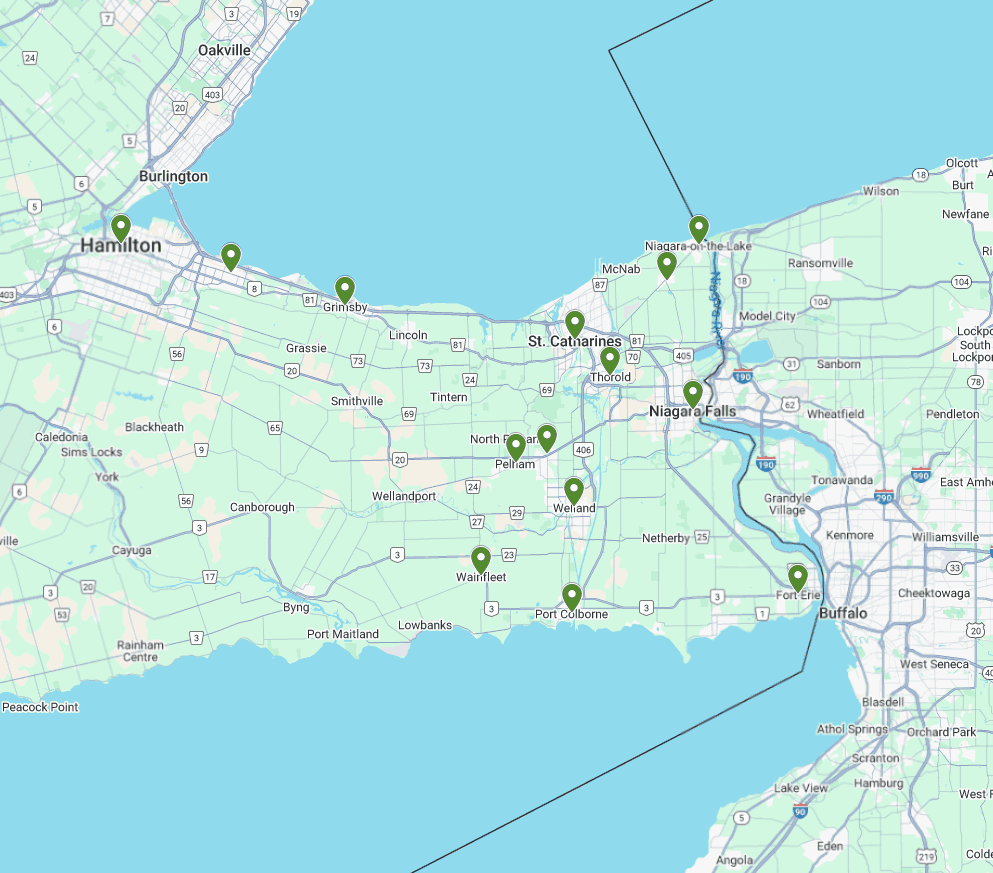
Our service areas encompass a wide range of locations, ensuring that we can meet the needs of our clients wherever they are. From bustling urban centers to serene rural landscapes, we are committed to providing top-notch services tailored to each unique environment.