



Tankless Water Heater Replacement in Niagara Falls, ON
Replacing a tankless water heater is a significant decision for homeowners in Niagara Falls, ON. With cold winters, mineral-rich water in parts of the Niagara Region, and rising energy costs, choosing the right time and the right system can improve comfort, reduce energy bills, and prevent unexpected failures.
When to Replace vs. Repair
Deciding whether to repair or replace a tankless unit depends on several practical factors:
- Age of the unit: Most tankless water heaters last 10 to 15 years. If yours is in the upper range and showing problems, replacement is usually more cost-effective.
- Frequency and cost of repairs: Repeated service calls or costly parts indicate diminishing returns on repair.
- Reduced performance or capacity: Lower flow rates or inability to maintain desired temperature at peak demand often means the unit no longer meets household needs.
- Efficiency decline: Older models can be significantly less efficient than current condensing, high-efficiency units.
- Safety concerns: Persistent gas leaks, corrosion, or repeated combustion issues are replacement triggers.
If your unit is under warranty and repair is straightforward, a repair may be appropriate. If multiple factors above apply, replacement gives longer-term reliability and efficiency gains.
Evaluation Process: What Professionals Check
A thorough evaluation guides the replacement decision and sizing:
- Unit age and visible condition: corrosion, heat exchanger scaling, and vent condition.
- Repair history: prior failures, replaced parts, and recurring issues.
- Performance testing: flow rates at fixtures, temperature retention under load, ignition and combustion checks for gas units.
- Fuel and venting: gas line capacity, existing venting type, and clearance requirements.
- Water quality impact: scale buildup due to hard water common in the Niagara Region and evidence of mineral damage.
- Energy usage and household demand: number of bathrooms, peak simultaneous uses, and future needs like a remodel.
This evaluation produces a recommendation: repair if isolated and economical, or replacement when long-term reliability, efficiency, or capacity needs are unmet.
Selecting the Right, Energy-Efficient Model
Choosing an appropriately sized, efficient tankless heater requires matching unit capacity to your household’s hot water demand.
- Sizing by flow rate (litres per minute) and temperature rise: Add flow rates for fixtures likely to run at once (shower ~8-12 L/min, dishwasher ~2 L/min). Calculate required temperature rise using Niagara’s colder inlet water—expect higher rises in winter, so size conservatively.
- Fuel type: Natural gas is common in Niagara Falls for higher peak demands; electric models suit smaller loads or where gas isn’t available.
- Condensing vs non-condensing: Condensing tankless units capture more heat and reach higher efficiencies, ideal for homeowners seeking lower operating costs.
- Energy efficiency ratings: Look for high energy factor or efficiency percentages. Advanced ignition and modulating burners improve seasonal performance.
- Scale management features: Choose models with built-in scale-reduction or compatibility with external water treatment. Given local water hardness, combine tankless replacement with a softener or descaler when necessary.
- Warranty and serviceability: Consider manufacturer warranty length and ease of obtaining replacement parts locally.
Removal, Disposal and Professional Replacement Procedures
Proper removal and replacement protect your home and ensure code compliance:
- Safe removal: Professionals shut off fuel and water, drain the system, and disconnect venting and electrical connections.
- Disposal: Old units are disposed of according to local regulations; many contain recyclable components and may require hazardous material handling for certain parts.
- Site preparation: Upgrades may include larger gas lines, new venting (direct vent, concentric), condensate drains for condensing units, and electrical upgrades for ignition systems.
- Installation: Certified technicians install, seal, vent, and connect the unit, then perform combustion analysis, leak checks, and temperature and flow verification.
- Post-install cleanup: Installation includes protecting floors, disposing of debris, and leaving the installation area tidy.
Code, Permits and Local Requirements
In Ontario, installations must meet provincial and municipal codes and may require permits and inspections:
- Permits: Building or plumbing permits are often required for modifications to fuel or venting systems and are handled by the installer in many cases.
- Safety standards: Gas installations must comply with Ontario and TSSA (Technical Standards and Safety Authority) requirements; venting and combustion clearances must meet code.
- Inspections: Inspections may be required before the unit is energized or during the final sign-off.
Financing, Rebates and Incentives
Replacement can be more affordable with the right programs:
- Utility and government incentives: Federal, provincial, or utility rebates and grants sometimes apply to high-efficiency equipment or whole-home efficiency upgrades. Eligibility often depends on model efficiency and installation standards.
- Manufacturer financing and third-party loans: Many homeowners use financing options to spread replacement costs over time.
- Energy savings: Higher-efficiency units reduce operating costs, partially offsetting upfront investment over the unit’s lifespan.
Confirm current local incentive availability and eligibility criteria before purchase.
Warranty, Post-Installation Testing and Documentation
Professional replacement should include:
- Manufacturer warranty: Typically covers parts and sometimes the heat exchanger for a set number of years.
- Labour warranty: Installer-provided workmanship warranty for a defined period.
- Post-installation testing: Leak, combustion, flow, temperature, and safety device checks. Documentation of settings, serial numbers, and maintenance recommendations should be provided for warranty records.
- Maintenance plan: Regular descaling, filter changes, and annual inspections extend unit life, especially in hard-water areas.
Typical Project Timelines and Cost Expectations
Timelines and costs vary by home complexity:
- Timeline: Straight swap with no major gas or venting changes can often be completed in one day. Projects requiring gas line upgrades, venting reroutes, or permit approvals commonly take several days to a week; municipal permit timelines can add extra days.
- Cost factors: Fuel type, unit capacity and efficiency, venting and gas line modifications, water treatment additions, and labour impact price.
- Typical ranges: Replacement projects in Niagara Region commonly range from moderate to higher depending on scope. Consider the long-term operational savings of a high-efficiency condensing unit when comparing options.
Local Considerations and Ongoing Maintenance
Niagara Falls homeowners should plan for:
- Hard water and scale: Regular descaling or a water softener significantly prolongs tankless life and maintains efficiency.
- Cold inlet temperatures: Size units for winter temperature rises to avoid capacity shortfalls.
- Seasonal checks: Annual inspections before heavy use seasons (cold months) ensure reliable performance.
Replacing a tankless water heater in Niagara Falls, ON is an investment in comfort and efficiency. A careful evaluation, correct sizing for local conditions, code-compliant installation, and an appropriate maintenance plan will deliver reliable hot water and energy savings for years.

Customer Testimonials

Very efficient company. I needed an old solar water heater removed from my roof. They were quick to book an appointment for the next day after I sent photos. They were very knowledgeable of the issue. The 2 guys that came were friendly and competent with the job, including removal of all parts.

I had an issue with my hot water tank and called Niagara Home Heating. Their service was fantastic and reasonably priced—exactly how a business should be run!
I have used Niagara Home heating for multiple projects for over 16 years. John and his staff are absolutely the best. I tell all my friends and family about Niagara Home Heating because you won’t get any better service or pricing anywhere in Niagara. He has saved me thousands and thousands of dollars and has never let me down.
We had an amazing experience getting our new furnace installed with Niagara Home Heating. The owner was very helpful, their quote was more then competitive and the technician who installed the unit was professional and friendly. I would recommend their services.
Lifesavers!! The AC in our house decided to quit the day we were passing the keys to the new owners!! Instead of making a service call to the house, John coached me through the minor repair over the phone, saving me the money and time waiting for a repair person to come.Much appreciated! Thanks again John
I called John today at 2:pm as my AC was not working and I wasn’t expecting even a call back as I knew with this hot weather we have had he would be swamped with calls. Well he called me back and showed at 8:pm on the same day to fix my AC. That is just incredible service and how much John really cares about his clients. Thank you John !

Service Areas
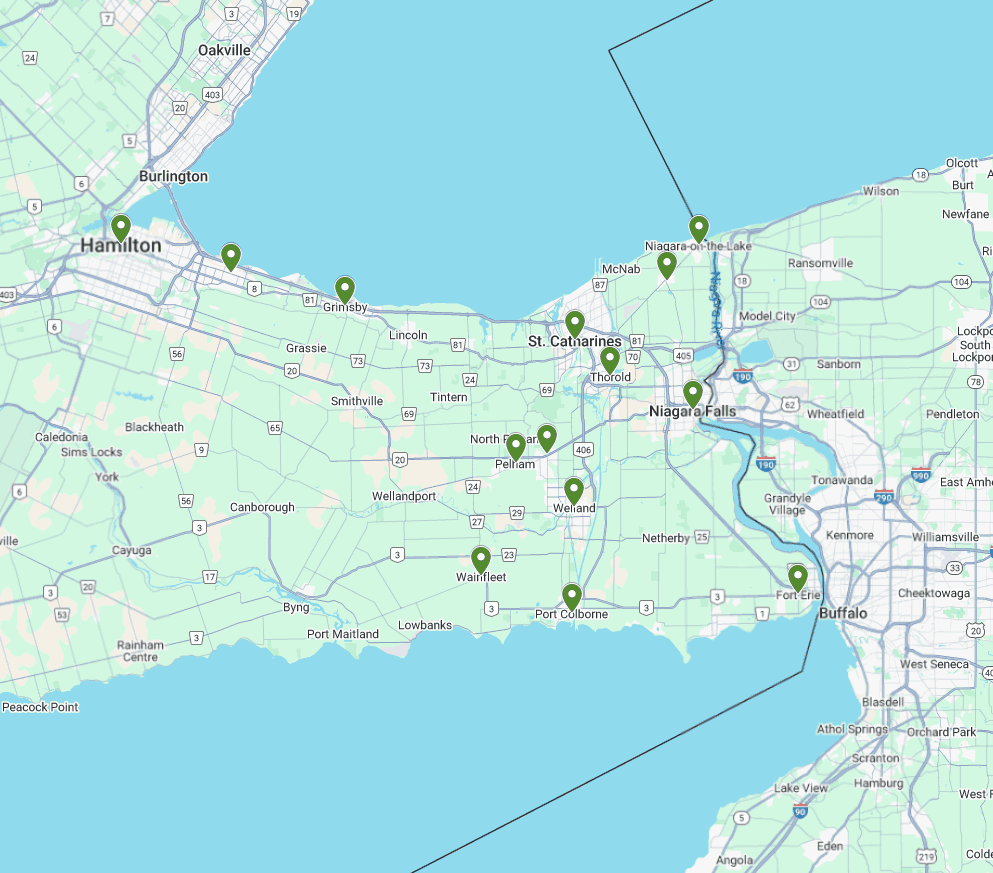
Our service areas encompass a wide range of locations, ensuring that we can meet the needs of our clients wherever they are. From bustling urban centers to serene rural landscapes, we are committed to providing top-notch services tailored to each unique environment.