



How to Know When It’s Time for a New Air Conditioner
At Niagara Home Heating, we’ve helped thousands of local families and businesses make the leap from a struggling, outdated system to one that actually keeps every room cool, runs quietly, and doesn’t fight you all summer. And the good news? The process doesn’t have to be stressful when you know exactly what to look for and who to trust.
Here’s the complete, no-fluff guide we wish every homeowner and business owner had before they started shopping for a new air conditioner.
Step 1: Be Honest — Is Your Current AC Still Doing Its Job?
Most air conditioners are designed to last 12–18 years here in Niagara (sometimes longer if they’ve been religiously maintained). But “working” and “working well” are two very different things.
Here are the red flags we see every single week that tell us it’s time for a replacement:
• Uneven cooling — upstairs is a sauna, downstairs is an icebox (or vice versa)
• Strange noises — grinding, banging, hissing, or squealing that wasn’t there before
• Constant humidity — the house feels sticky even when the AC is running non-stop
• Frequent breakdowns — you’ve had two or more service calls in the last two years
• Sky-high hydro bills in summer — a sudden jump even though your usage hasn’t changed
• Ice forming on the coils or copper lines
• Water pooling around your furnace or indoor unit
• Your system is over 12 years old and uses R-22 refrigerant (now obsolete and extremely expensive to recharge)
If three or more of those sound familiar, you’re not just throwing good money after bad with repairs — you’re living with discomfort that’s completely fixable.
We always start with a free, no-pressure Performance Evaluation. One of our senior technicians spends 60–90 minutes at your home or business checking airflow, refrigerant levels, electrical components, duct condition, thermostat accuracy, and overall efficiency. You get a plain-English report with photos showing exactly what’s going on — and clear options moving forward.
Step 2: Why Energy Efficiency Is the #1 Thing That Actually Matters Long-Term
Today’s air conditioners are light-years ahead of what was available even 10 years ago.
• A 15-year-old unit might have a SEER rating of 8–10
• A new high-efficiency model starts at 16 SEER and goes up to 24+ SEER
That difference can cut your cooling costs by 40–60 % — and in Niagara, where we regularly have weeks of 30°C+ weather, that adds up fast.
But here’s what most people don’t realize: efficiency isn’t just about the sticker on the box. It’s about how the system is designed and installed in your specific home.
That’s why we only recommend (and install) systems with these game-changing features:
• Variable-speed or two-stage compressors — run on low most of the time for quieter operation, better humidity control, and even temperatures
• Smart, communicating thermostats (Ecobee, Carrier Cor, Nest) that learn your schedule and adjust automatically
• Advanced airflow technology that eliminates hot/cold spots
• Eco-friendly R-410A or R-454B refrigerants (better for the planet and future-proof)
We carry the brands that consistently outperform in real Niagara homes: Carrier, Lennox, Goodman, Daikin, and Fujitsu.
Step 3: Size Matters — Why “Bigger Is Better” Is a Myth
This is the single biggest mistake we see — and it destroys comfort and equipment life.
An oversized air conditioner cools the house too quickly, then shuts off before it removes humidity. Result? A cold, clammy house and a system that wears out fast from short-cycling.
An undersized unit runs constantly, never quite gets comfortable, and drives up your hydro bill.
We fix this with science, not guesswork.
Every Niagara Home Heating replacement starts with a Manual J load calculation — the industry gold standard. We measure:
• Square footage and ceiling heights
• Number, size, and orientation of windows
• Insulation levels in walls, attic, and basement
• Duct condition and leakage
• How many people live/work there and how the space is used
Then we run the numbers (literally) to find the perfect BTU capacity for your home. The result? A system that runs longer, quieter, cooler, and drier — exactly how air conditioning should feel.
Step 4: Which Type of Air Conditioner Is Actually Right for Your Home?
Not every house or building is the same. Here’s how we match the system to your life:
Central Air (with existing ductwork)Perfect for most single-family homes in St. Catharines, Thorold, and Welland. We can often reuse your current ducts (after sealing and cleaning them) or upgrade as needed.
Ductless Mini-SplitsThe #1 choice for:
• Older homes without ducts (common in downtown St. Catharines and Niagara-on-the-Lake)
• Finished basements, sunrooms, or garage conversions
• Rooms that are always too hot or too cold
• Allergy sufferers (multi-stage filtration built into every indoor unit)
Heat Pumps (Air-Source or Cold-Climate)Cool in summer, heat in winter — and incredibly efficient in Niagara’s climate. Many customers now use them as their only system or paired with their existing furnace for hybrid comfort.
High-Velocity SystemsIdeal for century homes with plaster walls and no room for ducts. Tiny outlets blend into décor and deliver perfectly even cooling.
Geothermal (for the ultimate in efficiency and luxury)If you’re building new or doing a major renovation, this is the gold standard — but we’ll be honest about whether it makes sense for your property.
Step 5: Professional Installation vs. DIY — Why This Isn’t a Weekend Project
We get it — YouTube makes everything look easy. But air conditioning installation involves:
• Handling pressurized refrigerant (illegal without an 313A refrigeration license)
• Precise electrical work (240-volt circuits, proper grounding)
• Duct modifications, drainage, and vibration isolation
• Startup, testing, and commissioning so the system runs at factory efficiency
One small mistake (wrong charge, poor airflow, leaky ducts) can cut the life of a $12,000 system in half.
Our full-time, factory-trained crews follow a 52-point installation checklist. We take photos of key steps, test everything with digital gauges, and register your warranty on the spot. You get perfect performance from day one — and peace of mind for the next 15–20 years.
Step 6: What Happens After Installation Day?
A great installation is just the beginning.
Every Niagara Home Heating customer gets:
• A full walkthrough of your new system and smart thermostat
• Seasonal maintenance reminders (spring + fall)
• Priority 24/7 emergency service
• 10–12 year parts & labour warranties available
• Our 100 % satisfaction guarantee — if you’re not happy, we make it right
Real Stories from Your Neighbours
→ A couple in old Glenridge had a 20-year-old AC that couldn’t keep the second floor below 28°C. We installed a properly sized Carrier variable-speed system — now every bedroom is 22°C and they sleep with blankets in July.
→ A restaurant on Lundy’s Lane was losing customers because the dining room was always hot. A new rooftop unit + zoning controls turned it into the coolest spot on the strip — and their hydro usage dropped 38 %.
→ A new custom home in Fonthill chose ductless throughout — the homeowners say guests always ask, “How is your house so comfortable?” (Answer: perfect sizing + multi-stage filtration.)
Ready to Finally Get the Cool, Quiet, Comfortable Home You Deserve?
Don’t spend another sweaty Niagara summer wishing things were different.
Give us a call or text anytime at (289) 228-2688 and ask for your FREE AC Replacement Evaluation.
We’ll come when it’s convenient for you, measure everything properly, show you real options (good/better/best), and give you a clear, written proposal — no surprises, no pressure.
.png)

Customer Testimonials

Lifesavers!! The AC in our house decided to quit the day we were passing the keys to the new owners!! Instead of making a service call to the house, John coached me through the minor repair over the phone, saving me the money and time waiting for a repair person to come.Much appreciated! Thanks again John

We had an amazing experience getting our new furnace installed with Niagara Home Heating. The owner was very helpful, their quote was more then competitive and the technician who installed the unit was professional and friendly. I would recommend their services.
Very efficient company. I needed an old solar water heater removed from my roof. They were quick to book an appointment for the next day after I sent photos. They were very knowledgeable of the issue. The 2 guys that came were friendly and competent with the job, including removal of all parts.
I have used Niagara Home heating for multiple projects for over 16 years. John and his staff are absolutely the best. I tell all my friends and family about Niagara Home Heating because you won’t get any better service or pricing anywhere in Niagara. He has saved me thousands and thousands of dollars and has never let me down.
I called John today at 2:pm as my AC was not working and I wasn’t expecting even a call back as I knew with this hot weather we have had he would be swamped with calls. Well he called me back and showed at 8:pm on the same day to fix my AC. That is just incredible service and how much John really cares about his clients. Thank you John !
I had an issue with my hot water tank and called Niagara Home Heating. Their service was fantastic and reasonably priced—exactly how a business should be run!

Service Areas
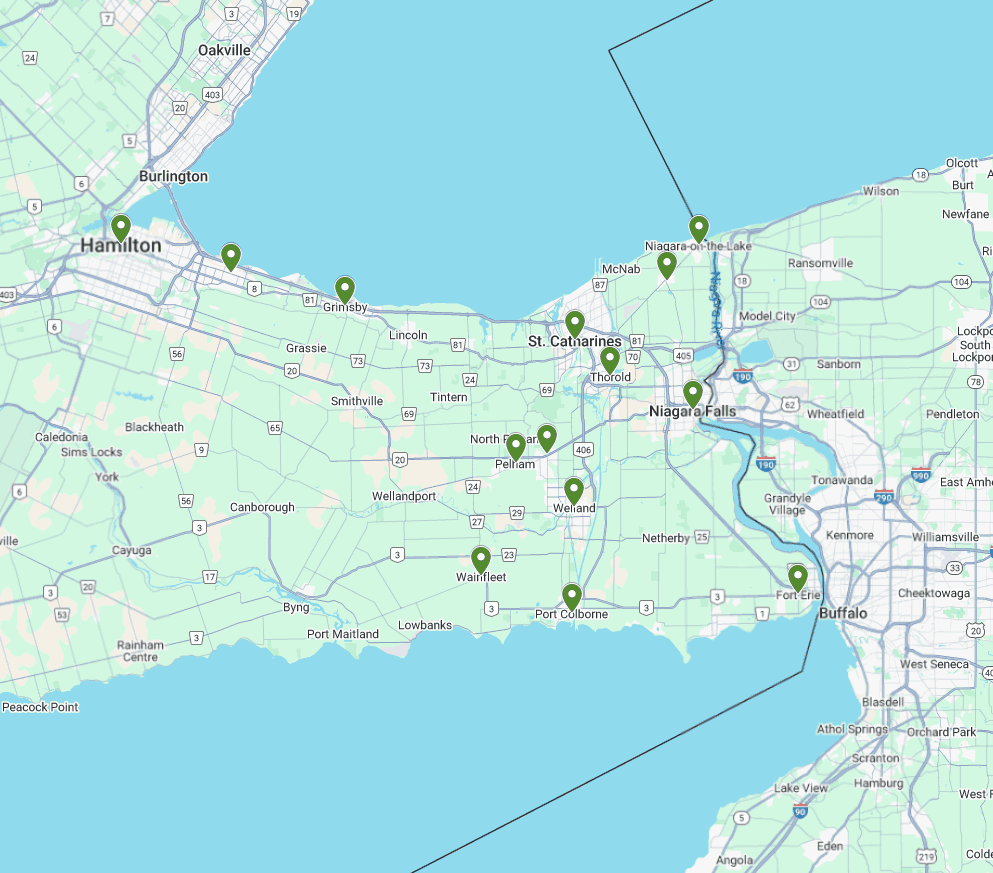
Our service areas encompass a wide range of locations, ensuring that we can meet the needs of our clients wherever they are. From bustling urban centers to serene rural landscapes, we are committed to providing top-notch services tailored to each unique environment.