



Getting the right water heater size matters. The correct capacity keeps your showers hot, cuts unnecessary energy use, and helps your system last longer. In this clear, practical guide we walk through the factors that determine the right size for homes and businesses, explain how efficiency ratings affect your choice, and highlight how to avoid the common sizing mistakes that cost time and money.
Below we cover why proper sizing matters, how to calculate the right tank or tankless size for your household, what commercial properties need to consider, how different heater types change the math, the role of recovery rate, and how efficiency ratings impact long-term costs. We’ll also explain Niagara Home Heating’s professional sizing process and available financing for your installation.
Why proper water heater sizing matters for comfort and efficiency
The right-sized water heater delivers consistent hot water while using less energy. When the unit matches your actual needs it runs efficiently; when it doesn’t, you can end up with cold showers, wasted energy, or extra repairs.
What goes wrong when the capacity is wrong?
Incorrect sizing can cause real headaches:
• Cold showers: If the heater is too small, it won’t keep up during busy times—morning routines and back-to-back uses can leave you without hot water.
• Higher energy bills: An oversized tank cycles more often and loses heat from standby—both of which can push your energy costs higher than they need to be.
• More breakdowns: Units that are poorly matched to the job can wear out faster. That often means more repairs and a shorter useful life.
How correct sizing saves energy and money
Picking the right size reduces wasted energy and lowers operating costs. Properly sized units commonly save homeowners roughly 10–20% on energy compared with oversized models. That initial equipment decision pays off over years through smaller bills and fewer service calls.
How to calculate residential water heater size for your family

Sizing for a house starts with how much hot water your household uses and when you use it. Key factors include how many people live there, what appliances run on hot water, and your busiest times of day.
What affects residential hot water demand?
Consider these drivers of hot water use:
• Number of occupants: More people typically equals more hot water demand—plan for the household size.
• Appliance usage: Dishwashers, laundry machines, and other appliances add to demand. Energy-efficient models reduce usage but still need hot water capacity.
• Peak usage times: Morning and evening peaks are common. If several fixtures run at once, you’ll need extra capacity or a faster recovery rate.
As a general guide, tank sizes often work like this:
• 1–2 people: 30–40 gallons
• 3–4 people: 40–50 gallons
• 5+ people: 50–80 gallons
These ranges follow industry practice and give a dependable starting point for matching capacity to real household needs.
To move from general guidance to a household-specific recommendation, follow a simple process: first, list the fixtures and appliances that commonly run at the same time during your busiest period. Second, note whether those uses are short or prolonged. Third, match that pattern to a unit that either stores enough hot water for the initial surge or can replace hot water quickly during extended use.
For households that see short, intense peaks (for example, multiple morning showers in quick succession), storage capacity and the First Hour Rating are especially important. For households with staggered use over a longer period, recovery rate becomes more valuable. If you are unsure about the balance in your home, a short checklist can help prepare for sizing:
• Identify peak windows: morning, evening, or commercial shift times.
• Count simultaneous uses: estimate the number of showers, faucets, and appliances commonly running together.
• Note appliance types: older appliances often draw more hot water than newer, efficient models.
• Record any special needs: soaking tubs, high-temperature laundry, or frequent guests.
Bring this checklist to your consultation and the technician can translate it into a recommended tank size, First Hour Rating, or tankless flow capacity tailored to your routine.
Key considerations when sizing commercial water heaters
Commercial sizing is a different process: businesses have varied peak loads, more fixtures, and specific temperature or code requirements. That makes accurate measurement and planning essential.
How business type and fixture count change requirements
Different businesses require very different approaches:
• Restaurants: High demand from dishwashing, food prep, and sanitation—expect intense, repeated peaks.
• Hotels: Guest rooms, laundry, and kitchens all draw hot water; demand fluctuates with occupancy.
• Salons and spas: Regular, steady demand for showers and treatments rather than short spikes.
Knowing the business type and counting fixtures helps determine capacity and whether tank or tankless solutions are best.
Industry guidance stresses that commercial selection focuses on gallons-per-hour capacity and the physical space available for the unit.
What temperatures do businesses typically need?
Temperature requirements depend on the application. Restaurants often need water around 140°F for sanitizing per health rules, while hotels usually deliver 120°F for guest safety and comfort. Make sure the chosen heater can meet the required output temperatures and local code expectations.
Commercial projects should also factor in redundancy and peak overlap. In many business settings it is prudent to plan for backup capacity or parallel units so that a temporary outage or maintenance activity does not interrupt service. Where health or safety regulations specify minimum temperatures or storage volumes, the final design must meet those requirements and provide space for service access and future maintenance.
How heater type affects sizing and performance
Your choice of tank vs. tankless changes how you size the system and what performance to expect.
How tank heaters are sized and what First Hour Rating means
Storage (tank) heaters are sized by gallons. The First Hour Rating (FHR) tells you how much hot water the heater can deliver in the first hour of use—so a 50-gallon tank with an FHR of about 67 gallons can cover larger household peak periods.
When choosing a tank model, evaluate where the unit will sit, how often it will cycle, and how quickly it recovers between draws. Installation factors such as venting, access for periodic service, and insulation of exposed piping influence both performance and user experience. It’s also helpful to compare manufacturer FHR and recovery specifications rather than relying solely on tank capacity.
How tankless units are sized by GPM and temperature rise
Tankless heaters are sized by flow rate (GPM) and the temperature rise they must provide. Add up the GPM of simultaneous fixtures during peak times, then factor the number of degrees the unit must heat incoming water to reach your desired temperature. Typical residential tankless units range from about 3 to 7 GPM.
Tankless systems shine where space is limited or where steady, spread-out demand is common. They require proper electrical or gas supply sizing and sometimes multiple units or staged systems to cover high peaks. When comparing tankless options, check both the flow capacity at the temperature rise you need and any manufacturer recommendations for simultaneous fixtures.
Even with modern equipment, correct sizing remains the most important factor to avoid running short during simultaneous high-demand uses
What role does recovery rate play in choosing capacity?
Recovery rate measures how quickly a heater can reheat water after a draw. It’s a key part of sizing—especially if your household or business has extended periods of high use.
How recovery rate affects hot water during peak times
A faster recovery means the heater replenishes hot water more quickly. For example, a unit with a 40-gallon-per-hour recovery can support back-to-back showers and appliance use more effectively than a slower unit.
Think of recovery rate and stored capacity as complementary: stored gallons cover immediate demand while recovery determines how quickly those gallons are returned to hot service. When evaluating options, place equal weight on both numbers so you do not pick a unit that performs well for only the first few minutes of a peak.
How to read First Hour Rating and recovery rate together
Look at both FHR and recovery rate. A high FHR is great for an initial surge, but if the recovery is slow you may run short during prolonged peaks. Conversely, a modest FHR plus a strong recovery can work well where demand is spread over time.
During a consultation, ask the technician to explain how those two metrics map to your typical day. A clear, practical example tied to your routine will show whether a larger tank, faster recovery, or a hybrid solution is the best match.
How efficiency ratings should guide your choice
Efficiency ratings tell you how well a heater turns fuel or electricity into hot water. Higher ratings mean lower operating costs and less environmental impact over time.
Why Energy Factor and Uniform Energy Factor matter
The Energy Factor (EF) and the newer Uniform Energy Factor (UEF) measure efficiency—UEF is the current standard and gives a clearer comparison across models and usage patterns. Choose a higher UEF to get better long-term savings.
When comparing models, look beyond the headline UEF number and consider installation context. A highly efficient unit installed with poor venting, undersized fuel or electric service, or uninsulated piping will underperform relative to expectations. Combined lifecycle thinking — purchase price, installation cost, and operating expense — gives a more complete picture of value than efficiency ratings alone.
These updated rating standards aim to give a more realistic picture of real-world water heater performance.
Do ENERGY STAR models really save money?
Yes — ENERGY STAR certified models meet strict efficiency requirements and typically use 10–15% less energy than standard units. That adds up to meaningful savings over the life of the heater.
ENERGY STAR status is useful as a filter when shopping, but it should not be the only factor. Balance certification with size, recovery, installation complexity, and any available rebates or incentives that can improve payback and lower upfront cost.
Niagara Home Heating’s professional sizing process
We follow a step-by-step process to make sure the unit you get fits your needs and the installation meets local rules.
How a personalized consultation improves capacity selection
Our consultation starts by learning how you use hot water: household size, peak times, and appliance types. From that we recommend a solution that balances performance, efficiency, and cost so you don’t pay for capacity you don’t need.
During consultations we also review site specifics: fuel type, available space, venting, access for maintenance, and electrical or gas service capacity. These practical constraints often determine which models are viable and which installation steps will be required. We provide clear options with the pros and cons of each so you can make an informed choice.
Installation steps and code compliance
Our installation workflow includes:
• Site assessment: We check space, access, and venting to plan a safe, efficient install.
• Compliance check: We make sure the work meets local codes, manufacturer specs, and safety standards.
• Installation: Professional connection to plumbing and electrical systems with attention to detail.
• Post-install support: Guidance on maintenance, operation, and warranty to keep your heater running well.
After installation we walk customers through normal operation and basic maintenance tasks. That includes demonstrating any controls, explaining performance behavior during peak times, and leaving a simple maintenance checklist so the system continues to operate efficiently.
Financing and support for your water heater install
Spreading the cost can make upgrading easier—Niagara Home Heating offers several financing options for your water heater installation.
What flexible financing does Niagara Home Heating provide?
We work with trusted partners to offer flexible plans that fit different budgets, so you can get a reliable water heater without a large upfront hit. Visit our financing page to see current options and terms.
Financing can be particularly helpful when a homeowner wants a higher-efficiency model or needs additional plumbing or venting work to support a new system. Our team reviews likely costs and financing alternatives during the estimate so you can compare total installed cost rather than just equipment price.
How to schedule a sizing consultation or service
To book a water heater sizing consultation or service, contact us online or call. We’ll walk you through scheduling and tell you what to expect for the visit—fast, clear, and hassle-free.
Before the technician arrives, gather any model information from your existing heater, note typical peak windows, and list appliances that use hot water. Having this information on hand shortens the visit and improves the accuracy of the recommendation.
• Tank Water Heater — Capacity (Gallons): 40 — First Hour Rating (Gallons) / Flow Rate (GPM): 60
• Tank Water Heater — Capacity (Gallons): 50 — First Hour Rating (Gallons) / Flow Rate (GPM): 67
• Tankless Water Heater — Capacity (Gallons): N/A — First Hour Rating (Gallons) / Flow Rate (GPM): 5 GPM
This table highlights typical capacity and performance ps for tank and tankless options to help you compare solutions for your hot water needs.
In short: proper sizing gives you reliable hot water, lower energy use, and fewer surprises. Consider household size, peak times, and efficiency ratings when choosing a unit. If you’d like expert help, Niagara Home Heating provides tailored consultations and financing to simplify the process.
Conclusion
Picking the right water heater size is one of the best ways to improve comfort and reduce operating costs. By matching capacity to your household or business needs—and by choosing efficient equipment—you’ll avoid unnecessary expense and downtime. Niagara Home Heating is ready to help with expert sizing, professional installation, and flexible financing. Contact us today to get started on the right system for your property.
.png)

Customer Testimonials

We had an amazing experience getting our new furnace installed with Niagara Home Heating. The owner was very helpful, their quote was more then competitive and the technician who installed the unit was professional and friendly. I would recommend their services.

I had an issue with my hot water tank and called Niagara Home Heating. Their service was fantastic and reasonably priced—exactly how a business should be run!
Very efficient company. I needed an old solar water heater removed from my roof. They were quick to book an appointment for the next day after I sent photos. They were very knowledgeable of the issue. The 2 guys that came were friendly and competent with the job, including removal of all parts.
I called John today at 2:pm as my AC was not working and I wasn’t expecting even a call back as I knew with this hot weather we have had he would be swamped with calls. Well he called me back and showed at 8:pm on the same day to fix my AC. That is just incredible service and how much John really cares about his clients. Thank you John !
I have used Niagara Home heating for multiple projects for over 16 years. John and his staff are absolutely the best. I tell all my friends and family about Niagara Home Heating because you won’t get any better service or pricing anywhere in Niagara. He has saved me thousands and thousands of dollars and has never let me down.
Lifesavers!! The AC in our house decided to quit the day we were passing the keys to the new owners!! Instead of making a service call to the house, John coached me through the minor repair over the phone, saving me the money and time waiting for a repair person to come.Much appreciated! Thanks again John

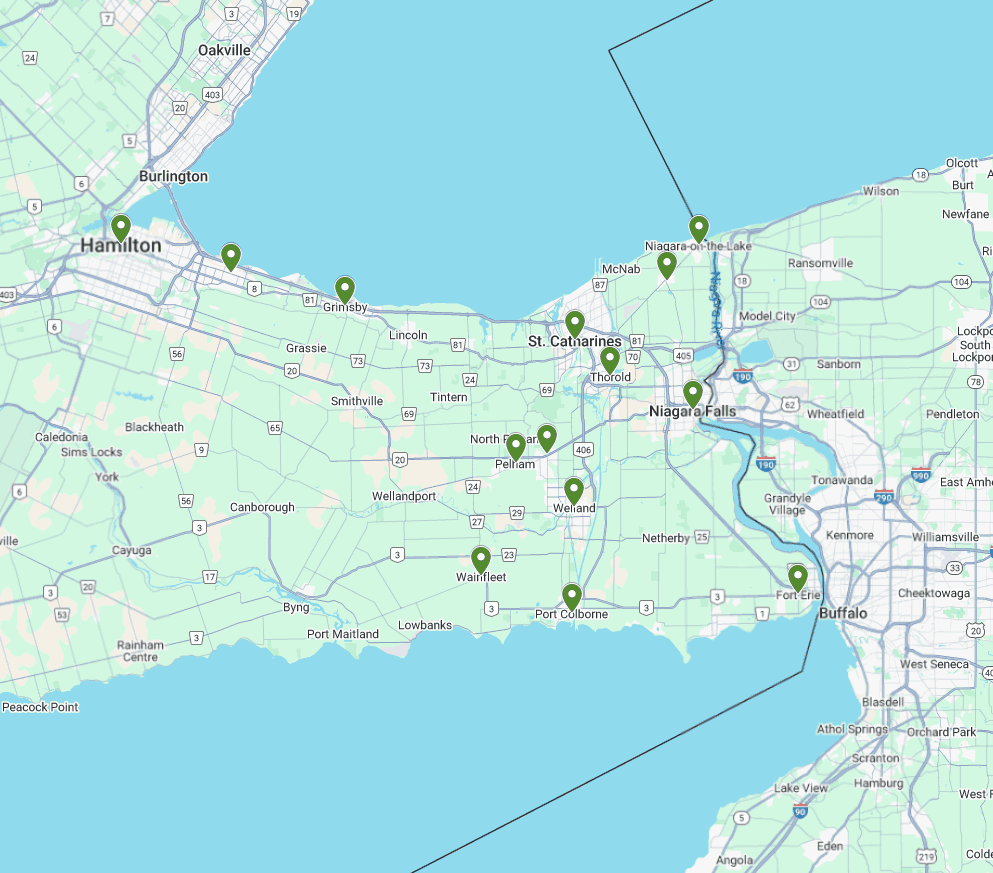
Service Areas
Our service areas encompass a wide range of locations, ensuring that we can meet the needs of our clients wherever they are. From bustling urban centers to serene rural landscapes, we are committed to providing top-notch services tailored to each unique environment.