



It describes professional heat pump installation in Thorold, ON, from initial site evaluations and load calculations to equipment selection, installation workflow, and commissioning. It covers heat pump types suitable for Thorold homes, common issues, energy savings, and year-round performance. Readers learn about warranties, maintenance handovers, and a clear maintenance plan, plus rebates and financing options available locally. The guide emphasizes accurate sizing, ductwork assessment, and code-compliant installation to deliver reliable comfort, reduced energy costs, and durable heating and cooling.
.jpeg)
Heat Pump installation in Thorold, ON
Modern heat pump installation in Thorold homes is a practical, long-term way to reduce energy costs, improve comfort year-round, and lower your carbon footprint. Whether you are replacing an aging furnace or installing a first-time heating and cooling solution, a properly sized and installed heat pump delivers reliable heating through our cold Niagara winters and effective cooling during humid summer months. It describes the full installation process, equipment options, expected savings, warranties and maintenance handover, and how we help navigate rebates and financing specific to Thorold, ON.
Common heat pump types and which is right for Thorold homes
Air-source (ducted) heat pumps: Best for homes with existing ductwork in good condition. A ducted heat pump can replace or complement a furnace and provides whole-house heating and cooling.
Ductless mini-splits: Ideal for older Thorold homes without ducts, additions, or rooms needing independent temperature control. They offer high efficiency and minimal disruption during installation.
Cold-climate models: In Niagara Region, choose units rated to operate efficiently at lower outdoor temperatures. Modern cold-climate air-source heat pumps maintain good capacity down to -20 to -25°C and often include backup heat integration.
Common heat pump issues and homeowner goals we address
- Uneven heating or cooling across rooms
- High winter energy bills on older systems
- Homes without ductwork or with leaky ducts
- Desire to reduce fossil fuel use and access provincial/federal incentivesUnderstanding these pain points helps tailor the installation: from targeted ductless solutions to full ducted replacements with new zoning and controls.
Site evaluation, load calculations and sizing
A correct installation begins with a thorough on-site evaluation and accurate load calculation. We perform:
- A room-by-room Manual J load calculation to determine heating and cooling loads based on insulation, window orientation, air leakage, and occupancy.
- Ductwork assessment: size, condition, leaks, and airflow testing if existing ducts are used.
- Placement review for outdoor units, indoor air handlers, and refrigerant routing that minimize visual impact and noise for neighbours.
Proper unit sizing is critical: oversized systems short-cycle and underperform, while undersized units cannot meet demand. The Manual J and equipment selection determine capacity, airflow rates, and required auxiliary heat.
Installation workflow — what to expect
Installation follows a professional, code-compliant sequence tailored to your home:
Preparation and permits
- Confirm municipal permit requirements and ensure compliance with the Ontario Building Code and local Thorold regulations.
Mounting and placement
- Secure outdoor condenser on pads or wall brackets to reduce vibration and ensure drainage. Indoor units positioned for optimal airflow and access.
Refrigerant lines and brazing
- Run line sets between indoor and outdoor units. All connections are brazed and insulated to manufacturer specifications.
Evacuation and refrigerant charging
- Evacuate the lines with a vacuum pump to remove air and moisture, then charge to exact refrigerant weight or by superheat/subcooling as required.
Electrical hookups
- Install dedicated circuits, disconnects, and controls. Coordinate with licensed electricians to meet electrical code and ensure safe interlocks with existing systems.
Condensate management
- Install drain lines and secondary protection where required to prevent moisture damage.
Commissioning and controls
- Start-up includes system diagnostics, refrigerant pressure checks, airflow balancing, thermostat/controller configuration, and performance verification at multiple operating points.
Permits and final inspection
- Documentation provided for permit sign-off and municipal inspection where applicable.
Most residential split-system installations are completed within one to three days once permits and equipment selection are finalized. Complex retrofits or ductwork replacements take longer.
Expected energy savings and performance
Heat pump savings vary by home, existing system, and fuel costs:
- Compared to electric baseboard heating, homeowners commonly see 50% or more reduction in heating costs.
- Compared to older natural gas or oil furnaces, many Thorold homeowners experience 20–40% annual energy cost savings depending on system efficiency and energy prices.
- Year-round benefits include efficient air conditioning in warm, humid months and improved humidity control.
Accurate load calculations, correct sizing, and airtight ducts or well-located indoor units are key to achieving these savings in the Niagara climate.
Warranty, commissioning and maintenance handover
A professional installation includes:
- Transferable manufacturer warranty documentation and clarification of coverage periods for compressor and parts.
- A workmanship warranty on installation that explains what is covered and for how long.
- Comprehensive handover: system manuals, operating instructions, and a walkthrough showing basic maintenance tasks (filter replacement, outdoor coil clearing, thermostat programming).
- Commissioning report detailing start-up settings, measured airflow, refrigerant charge and performance metrics.
Maintenance plan and tips for longevity
Routine maintenance preserves efficiency and reliability:
- Replace or clean filters every 1–3 months depending on use and indoor air quality.
- Annual professional tune-up before the heating season: check refrigerant charge, electrical connections, controls and defrost operation.
- Keep outdoor unit clear of snow, leaves and debris; ensure 30–60 cm clearance for airflow.
- Inspect ductwork every few years for leaks and insulation gaps in Thorold’s variable climate.
Rebates and financing assistance in Thorold, ON
Many Thorold homeowners qualify for provincial, federal and utility incentives that reduce up-front costs. Programs change frequently, but commonly available options include:
- Federal and provincial energy-efficiency grants
- Local utility rebates for high-efficiency heat pumps
- Interest-rate financing or loan programs targeted at home energy upgrades
During the site evaluation we assess your likely eligibility and provide the documentation typically required for rebate applications, including system specifications and commissioning records.
Making the decision
A successful heat pump installation in Thorold combines accurate load design, appropriate equipment choice for cold-climate performance, professional installation to code, and a clear maintenance plan. When these elements are in place you gain predictable year-round comfort, lower energy bills, and a durable heating and cooling solution suited to the Niagara Region climate.
For homeowners weighing options, the most important factors are correct sizing, ductwork condition (or choosing ductless where appropriate), and choosing a cold-climate rated model paired with a dependable installation and warranty package.

Customer Testimonials

Very efficient company. I needed an old solar water heater removed from my roof. They were quick to book an appointment for the next day after I sent photos. They were very knowledgeable of the issue. The 2 guys that came were friendly and competent with the job, including removal of all parts.

I called John today at 2:pm as my AC was not working and I wasn’t expecting even a call back as I knew with this hot weather we have had he would be swamped with calls. Well he called me back and showed at 8:pm on the same day to fix my AC. That is just incredible service and how much John really cares about his clients. Thank you John !
I have used Niagara Home heating for multiple projects for over 16 years. John and his staff are absolutely the best. I tell all my friends and family about Niagara Home Heating because you won’t get any better service or pricing anywhere in Niagara. He has saved me thousands and thousands of dollars and has never let me down.
We had an amazing experience getting our new furnace installed with Niagara Home Heating. The owner was very helpful, their quote was more then competitive and the technician who installed the unit was professional and friendly. I would recommend their services.
I had an issue with my hot water tank and called Niagara Home Heating. Their service was fantastic and reasonably priced—exactly how a business should be run!
Lifesavers!! The AC in our house decided to quit the day we were passing the keys to the new owners!! Instead of making a service call to the house, John coached me through the minor repair over the phone, saving me the money and time waiting for a repair person to come.Much appreciated! Thanks again John

Service Areas
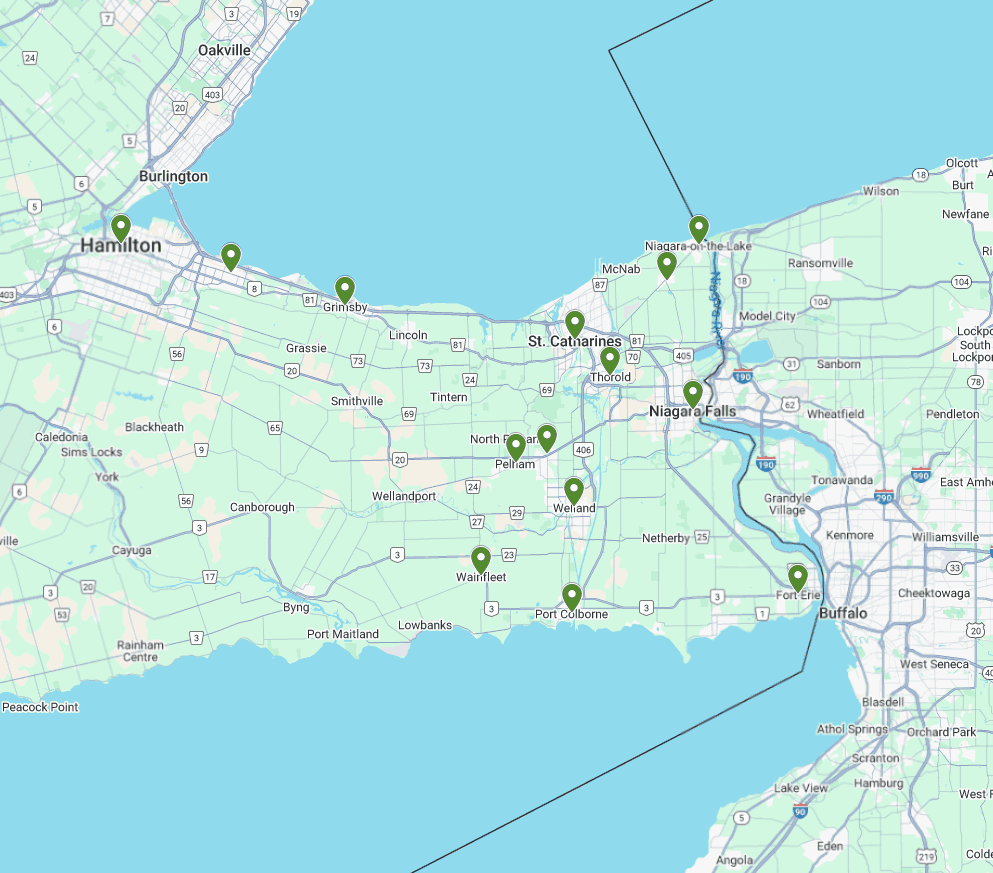
Our service areas encompass a wide range of locations, ensuring that we can meet the needs of our clients wherever they are. From bustling urban centers to serene rural landscapes, we are committed to providing top-notch services tailored to each unique environment.