



Mini split installation in Hamilton, ON provides flexible, ductless heating and year-round comfort for older and newer homes alike, with professional service from pre-install assessment through handover. It describes details the full process: load calculations, unit sizing, indoor and outdoor placement, refrigerant and electrical hookups, commissioning, and performance testing; plus what to expect on install day, warranty coverage, and ongoing care. By prioritizing proper sizing, code-compliant installation, and clear documentation, homeowners receive reliable comfort and energy efficiency for Hamilton’s climate.
.jpeg)
Mini Split Installation in Hamilton, ON
Hiring a professional mini split installation in Hamilton, ON ensures reliable year-round comfort for homes that need flexible heating and cooling without ductwork. Mini split systems (also called ductless heat pumps) are especially well suited to Hamilton’s mix of older brick homes, rowhouses, and newer condos where adding ducts is impractical. It describes the full installation process—from pre-install consultation and load calculations to commissioning, what to expect on install day, and warranty and handover details—so homeowners know exactly what a quality installation looks like.
Why a mini split is a smart choice for Hamilton homes
- Hamilton’s humid summers and cold winters demand efficient systems that both cool and heat. Modern mini splits provide high-efficiency cooling (SEER) and cold-climate heating performance (HSPF), reducing energy bills compared with window units or electric baseboard heat.
- Ductless systems are ideal for room additions, basements, garages converted to living space, or zoned comfort in multi-level homes.
- Compact outdoor units and low-profile indoor heads fit tight urban lots and historic neighbourhoods without major exterior changes.
Common mini split types and common issues in Hamilton
- Single-zone wall-mounted units for a single room
- Multi-zone systems serving several rooms from one outdoor compressor
- Ceiling cassette or slim-duct indoor heads for aesthetic or ceiling-mounted applications
Common mini split issues Hamilton homeowners encounter:
- Undersized units that struggle to heat during cold snaps
- Poor placement causing short-cycling or uneven comfort
- Inadequate electrical service or improper disconnects
- Incorrect refrigerant charge or leak-related performance loss
- Condensate drain blockages in humid months
Pre-install consultation and home assessment
A thorough pre-install consultation includes:
- Reviewing your comfort goals, daily schedules, and specific rooms to be conditioned
- Inspecting the home's layout, insulation levels, window exposure, and existing electrical service
- Identifying practical indoor head locations and outdoor condenser placement considering noise, visual impact, and municipal bylaws in Hamilton
This step uncovers structural challenges (masonry walls, limited exterior space, balconies) and informs whether a single-zone or multi-zone mini split is the right solution.
Load calculations and system sizing
Professional load calculations (Manual J style) are essential. Proper sizing balances capacity and efficiency:
- Oversized units short-cycle, increasing wear and reducing dehumidification
- Undersized units fail to meet heating demand on cold Hamilton nights
Calculations factor in:
- Square footage, ceiling height, insulation, window area and orientation
- Local climate effects (lake effect wind and temperature swings)
- Desired indoor temperature and zone separation
Placement options for indoor and outdoor units
Indoor heads:
- Wall-mounted: most common, efficient for bedrooms and living rooms
- Ceiling cassette: best for open-plan living and discreet installation
- Slim-duct: used when a low-profile look is required
Outdoor condensers:
- Ground-mounted on concrete pad or vibration isolators
- Wall-mounted brackets on masonry or siding
- Roof or balcony placement for dense urban lots, with proper structural assessment
Placement considerations include noise (Hamilton residential bylaw limits), ease of service access, and pipe run length to minimize refrigerant and efficiency losses.
Professional refrigerant and electrical hookup
A certified technician handles:
- Proper refrigerant charging using gauges and factory procedures; modern systems use pre-charged lines but still require accurate field charging for long runs
- Routing and securing refrigerant lines, drain lines, and control wiring through minimal wall penetrations with airtight seals
- Electrical hookup to a dedicated circuit, breaker sizing, and installation of a disconnect as required by code
- Ensuring all work meets Ontario electrical and HVAC codes and any local permitting requirements
DIY hookups risk leaks, void warranties, and reduce system life; professional installation protects performance and safety.
Commissioning and performance testing
Once installed, technicians perform detailed commissioning:
- Evacuation and leak test of the refrigerant circuit
- Precise refrigerant charge and current/voltage checks
- Airflow and temperature split measurements to verify cooling and heating capacity
- Defrost cycle verification for winter performance on cold-climate models
- Noise and vibration checks and final aesthetic adjustments
Documentation of performance readings is provided at handover so homeowners understand system baseline performance.
What homeowners can expect on install day
Typical timeline and site process:
- Arrival and site protection: technicians lay down runners and floor protection and cover furniture in the work area
- Outdoor unit siting and pad/bracket installation
- Indoor head installation, wall penetration, and concealment of lines where possible
- Refrigerant lines, condensate, and electrical connections, followed by commissioning tests
- System orientation and handover paperwork
Install day duration varies by system complexity: single-zone installs are commonly completed in a day; multi-zone and retrofits may require two days. Technicians clean the worksite and remove debris, leaving the home tidy.
Warranty, documentation, and handover
A complete handover includes:
- Manufacturer warranty details for indoor heads and outdoor compressor
- Labor warranty information covering workmanship
- Copy of commissioning results and electrical/refrigerant documentation
- User orientation on remote controls, modes, filters, and defrost behaviour
- Recommended maintenance schedule (filter cleaning, annual inspection)
Keeping installation paperwork and performance logs preserves warranty eligibility and simplifies future service.
Benefits and ongoing care for Hamilton homeowners
- Energy savings and zoned comfort reduce utility bills and improve indoor air quality
- Quiet operation and flexible placement suit Hamilton’s dense neighbourhoods and retrofit projects
- Potential eligibility for provincial or federal incentives and utility rebates for heat pump installations; verify current programs that apply in Hamilton
Maintenance tips:
- Clean or replace filters every 1–3 months depending on use
- Keep outdoor unit clear of debris, snow, and vegetation
- Schedule annual professional checks before summer and winter seasons
A correctly sized and professionally installed mini split delivers dependable, efficient comfort suited to Hamilton’s climate and housing stock while protecting your investment through proper commissioning and documented warranties.

Customer Testimonials

I have used Niagara Home heating for multiple projects for over 16 years. John and his staff are absolutely the best. I tell all my friends and family about Niagara Home Heating because you won’t get any better service or pricing anywhere in Niagara. He has saved me thousands and thousands of dollars and has never let me down.

I had an issue with my hot water tank and called Niagara Home Heating. Their service was fantastic and reasonably priced—exactly how a business should be run!
Very efficient company. I needed an old solar water heater removed from my roof. They were quick to book an appointment for the next day after I sent photos. They were very knowledgeable of the issue. The 2 guys that came were friendly and competent with the job, including removal of all parts.
Lifesavers!! The AC in our house decided to quit the day we were passing the keys to the new owners!! Instead of making a service call to the house, John coached me through the minor repair over the phone, saving me the money and time waiting for a repair person to come.Much appreciated! Thanks again John
I called John today at 2:pm as my AC was not working and I wasn’t expecting even a call back as I knew with this hot weather we have had he would be swamped with calls. Well he called me back and showed at 8:pm on the same day to fix my AC. That is just incredible service and how much John really cares about his clients. Thank you John !
We had an amazing experience getting our new furnace installed with Niagara Home Heating. The owner was very helpful, their quote was more then competitive and the technician who installed the unit was professional and friendly. I would recommend their services.

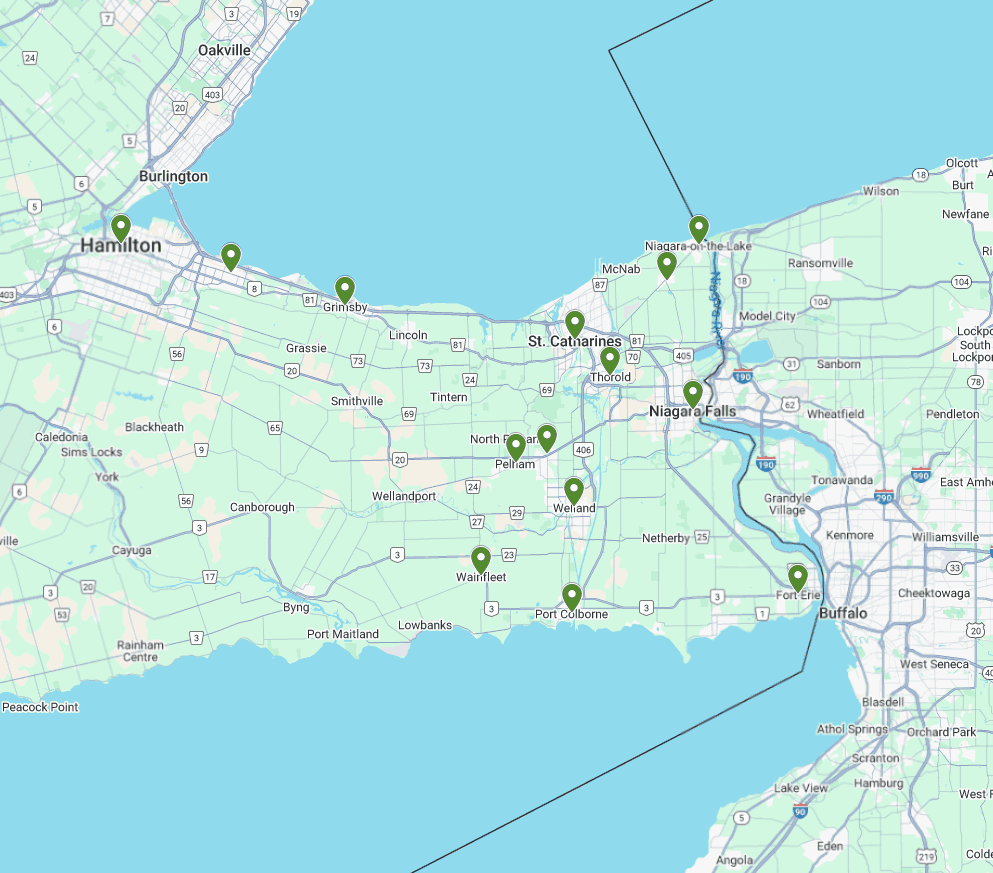
Service Areas
Our service areas encompass a wide range of locations, ensuring that we can meet the needs of our clients wherever they are. From bustling urban centers to serene rural landscapes, we are committed to providing top-notch services tailored to each unique environment.