



Mini Split in Niagara Falls, ON
Choosing a ductless mini split is one of the most practical, energy efficient, and flexible ways to heat and cool homes in Niagara Falls, ON. Niagara heating brings local experience and technical skill to each mini split installation, helping homeowners solve common comfort problems like cold second floors, inconsistent room temperatures, and rising energy bills.
.png)
Why a mini split is a strong choice for Niagara Falls homes
Niagara Falls experiences cold, long winters with freeze-thaw cycles and humid summers influenced by the Great Lakes. These conditions create specific comfort and efficiency challenges:
- Cold drafts and heat loss in older, less insulated houses make room-by-room temperature control valuable.
- High summer humidity increases cooling load and makes dehumidification performance an important consideration.
- Variable occupancy (seasonal visitors, home offices, guest rooms) benefits from multi-zone control to avoid heating or cooling unused spaces.
- Rising energy costs push homeowners to systems with higher efficiency and smart controls to reduce operating bills.
A ductless mini split system addresses these challenges by delivering heat and cooling directly to each room or zone without duct losses, offering precise temperature control, strong dehumidification, and significant seasonal efficiency gains when sized and installed correctly.
Types of mini split systems and common applications
- Single-zone mini split
- One outdoor unit paired with one indoor head.
- Ideal for basements, additions, sunrooms, or a single problematic room.
- Multi-zone mini split
- One outdoor unit supports two to eight indoor units, each with independent controls.
- Excellent for whole-house zoning, older homes without ducts, multi-level houses, or rooms with differing comfort needs.
- Heat pump mini splits (air-source)
- Provide both heating and cooling with inverter-driven compressors for variable speed operation.
- Modern units perform well in cold climates and often include low-temperature operation modes suitable for Niagara Falls winters.
- Ceiling cassette, wall-mounted, floor-mounted, and concealed-duct indoor units
- Allow aesthetics and placement flexibility for different room layouts and renovation constraints.
Common mini split issues Niagara Falls homeowners face
- Rooms remain cold in winter despite running the system
- Excess humidity or condensation in the house during summer
- Short cycling or frequent on/off behavior
- Uneven temperatures between zones
- Outdoor unit frosting in extreme cold (expected during defrost cycles if not sized properly)
- Visible refrigerant lines or poor aesthetic integration after installation
Understanding these issues up front helps you evaluate proposals and choose a system that meets your comfort and efficiency goals.
How mini split systems are sized and selected
Proper sizing is critical. Oversized systems short cycle and underperform; undersized systems struggle to meet load. Professional sizing goes beyond rule-of-thumb BTU estimates and includes:
- Heat loss and heat gain calculation for each room (Manual J style)
- Factors: square footage, ceiling heights, insulation levels, window types and orientation, air leakage, and local climate data for Niagara Falls.
- Occupancy and usage patterns
- Rooms used intermittently can be zoned independently to save energy.
- Solar gain and shading
- South-facing rooms may need different capacities than north-facing rooms.
- Humidity control needs
- In Niagara Falls summers, selecting units with strong dehumidification and appropriate fan control prevents clammy conditions.
- Electrical capacity and space for outdoor unit
- Evaluating service panel and available outdoor space for condenser placement.
A correct sizing and multi-zone layout by Niagara heating technicians ensures consistent comfort, longer equipment life, and better energy savings.
The professional installation process and expected timeline
A well-executed installation is as important as the equipment choice. Typical steps and realistic timeline for a single-family home mini split project performed by experienced technicians:
Initial consultation and site assessment (1 to 2 hours)
- Walkthrough to confirm zones, indoor unit locations, refrigerant line routing, electrical access, and outdoor unit siting.
- Discuss aesthetic preferences and concealment options.
Detailed proposal and system design (1 to 3 business days)
- Equipment selection, zone layout, capacity calculations, and rough installation schedule.
- Guidance on rebates and financing options available in Ontario.
Installation day(s)
- Small single-zone installation: 4 to 8 hours.
- Typical multi-zone installation (2–4 heads): 1 to 2 days.
- Larger multi-zone or complex runs (concealed ducts, multiple floors): 2 to 4 days.
- Steps performed:
- Protect flooring and furniture, set up work area.
- Mount indoor head(s) and outdoor condenser(s).
- Drill small 2 to 3 inch penetrations for refrigerant, condensate, and electrical lines.
- Run insulated refrigerant lines and condensate drains, secure and weatherproof exterior penetrations.
- Make electrical and control wiring connections to code.
- Vacuum and pressure-test refrigerant lines, charge the system as required.
- Commission system: test heating and cooling modes, check airflow, and explain operation to homeowner.
Post-installation walkthrough and documentation (30 to 60 minutes)
- Demonstration of controls, scheduling, and maintenance tips.
- Provide warranty details and service recommendations.
Niagara heating follows professional installation practices, including attention to aesthetic concealment and workmanship standards consistent with warranty coverage and local code compliance.
Aesthetic and placement considerations
Placement choices strongly influence performance and appearance. Considerations include:
Indoor head placement
- High on a wall for even air distribution, away from direct sunlight and obstructions.
- Avoid placing above doors or tightly recessed alcoves that block airflow.
- For bedrooms, choose quieter wall units or concealed-duct options for noise-sensitive spaces.
Outdoor unit siting
- Firm, level pad location with good airflow and protected from heavy snow drifts and debris.
- Allow service access and maintain clearance for maintenance and defrost airflow.
- Consider elevation or fencing to reduce visual impact while preventing snow blockages.
Concealing lines
- Use matching covers, chaseways, or run lines through interior cavities where possible to hide refrigerant and condensate piping.
- For renovations, concealment within walls or soffits gives a nearly invisible installation.
Interior design integration
- Slim wall-mounted heads and discreet ceiling cassettes minimize visual intrusion.
- Color-matched units and careful placement make mini splits blend with modern and traditional interiors.
Seasonal maintenance and troubleshooting
Year-round maintenance keeps performance high and extends equipment life. Typical maintenance tasks and what to expect seasonally in Niagara Falls:
- Routine maintenance (recommended twice yearly: spring and fall)
- Clean or replace filters every 1 to 3 months depending on usage.
- Clean indoor coil fins and check condensate drain for blockage.
- Inspect outdoor unit for debris, snow, or ice buildup and ensure airflow.
- Verify refrigerant pressure and overall system charge if performance issues arise.
- Test defrost cycle in winter to ensure correct operation.
- Common troubleshooting items
- Reduced airflow: check and clean filters; inspect for blocked outdoor coils or dirty indoor coil.
- Warm indoor air in cooling mode: check refrigerant charge and verify compressor operation.
- Ice on outdoor unit: confirm proper defrost control and adequate refrigerant charge; ensure unit is clear of snow.
- Strange noises: check fan motor bearings, mounting brackets, and refrigerant line clamps.
- Error codes on indoor controller: consult manual for code meaning; many are simple resets, others indicate sensor or communication faults.
Niagara heating technicians provide professional service and diagnostics to address common issues quickly and safely, backed by training and warranty on workmanship.
Efficiency, performance metrics, and cost savings
Understanding efficiency ratings helps compare systems and estimate operating costs:
SEER and HSPF ratings
- SEER (Seasonal Energy Efficiency Ratio) measures cooling efficiency; higher is better.
- HSPF (Heating Seasonal Performance Factor) measures heating efficiency for heat pump mini splits.
- Variable-speed inverter technology dramatically improves real-world efficiency by modulating output to actual load rather than cycling on and off.
Real-world savings
- Ductless systems avoid duct losses that can account for up to 20 to 30 percent of heating and cooling energy in older homes.
- Zoning allows conditioning only occupied rooms, reducing total energy use.
- Efficient mini splits can lower winter heating bills if replacing baseboard electric or older gas systems in certain applications, particularly when coupled with smart thermostats and proper cycling strategies.
Longevity and lifecycle value
- Properly installed and maintained mini splits often have long operational lives with predictable maintenance costs.
- When evaluating value, factor installation quality, warranty coverage, and local climate effects on performance.
Financing and rebate guidance for Niagara Falls homeowners
Rebates and finance options can make mini splits more affordable. Niagara Falls homeowners commonly encounter:
- Provincial and federal incentive programs for energy-efficient heat pumps and home retrofits.
- Utility or municipality-level rebates for electrification, energy reduction, or heat pump adoption.
- Financing programs and loans tailored to home energy upgrades to spread costs over time.
Niagara heating can explain typical program structures and documentation requirements so homeowners can apply for available incentives. While incentive specifics change, common guidance includes documenting receipts, completing required pre- and post-installation energy assessments when mandated, and ensuring equipment meets listed efficiency thresholds.
FAQs
Q: How long does a typical mini split installation take?
A: Single-zone installations typically take a day (4 to 8 hours), while multi-zone systems often require 1 to 3 days depending on complexity, concealment work, and any electrical upgrades.
Q: Will a mini split work in cold Niagara Falls winters?
A: Modern heat pump mini splits are designed to operate effectively in cold climates; look for models rated for low-temperature operation and ensure correct sizing and defrost control for reliable winter performance.
Q: Can a mini split replace an existing furnace or central air system?
A: Mini splits are ideal for supplementing or replacing heating and cooling in specific zones or entire homes without ductwork. A careful load analysis will determine if a full ductless conversion is appropriate or if a hybrid solution makes sense.
Q: How noisy are mini splits?
A: Indoor units are generally quiet; high-quality wall-mounted heads operate at low decibel levels suitable for living spaces. Outdoor units produce moderate sound but can be sited and isolated to minimize impact.
Q: What maintenance should I plan for and how often?
A: Homeowners should clean or replace filters every 1 to 3 months, keep the outdoor unit clear, and schedule professional maintenance twice a year (spring and fall) for cleaning, system checks, and refrigerant inspection.
Q: Are there rebates or incentives for installing a mini split in Niagara Falls?
A: Many homeowners qualify for provincial, federal, and utility incentives for efficient heat pumps or home energy upgrades; eligibility and program details vary, so collect documentation and verify program requirements before and after installation.
Q: How do I choose between wall-mounted and concealed indoor units?
A: Wall-mounted units are cost effective and easy to install; concealed-duct or ceiling cassette options are preferable when aesthetics or noise considerations require a less visible solution. Room configuration, ceiling space, and budget influence the choice.
Q: What should I ask potential installers to ensure quality workmanship?
A: Ask about heat load calculation practices, how refrigerant lines and drains will be routed and concealed, warranty coverage on equipment and labour, references for similar local installs, and how they handle snow protection for outdoor units.
Common mini split types and which is right for you
- Single-zone mini split: one outdoor unit paired with one indoor head. Ideal for a garage conversion, basement, sunroom, or a single apartment.
- Multi-zone mini split: one outdoor unit serving multiple indoor heads. Best for whole-home comfort without ducts, or multi-room businesses that need independent room control.
- Cold-climate models: specially designed heat pump variants that maintain heating performance through Niagara winters. Choose these for reliable frost-season performance.
Common mini split issues in Niagara Falls homes
Understanding typical problems helps set realistic expectations and speeds troubleshooting:
- Reduced airflow or weak cooling/heating — often due to dirty filters, blocked indoor units, or undersized equipment.
- Ice on outdoor unit or indoor coil in heating mode — can indicate refrigerant issues, improper airflow, or an obstructed defrost cycle.
- Short cycling or frequent on/off — usually caused by incorrect sizing, thermostat placement, or electrical issues.
- Strange noises or vibration — may come from loose mounting, refrigerant flow, or outdoor debris after storms.
- Error codes or system lockouts — modern systems provide diagnostics; many issues trace back to sensors, wiring, or communication faults.
Site assessment and professional sizing
A thorough site assessment is the foundation of a successful mini split installation. A professional assessment will typically include:
- Load calculation based on home orientation, insulation, window sizes, and local climate conditions.
- Room-by-room review to recommend single- or multi-zone layouts and indoor head styles (wall-mounted, floor-mounted, ceiling cassette).
- Evaluation of outdoor unit placement for airflow, noise, and service access during winter snow and ice conditions.
- Electrical capacity check to see if panel upgrades are required for the outdoor unit and disconnects.
Proper sizing avoids undersized equipment that struggles on hot or cold days and oversized units that short cycle and increase wear.
Installation and commissioning – what to expect
Professional installation should follow industry best practices and include:
- Secure mounting of outdoor and indoor units with correct clearances.
- Careful routing of refrigerant lines and condensate drains through a single small penetration.
- Proper refrigerant charge and vacuuming of lines to remove air and moisture.
- Electrical connections to meet code, including a dedicated circuit and disconnect.
- System commissioning that tests modes, airflow, refrigerant pressures, and control programming.
- User orientation so owners understand filters, basic controls, and seasonal care.
Commissioning is critical: it ensures efficiency, warranty compliance, and dependable operation in Niagara’s variable weather.
Energy efficiency and zoning advantages
Mini splits use variable-speed compressors and advanced controls, which translate to:
- Lower energy use compared to baseboard electric or inefficient window units, especially when zoning avoids conditioning unused spaces.
- Better humidity control in summer, reducing load and improving comfort in Niagara’s humid months.
- Consistent temperatures without the temperature swings common with on/off systems.
Over time, efficient operation and targeted conditioning can produce noticeable utility savings, particularly in homes where only portions of the house need conditioning at any given time.
Maintenance needs and simple troubleshooting
Regular maintenance keeps a mini split running efficiently and extends equipment life. Key maintenance tasks:
- Clean or replace indoor filters every 1-3 months depending on usage and indoor air quality.
- Keep outdoor unit clear of snow, leaves, and debris; ensure good airflow in winter and summer.
- Annual professional service to check refrigerant levels, electrical connections, coil condition, and drain lines.
- Inspect indoor head drain pans and condensate lines for clogs to prevent leaks.
Simple homeowner troubleshooting:
- If airflow weakens, clean filters and check that indoor intake is not blocked.
- If heating falters in cold weather, confirm the outdoor unit is not buried under snow and that the defrost cycle is operating.
- Note and record any error codes displayed; many modern units use codes that help a technician diagnose issues faster.
Cost and financing considerations
Mini split costs depend on equipment capacity, number of zones, unit quality, and any necessary electrical or mounting work. Factors that influence total project cost:
- Single-zone vs multi-zone configuration.
- Indoor head type and number of zones.
- Complexity of line runs, wall penetrations, or mounting work.
- Need for electrical service upgrades or additional breaker capacity.
- Equipment efficiency ratings and manufacturer features.
Many homeowners offset upfront cost with operating savings over time. There may also be local or provincial incentive programs and financing options available for energy-efficient heat pump installations—check current regional offerings when planning a project.
Final considerations and long-term value
A properly designed and installed mini split system is a durable, flexible solution for Niagara Falls homes and businesses. It reduces the need for disruptive ductwork, provides tailored comfort through zoning, and delivers efficient heating and cooling throughout the year. Prioritize an accurate site assessment, choose units suited for cold-climate performance, and schedule regular maintenance to maximize efficiency and lifespan. With the right planning, a ductless mini split can be a smart, long-term investment in comfort and energy savings for properties across the Niagara Region.

Customer Testimonials

I have used Niagara Home heating for multiple projects for over 16 years. John and his staff are absolutely the best. I tell all my friends and family about Niagara Home Heating because you won’t get any better service or pricing anywhere in Niagara. He has saved me thousands and thousands of dollars and has never let me down.

I had an issue with my hot water tank and called Niagara Home Heating. Their service was fantastic and reasonably priced—exactly how a business should be run!
Very efficient company. I needed an old solar water heater removed from my roof. They were quick to book an appointment for the next day after I sent photos. They were very knowledgeable of the issue. The 2 guys that came were friendly and competent with the job, including removal of all parts.
We had an amazing experience getting our new furnace installed with Niagara Home Heating. The owner was very helpful, their quote was more then competitive and the technician who installed the unit was professional and friendly. I would recommend their services.
Lifesavers!! The AC in our house decided to quit the day we were passing the keys to the new owners!! Instead of making a service call to the house, John coached me through the minor repair over the phone, saving me the money and time waiting for a repair person to come.Much appreciated! Thanks again John
I called John today at 2:pm as my AC was not working and I wasn’t expecting even a call back as I knew with this hot weather we have had he would be swamped with calls. Well he called me back and showed at 8:pm on the same day to fix my AC. That is just incredible service and how much John really cares about his clients. Thank you John !

Service Areas
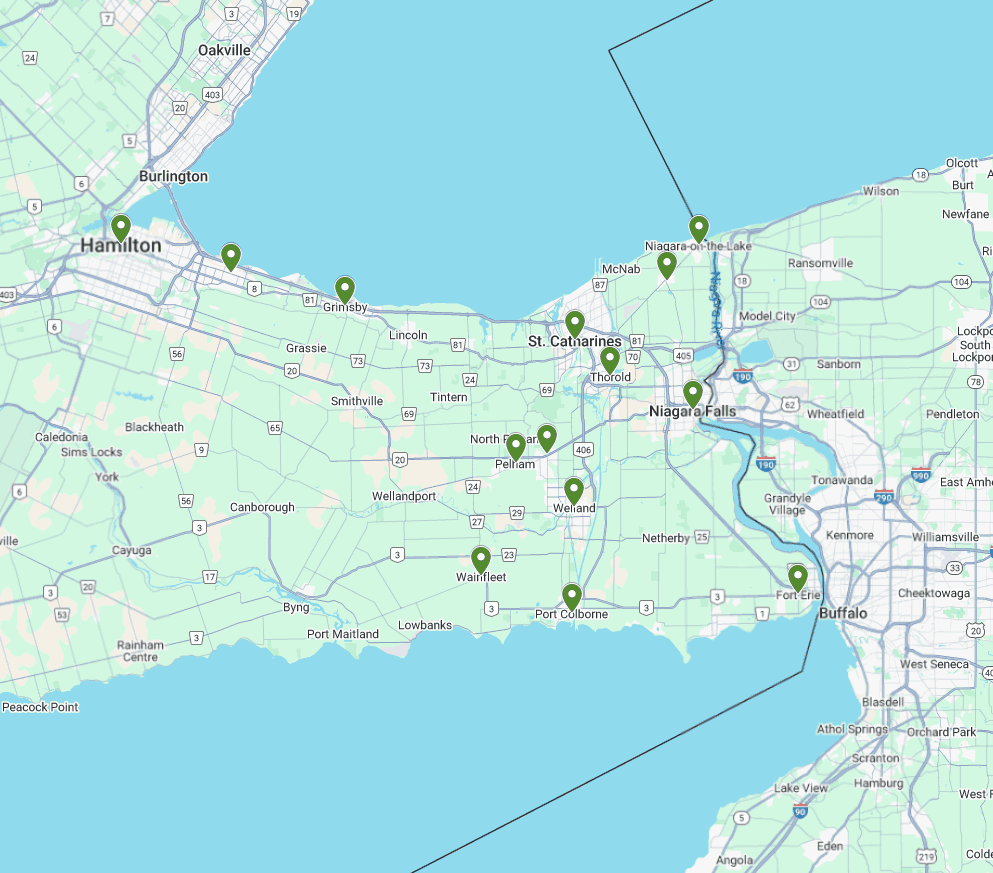
Our service areas encompass a wide range of locations, ensuring that we can meet the needs of our clients wherever they are. From bustling urban centers to serene rural landscapes, we are committed to providing top-notch services tailored to each unique environment.