



Water Heater in Niagara Falls, ON
Your hot water system is one of the most relied upon appliances in a Niagara Falls home. Whether you use hot water for showers, laundry, dishwashing, or radiant heating, interruptions or inefficiency can be disruptive and costly. Niagara heating provides expert information and service for both traditional hot water tanks and tankless water heaters in Niagara Falls, ON, covering installation, replacement, on site diagnostics and repairs, rental programs, and maintenance strategies designed for local conditions.
.png)
Why proper water heater service matters in Niagara Falls, ON
Niagara Falls homes face specific factors that affect water heater performance:
- Cold winters place higher demand on hot water and increase risk of freeze damage to exposed plumbing.
- Local water quality in the Niagara region tends to be moderately hard, which accelerates scale buildup inside tanks and on heat exchanger surfaces.
- Many older homes have limited mechanical room space, making compact or tankless solutions attractive.
- Energy costs and conservation priorities make efficient models and proper sizing important for year round comfort and budget control.
Understanding these realities helps homeowners choose the right system and maintenance strategy. Niagara heating brings local experience and practical recommendations tailored to Niagara Falls homes.
Types of systems we service: tank and tankless explained
Both tank and tankless systems have roles depending on household needs, installation constraints, and energy priorities.
Tank water heaters
- Store hot water in a pressurized insulated tank sized from 30 to 80 gallons (110 to 300 litres).
- Best for households with simultaneous high demand for hot water or where initial cost must be controlled.
- More susceptible to heat loss from standby storage and scale buildup in hard water areas.
- Typical useful life 8 to 12 years in hard water regions; properly maintained tanks can last longer.
Tankless (on demand) water heaters
- Heat water as it flows, eliminating standby heat loss and often reducing energy consumption.
- Compact footprint, good for homes with limited space or for point of use installations.
- Require proper sizing for peak flow (litres per minute) and may need upgrades to gas or electrical supply.
- Can last 15 to 20 years with maintenance; scale control is essential in Niagara Falls.
Other options
- Hybrid heat pump water heaters that move heat rather than create it electrically. Highly efficient but need space and favorable ambient conditions.
- Condensing tankless models that recover wasted heat from combustion for extra efficiency on gas systems.
Niagara heating evaluates your usage patterns, family size, and mechanical constraints to recommend the appropriate system type and model class.
Common water heater problems in Niagara Falls and what they mean
Recognizing symptoms early reduces the chance of an emergency replacement. Common problems we diagnose and repair include:
- Lukewarm or no hot water: could be a failed heating element, gas control valve issue, thermocouple problem, or undersized unit.
- Short hot water supply: sediment buildup reducing effective tank capacity or undersized unit for family demands.
- Frequent cycling or high energy bills: thermostat issues, inefficient burner, or excessive standby losses in older tanks.
- Strange noises from the tank: popping or rumbling typically indicate mineral accumulation and boiling pockets of water caused by scale and sediment.
- Leaks at tank base or fittings: corrosion of tank lining or failed connections; tank failures require replacement.
- Discolored or metallic-smelling hot water: early sign of corrosion or a deteriorating anode rod.
- Pilot light or ignition failures: gas supply, venting obstruction, or appliance control issues.
- Pressure relief valve dripping: excessive pressure or failed valve that needs attention for safety.
- Freeze damage to pipes or exposed units: seasonal concern for exterior-mounted or poorly insulated equipment.
These issues are common in Niagara Falls and often related to local water quality and cold temperatures. Timely diagnostics reduce repair cost and extend equipment life.
On site diagnostic process: how Niagara heating evaluates your hot water system
A thorough on site diagnostic ensures repairs and replacements are necessary and properly sized. Typical steps include:
- Visual inspection of the unit, venting, gas line or electrical connections, and surrounding piping for corrosion, leaks, and installation defects.
- Measurement of incoming water temperature, outgoing hot temperature, and recovery rate to calculate actual performance.
- Water hardness assessment and inspection for scale on accessible components.
- Combustion and draft analysis for gas units to confirm safe and efficient operation.
- Electrical testing of elements, thermostats, and controls for electric and hybrid units.
- Pressure relief valve testing and leak detection around fittings.
- For tankless units, flow testing at typical fixtures to confirm whether the unit can meet peak demand.
- Clear documentation of findings with repair options and replacement recommendations that consider local conditions and long term costs.
Diagnostics are a critical step before recommending repair or replacement. Niagara heating technicians follow a consistent process so homeowners understand the problem and available solutions.
Repair options and when replacement makes sense
Many water heater problems are repairable, but some conditions signal replacement as the more reliable choice.
Common repairs
- Replacing heating elements or thermostats in electric tanks.
- Replacing gas valves, thermocouples, burners, or ignitors in gas units.
- Replacing the sacrificial anode rod to slow tank corrosion.
- Flushing tanks to remove sediment and restore efficiency and recovery.
- Replacing pressure relief valves and inlet/outlet fittings.
- Repairing or replacing circulation pumps in systems with recirculation.
- Descaling or installing scale mitigation for tankless units to restore heat exchanger performance.
When to replace
- Visible tank corrosion or active leakage from the tank shell.
- Age beyond the expected service life (commonly 8 to 12 years for tanks in hard water areas; 15 to 20 years for tankless units).
- Repeated repairs within a short period, with repair costs approaching a significant portion of replacement cost.
- Need for a higher capacity or more efficient unit to meet changing household demands.
- Major component failure on older units where availability of parts is limited.
Replacement decisions should weigh upfront cost against long term energy savings, reliability, and the impact of local water quality. Niagara heating provides transparent assessments to help you choose the best path.
Installation and replacement considerations for Niagara Falls homes
Professional installation affects safety, efficiency, and warranty coverage. Key factors to consider:
- Proper sizing: match tank capacity or tankless flow rate to household peak demand (showers, laundry, dishwasher running simultaneously). Typical family flow requirements range from 20 to 50 litres per minute depending on fixtures and number of simultaneous uses.
- Venting and combustion air: gas units need correct venting and combustion air to operate safely in cold climates.
- Fuel type availability and conversion: gas versus electric supply, and whether service upgrades are necessary.
- Space constraints and clearances: many Niagara Falls basements are tight; tankless or compact tanks can be better for small mechanical rooms.
- Seismic and flood considerations: locating equipment above potential flood levels where relevant and protecting components from freezing.
- Compliance with local codes and permitting requirements.
- Warranty registration and documentation to preserve manufacturer coverage.
Niagara heating installs and replaces systems with code compliant practices and attention to long term performance specific to the Niagara Falls environment.
Rental programs for tanks and tankless units
Rental options provide flexibility for situations like emergency replacements, landlord properties, or temporary needs during renovations. Typical rental program features include:
- Short term or longer lease periods with exchange options if a unit fails.
- Rapid deployment of replacement tanks or compact tankless units to restore hot water quickly.
- Maintenance and service included in some rental agreements to keep units performing.
- Options for both electric and gas rental units based on site capability.
- Ideal for rental properties and commercial sites where downtime must be minimized.
A rental program can be a practical bridge while evaluating long term replacement options or when immediate hot water restoration is needed without making a permanent equipment decision.
Maintenance tips to extend the life of your water heater
Regular maintenance reduces breakdowns and extends lifespan, especially in hard water regions like Niagara Falls. Practical steps include:
- Annual flush for conventional tanks to remove sediment that reduces efficiency and accelerates corrosion.
- Inspect and replace the sacrificial anode rod every 1 to 3 years depending on water quality and rod condition.
- Check and test the temperature and pressure relief valve annually.
- Keep the thermostat at a safe, efficient setting, typically around 49 to 50 degrees Celsius for most homes to reduce scald risk and save energy.
- Insulate older tanks and the first metre of hot water piping to reduce standby heat loss.
- Install or maintain a water softener or scale control device if mineral buildup is significant.
- For tankless units, schedule professional descaling maintenance seasonally or as recommended by the manufacturer in areas with hard water.
- Ensure adequate ventilation and clearances and inspect gas and electrical connections for safety.
Consistent maintenance preserves efficiency, reduces emergency repairs, and helps you get the expected life from your equipment.
Energy efficient model recommendations for Niagara Falls homeowners
Choosing an energy efficient water heater depends on household needs and installation constraints. General guidance:
- Tankless water heaters reduce standby losses and can cut energy use for households with moderate continuous hot water demand. Ensure proper scale management.
- High efficiency condensing gas tankless units are among the most efficient gas options for homes with the appropriate venting and demand patterns.
- Heat pump water heaters offer excellent efficiency for homes with suitable basement space and year round ambient temperatures, though cold winter performance can be affected and may require backup heating.
- Modern storage tanks with high recovery rates, better insulation, and efficient burners can be a cost effective solution for large families with simultaneous peak demands.
- Consider whole system efficiency: insulating pipes, reducing hot water demand with low flow fixtures, and adjusting usage patterns have an immediate impact on energy bills.
Niagara heating evaluates home specific factors to recommend the equipment class that balances efficiency, reliability, and cost for Niagara Falls residents.
Emergency hot water solutions for Niagara Falls winters
Lost hot water in winter can create serious discomfort. Emergency solutions adapted to Niagara Falls conditions include:
- Temporary rental tanks or tankless units to restore hot water while a permanent decision is made.
- On site bypass and wiring solutions to isolate a failed unit and use a backup system.
- Rapid replacement options when a tank has irreparable failure or severe corrosion.
- Freeze mitigation measures for exposed systems, including insulating and re-routing piping where feasible.
Preparing now with proper maintenance and awareness of replacement thresholds minimizes emergency scenarios during cold months.
Choosing Niagara heating: local expertise and service values
Niagara heating brings local knowledge to every water heater job. Our approach aligns with customer expectations found across the Niagara region:
- We are a local business familiar with Niagara Falls climate, common plumbing layouts, and regional water chemistry, which informs our recommendations.
- Our technicians are trained to perform safe, code compliant installs and thorough diagnostics that identify root causes rather than surface symptoms.
- We prioritize honest, transparent assessments so you understand whether repair, rental, or replacement is the best investment for your home.
- Warranty and documentation practices are followed to protect your equipment and service history.
- Respect for your home environment means clean, organized installations and careful protection of indoor spaces during service.
Applying professional skill to practical local insight helps Niagara Falls homeowners make durable, cost effective decisions about their hot water systems.
Long term considerations and lifecycle planning
When planning for a new water heater, think in terms of 10 to 20 year horizons:
- Track maintenance records and anode rod changes to get the most life from tank systems.
- Factor in ongoing energy costs and likely savings from high efficiency models.
- Consider future home improvements, such as adding bathrooms or switching to higher efficiency boilers or heat pumps, which may change heating and hot water needs.
- Keep an eye on local incentives or rebate programs that sometimes offset the cost of high efficiency upgrades, and evaluate eligibility before finalizing equipment choice.
Planning with lifecycle costs in mind yields better long term value than focusing on upfront price alone.
FAQs
Q: How long does a hot water tank typically last in Niagara Falls, ON?
A: With average local water hardness and regular maintenance, conventional tanks last about 8 to 12 years. Neglected tanks in hard water conditions often fail earlier, while diligent maintenance and magnesium anode replacement can extend life.
Q: Is a tankless water heater the best choice for a large family?
A: Tankless units can be excellent, but they must be sized for peak simultaneous demand. Very large households or homes with multiple showers and appliances running at once may need multiple tankless units or a high capacity tank to avoid flow limitations.
Q: Can a leaking hot water tank be repaired?
A: Leaks from fittings, valves, and connections are often repairable. A leak from the tank shell itself usually means replacement is required because internal corrosion compromises the tank integrity and leaks will recur.
Q: What maintenance is most important to prevent early failure?
A: Annual tank flushing, regular anode rod inspections and replacement, and pressure relief valve checks are the top maintenance priorities. For tankless units, routine descaling is essential in Niagara Falls due to mineral content.
Q: Are rental water heaters a reliable alternative to buying?
A: Rentals are reliable for temporary or transitional needs, such as emergency replacement or when you prefer short term flexibility. Rental programs often include service and quick exchanges, which is practical for landlords or urgent winter situations.
Q: How should I size a water heater for my home?
A: Sizing depends on household hot water usage patterns. For tanks, consider first hour delivery ratings relative to peak demand. For tankless, calculate peak flow rate in litres per minute for simultaneous fixtures. A professional assessment provides accurate sizing.
Q: Can scale from hard water damage tankless units?
A: Yes, scale buildup reduces heat exchanger efficiency and can cause shutdowns. Regular descaling and installation of a whole home softener or scale mitigation devices greatly reduce risk.
Q: Are heat pump water heaters suitable for Niagara Falls winters?
A: Heat pump water heaters are efficient, but their performance can decline in very cold spaces. If installed in a heated basement with sufficient ambient temperature and ventilation, they can be a strong efficiency choice; otherwise, consider hybrid or backup heating.
Q: Will upgrading to a high efficiency unit reduce my energy bills significantly?
A: Upgrading can reduce energy use, but actual savings depend on your hot water usage, current equipment efficiency, and local energy rates. Efficiency gains are greater when combined with conservation measures like low flow fixtures and tank insulation.
Q: How quickly can an emergency hot water rental be installed in winter?
A: Installation time varies with access, venting and fuel type, but rental programs and emergency services aim to restore hot water expediently. Properly sized and prepared rentals are commonly deployed quickly to minimize disruption.
Common water heater services and issues
- Installation: new hot water tank, tankless on-demand systems, hybrid/heat pump water heaters, and commercial-grade systems tailored to usage patterns.
- Repair: leaks, no hot water, insufficient heating, strange noises, pilot or ignition failures on gas units, and electrical or element failures on electric tanks.
- Rental options: short-term or long-term rentals for hot water tanks and tankless units useful during emergency replacement, renovations, or while awaiting funding/approval.
- Diagnostics and emergency repair: rapid troubleshooting for leaks, no hot water, gas smells, or pressure relief valve failures; includes safety checks for gas ventilation and carbon monoxide risk.
- Preventive maintenance: flushing, anode rod inspection, element testing, and descaling tankless units to prevent efficiency loss and prolong life.
How technicians diagnose water heater problems
A systematic diagnostic approach ensures accurate repair and helps determine whether replacement is advisable:
- Visual and safety inspection: check for leaks, corrosion, proper venting (for gas units), and signs of combustion issues or CO risk.
- Performance testing: measure outlet temperature, cycle behavior, and recovery time for tanks; confirm flow rate and temperature rise for tankless units.
- Component checks: test thermostats, heating elements, gas valves, thermocouples, pressure relief valves, and sacrificial anode rods.
- Water quality assessment: evaluate scale buildup or sediment that can impair heat transfer and clog components important in areas with hard water.
- Recommendation: repairable components are identified and estimated life expectancy is provided so you can weigh repair vs replacement options.
Tank vs tankless vs hybrid: efficiency and lifespan
- Hot water tanks (storage): lower upfront cost, simple installation, best for households with predictable, simultaneous hot water needs. Typical lifespan 8 to 12 years. Standby heat loss occurs while water sits in the tank.
- Tankless (on-demand): heat water only when needed, reducing standby losses and often lowering energy bills. Lifespan commonly 15 to 20+ years with proper maintenance. Performance is affected by inlet water temperature—winter conditions in Niagara may require larger units or multiple units to maintain flow at high temperature rises.
- Hybrid/heat pump water heaters: highly efficient electric option by moving heat rather than creating it. Best in spaces with moderate ambient temps and sufficient room for airflow. Cold basement temperatures in winter can reduce efficiency, so placement matters.
Energy trade-offs: tankless units save energy over time but cost more initially and require periodic descaling in hard-water areas. Tanks are simpler to maintain but lose energy through standby heat.
Selecting the right capacity and system type
- For tanks: use the First Hour Rating (FHR) as a guide. Typical recommendations:
- 1-2 people: 30–40 gallon
- 2-4 people: 40–50 gallon
- 4+ people: 50–80+ gallon depending on simultaneous use
- For tankless: size by required flow rate (GPM) and temperature rise. Example flow rates:
- Single shower: 1.5–2.5 GPM
- Shower + sink: 3.0–4.0 GPM
- Two showers + dishwasher: 5.0+ GPM
Determine temperature rise by subtracting local inlet water temp (often near 5–10 C in winter) from desired output (typically 49–60 C). Choose a unit with sufficient GPM at that temperature rise; in Niagara’s cold months, you may need a higher-capacity unit or two units in parallel.
- For commercial or multi-family: consider storage tanks with high recovery or multiple tankless modules staged for peak demand. Hot water management and redundancy matter for business continuity.
Recommended maintenance to extend life and efficiency
- Tanks: flush the tank annually to remove sediment that reduces heat transfer and can cause corrosion. Inspect and replace the sacrificial anode rod every 3–5 years or sooner if heavily corroded. Test the temperature and pressure relief (T&P) valve yearly.
- Tankless: descale and clean the heat exchanger at least once a year in hard-water areas; frequency may be every 6–12 months depending on mineral content. Clean air intake and venting, and inspect ignition components.
- All systems: check combustion air and venting on gas units, verify thermostat accuracy, inspect for leaks, and confirm safe pressure settings. Consider a water softener or scale inhibitor if hard water is present to reduce maintenance and prolong equipment life.
Safety and signs you should not ignore
- Persistent leaks or pooling water around the base of a tank
- No hot water or intermittent heating
- Strange noises: popping or rumbling in tanks often indicates sediment buildup
- Gas smell or soot/blackening around a gas water heater
- Tripping breakers or blown fuses related to electric heaters
- T&P valve discharging frequently or at high volumes
Any of these point to immediate attention; they can indicate safety hazards or impending failure.
Long-term benefits of timely replacement and maintenance
Choosing the right system and keeping it maintained saves on energy costs, reduces emergency failures, and provides predictable hot water for your household or business. In Niagara Region homes where winters are cold and water may be hard, properly sized equipment and regular descaling or water conditioning are key to maximizing performance and lifespan. Upgrading to a more efficient system tankless or heat pump can lower operating costs, but sizing and installation must account for local inlet temperatures and space constraints.
Conclusion
Selecting and maintaining the right water heater for Niagara Falls and the surrounding communities is a balance of capacity, efficiency, and local conditions. Understanding the differences between tanks, tankless, and hybrid systems; recognizing common failure signs; and following a simple maintenance schedule will help you get reliable hot water while minimizing energy use and repair risks.

Customer Testimonials

Lifesavers!! The AC in our house decided to quit the day we were passing the keys to the new owners!! Instead of making a service call to the house, John coached me through the minor repair over the phone, saving me the money and time waiting for a repair person to come.Much appreciated! Thanks again John

We had an amazing experience getting our new furnace installed with Niagara Home Heating. The owner was very helpful, their quote was more then competitive and the technician who installed the unit was professional and friendly. I would recommend their services.
Very efficient company. I needed an old solar water heater removed from my roof. They were quick to book an appointment for the next day after I sent photos. They were very knowledgeable of the issue. The 2 guys that came were friendly and competent with the job, including removal of all parts.
I have used Niagara Home heating for multiple projects for over 16 years. John and his staff are absolutely the best. I tell all my friends and family about Niagara Home Heating because you won’t get any better service or pricing anywhere in Niagara. He has saved me thousands and thousands of dollars and has never let me down.
I had an issue with my hot water tank and called Niagara Home Heating. Their service was fantastic and reasonably priced—exactly how a business should be run!
I called John today at 2:pm as my AC was not working and I wasn’t expecting even a call back as I knew with this hot weather we have had he would be swamped with calls. Well he called me back and showed at 8:pm on the same day to fix my AC. That is just incredible service and how much John really cares about his clients. Thank you John !

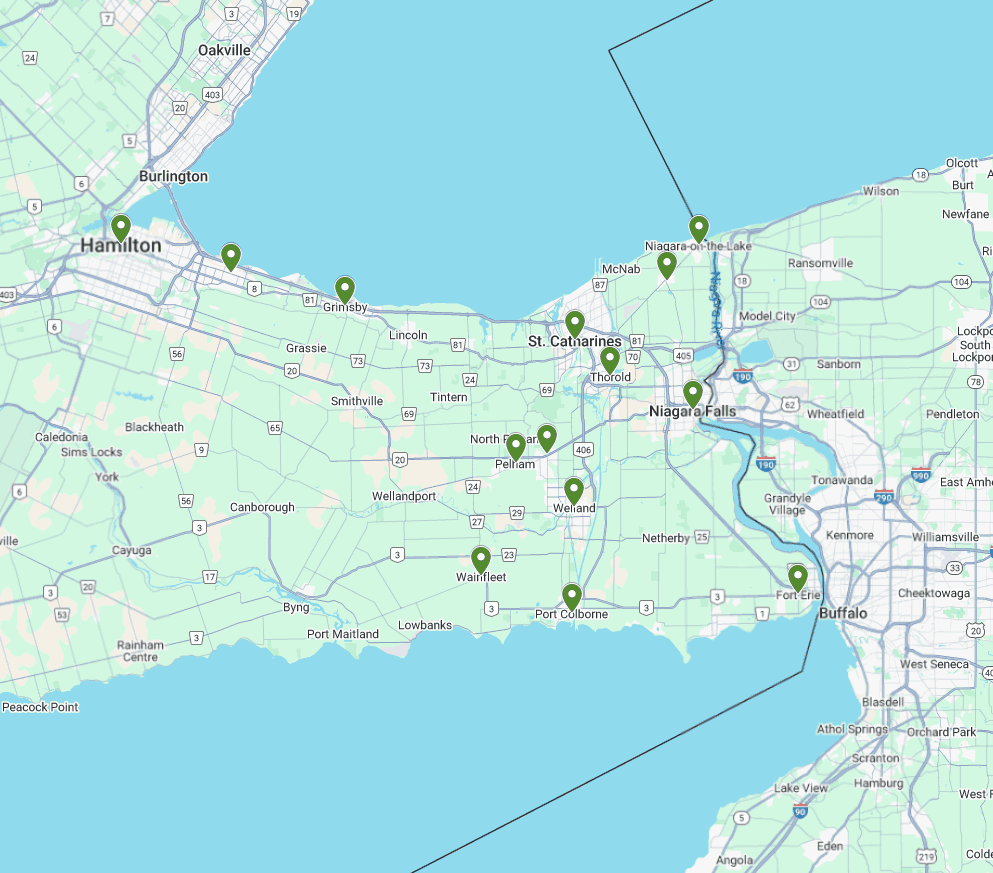
Service Areas
Our service areas encompass a wide range of locations, ensuring that we can meet the needs of our clients wherever they are. From bustling urban centers to serene rural landscapes, we are committed to providing top-notch services tailored to each unique environment.