



Is Your Aging Heating System Ready for a Niagara Winter?
When you are looking for reliable home maintenance tips and troubleshooting, the most critical issue to address is whether your aging heating equipment can survive another harsh winter. Your furnace might still turn on, but if the air coming out of the vents feels lukewarm or the system runs constantly without reaching the target temperature, you have a concrete problem on your hands. Impending freezing temperatures place immense stress on residential heating systems, forcing a difficult decision: do you schedule pre-season maintenance to limp an old furnace through one more season, or is it time to invest in a high-efficiency upgrade?
Making this decision early prevents emergency breakdowns during extreme cold snaps. By evaluating your equipment now, you can weigh the costs of ongoing repairs against the long-term reliability of a modern system. If you need expert guidance on navigating this choice, explore our home heating solutions.
How Lake-Effect Climate Accelerates Heating System Wear
The local climate plays a massive role in how quickly your furnace degrades. High indoor humidity combined with damp, cold outdoor air forces heating equipment to work much harder to maintain perceived comfort. In a dry cold, achieving a comfortable indoor temperature is relatively straightforward. However, the unique operational strain caused by Niagara's lake-effect precipitation and winter dampness means the air feels heavier and colder, prompting you to bump up the thermostat and keep the system running longer.
This constant operation takes a toll. Rapid, severe temperature drops place significant thermal stress on aging heat exchangers and flues. As the metal repeatedly heats up and cools down, it expands and contracts, eventually leading to microscopic cracks or structural fatigue.
Furthermore, homes in older residential neighborhoods in Niagara Falls often have aging ductwork or less efficient insulation. These architectural factors compound the workload on the furnace. The system has to push conditioned air through unsealed or poorly designed ducts, losing heat along the way. When your furnace operates in these challenging environmental conditions year after year, the expected lifespan of the internal components naturally decreases, making proactive evaluation absolutely vital.
Safe Home Heating Troubleshooting Steps
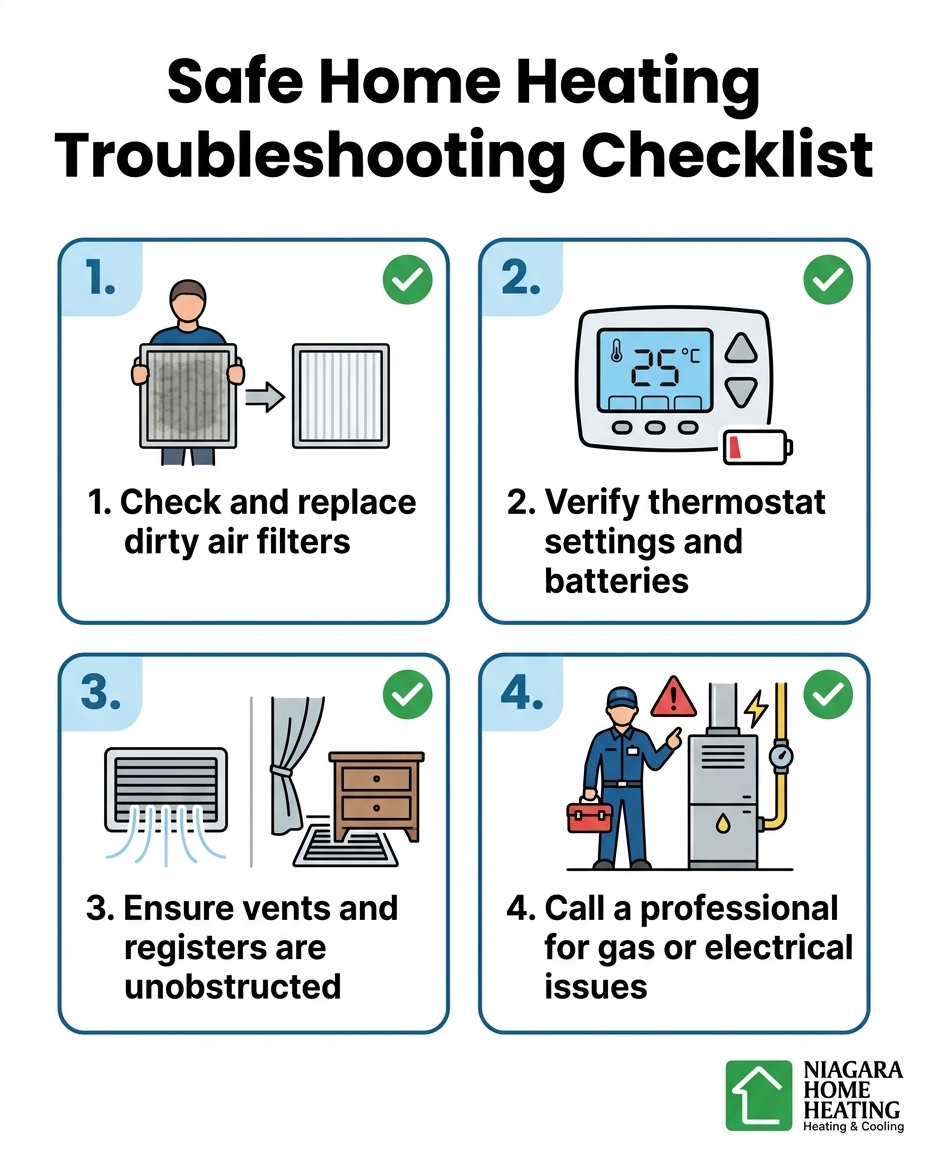
Before you call a professional, there are several safe, homeowner-level diagnostic steps you can perform. Walking through this checklist can sometimes resolve minor issues immediately.
1. Check and replace dirty air filters: A clogged filter restricts airflow, causing the heat exchanger to overheat and trigger a safety shutdown. Replacing dirty filters is the single most important step for maintaining efficiency and preventing premature failure.
2. Verify thermostat settings and power: Ensure the thermostat is set to "Heat" and the fan is set to "Auto." If the screen is blank or unresponsive, replace the batteries before assuming the furnace is broken.
3. Inspect household vents and registers: Walk through every room to ensure all supply and return vents are fully open. Move any furniture, heavy drapes, or thick rugs that might be blocking the airflow, as obstructed vents increase static pressure inside the ductwork.
4. Check the breaker panel: Sometimes a power surge or an overloaded circuit will trip the breaker dedicated to your furnace. A simple reset might restore power to the unit.
The hard limit on DIY repairs: Never attempt DIY diagnostics on gas lines, heat exchangers, or complex internal electrical components. Opening the sealed combustion chamber or tampering with gas valves poses severe safety risks, including carbon monoxide exposure and fire hazards. Always defer to licensed professionals for internal mechanical repairs.
Recognizing the Warning Signs of a Failing Furnace
Even with diligent filter changes, an aging furnace will eventually show signs of mechanical failure. Learning to recognize these symptoms early allows you to address the root cause before the system breaks down completely.
Abnormal operational sounds: A healthy furnace operates with a steady, predictable hum. If you hear loud banging when the system turns on, it usually indicates a delayed ignition—a dangerous condition where gas builds up before igniting. Rattling sounds often point to loose panels or failing blower motor bearings, while a high-pitched squealing usually means a worn-out fan belt or an unlubricated motor.
Short cycling behavior: Short cycling happens when the furnace turns on, runs for only a minute or two, and shuts off rapidly without actually heating the home. This constant stopping and starting places immense strain on the motor and causes energy bills to spike. One local homeowner reached out on the coldest day of the year because their furnace was constantly short cycling—an oddball problem that kept the house freezing. Technicians stayed longer than required to trace the electrical fault and ensure the problem was fully resolved.
Uneven heating and cold spots: If your living room is sweltering but the bedrooms remain frigid, your aging unit is likely losing its heating capacity. As blower motors weaken and heat exchangers degrade, the system loses the power required to push warm air evenly to the furthest corners of the house. This symptom strongly indicates that the equipment is nearing the end of its functional life.
The Repair vs. Replace Decision Matrix
When a technician diagnoses a major issue, you face a critical choice: pay for the repair or invest in a new system. Using clear, non-technical criteria helps you make a logical decision rather than an emotional one.
• System Age — Lean Toward Repair If...: The unit is under 10 years old. — Lean Toward Replace If...: The unit is 15-20+ years old.
• Repair Frequency — Lean Toward Repair If...: This is the first minor issue in years. — Lean Toward Replace If...: You need multiple service calls per season.
• Energy Efficiency — Lean Toward Repair If...: Utility bills remain stable and predictable. — Lean Toward Replace If...: Heating costs are rising despite regular maintenance.
• Overall Reliability — Lean Toward Repair If...: The system keeps the whole house comfortable. — Lean Toward Replace If...: You worry about it failing during every cold snap.
Age is the primary baseline. Most conventional furnaces have an expected lifespan of 15 to 20 years. If your unit is approaching this threshold, replacement parts become harder to source, and the core components are simply worn out. You must also consider the frequency of recent repairs. If a system requires multiple service calls per season, replacement is almost always the more viable long-term strategy.
Another major factor is the availability of generic provincial or federal energy rebates. These utility incentives can significantly offset the initial investment of upgrading to a modern, high-efficiency system, changing the math in favor of replacement. A trusted local HVAC provider will offer honest assessments and help you navigate these options rather than pushing unnecessary replacements.
Ultimately, you are factoring in the peace of mind of having reliable heat during extreme weather events. Another family experienced an unexpected breakdown on a freezing Sunday. Rather than pouring money into an aging unit, they chose to upgrade, and a new furnace, air conditioner, and water tank were replaced the very next day to restore heat. If you are weighing your options, learn more about finding the best furnace value for your specific home.
Exploring High-Efficiency Heating Alternatives
If you decide that replacing your aging equipment is the smartest move, you have access to modern heating technology that operates far more efficiently than systems built just a decade ago. Upgrading is not just about replacing like-for-like; it is an opportunity to improve your home's overall comfort profile.
Modern Condensing Furnaces: Older furnaces often wasted up to 20% of their heat energy straight out the exhaust flue. Today's high-efficiency condensing furnaces capture that exhaust heat through a secondary heat exchanger, operating at 96% efficiency or higher. This means almost all the energy consumed goes directly into warming your home.
Advanced Heat Pump Technology: Introduce modern high-efficiency heat pumps as a versatile, energy-saving option. While older heat pumps struggled in freezing temperatures, modern cold-climate models extract ambient heat from the outdoor air even well below freezing. They provide both heating in the winter and cooling in the summer, making them an excellent all-in-one solution.
Hydronic Heating Systems: If your home utilizes radiant heating through baseboards or in-floor piping, upgrading to modern residential boilers offers incredible benefits. New boilers modulate their energy output based on exact demand, providing a consistent, gentle heat without the drafts associated with forced-air systems.
The Role of Professional Installation
Selecting top-tier equipment is only half the battle. Even the best heating system will severely underperform if it is not installed correctly. Proper installation requires a comprehensive ductwork evaluation to ensure the existing channels can handle the airflow of the new unit. Technicians must also perform precise system calibration, adjusting blower speeds and manifold pressures to match your specific home layout. Skipping these steps leads to short cycling, uneven heating, and premature component failure.
Why Timing Your Pre-Season Maintenance Matters
Whether you choose to maintain your current furnace or install a new one, timing is everything. Scheduling this work in late autumn before the first major lake-effect snow hits ensures you are prepared for the worst weather. Waiting until the first deep freeze guarantees longer wait times for service, as HVAC companies are flooded with emergency no-heat calls.
A comprehensive professional maintenance visit goes far beyond a simple filter change. A licensed technician will clean the flame sensors to prevent ignition failures, check the exhaust flues for dangerous blockages, and test all internal safety switches. They will also inspect the heat exchanger for microscopic cracks that could leak carbon monoxide into your living space.
Our commitment to fast, reliable service means we prioritize your safety, ensuring homeowners are never left in the cold during a storm. Taking proactive steps now grants you the peace of mind that comes from knowing the system is fully prepped for heavy winter usage. If you are ready to upgrade, scheduling your professional HVAC installation early guarantees your home stays warm all season long.
Frequently Asked Questions About Home Heating
How do you troubleshoot a home heating system safely?
The safest approach is to stick to external checks like replacing the air filter and verifying thermostat settings. You should also ensure that all household vents are open and that the circuit breaker hasn't tripped. Never open the furnace cabinet to inspect gas valves or electrical relays, as these require specialized tools and licensing to handle safely.
What is routine maintenance for a furnace?
Routine maintenance involves a comprehensive safety and performance inspection by a licensed technician. This process includes cleaning the flame sensor, testing the ignition system, lubricating moving parts like the blower motor, and inspecting the heat exchanger for cracks. Regular maintenance ensures the system runs efficiently and catches minor wear before it causes a breakdown.
Why is my heater running but not producing heat?
A heater running without producing warm air usually points to restricted airflow or a failed ignition sequence. A severely clogged air filter can trap heat inside the unit, causing the limit switch to shut off the burners while the fan keeps running. Alternatively, a dirty flame sensor or a faulty gas valve might be preventing the system from generating heat in the first place.
How do I know if my aging heating system needs replacing?
You should consider replacement if your furnace is over 15 years old and requires frequent, costly repairs. Other strong indicators include steadily rising energy bills, loud mechanical noises, and an inability to keep the house evenly warm. If the cost of a single repair approaches half the value of a new system, upgrading is generally the smarter financial choice.
Can high winter humidity affect my furnace's performance?
Yes, high winter humidity makes the indoor air feel colder and heavier, forcing your furnace to run longer cycles to achieve comfort. This extended operation accelerates wear and tear on moving parts and heat exchangers. Managing indoor humidity levels can actually help your heating system operate more efficiently and extend its lifespan.
What heating troubleshooting should I never attempt myself?
You must never attempt to repair gas lines, adjust manifold pressures, or splice internal electrical wiring. Troubleshooting the sealed combustion chamber or bypassing safety limit switches can lead to catastrophic failures, carbon monoxide leaks, or fires. Always leave internal mechanical and electrical diagnostics to a certified HVAC professional.
Make the Right Choice for Your Winter Comfort
Evaluating your aging equipment before the bitter cold sets in is the most effective way to protect your home this season. Whether your system just needs a thorough tune-up to improve airflow or it is finally time to explore a high-efficiency replacement, ignoring the warning signs will only lead to stressful emergency breakdowns. Reach out for a professional assessment to determine the best path forward. By relying on a clear, regionally-aware set of criteria for evaluating your heating system's reliability, you are empowered to make an informed decision without relying on dangerous DIY diagnostics.
.png)

Customer Testimonials

Very efficient company. I needed an old solar water heater removed from my roof. They were quick to book an appointment for the next day after I sent photos. They were very knowledgeable of the issue. The 2 guys that came were friendly and competent with the job, including removal of all parts.

We had an amazing experience getting our new furnace installed with Niagara Home Heating. The owner was very helpful, their quote was more then competitive and the technician who installed the unit was professional and friendly. I would recommend their services.
I had an issue with my hot water tank and called Niagara Home Heating. Their service was fantastic and reasonably priced—exactly how a business should be run!
I have used Niagara Home heating for multiple projects for over 16 years. John and his staff are absolutely the best. I tell all my friends and family about Niagara Home Heating because you won’t get any better service or pricing anywhere in Niagara. He has saved me thousands and thousands of dollars and has never let me down.
Lifesavers!! The AC in our house decided to quit the day we were passing the keys to the new owners!! Instead of making a service call to the house, John coached me through the minor repair over the phone, saving me the money and time waiting for a repair person to come.Much appreciated! Thanks again John
I called John today at 2:pm as my AC was not working and I wasn’t expecting even a call back as I knew with this hot weather we have had he would be swamped with calls. Well he called me back and showed at 8:pm on the same day to fix my AC. That is just incredible service and how much John really cares about his clients. Thank you John !

Service Areas
Our service areas encompass a wide range of locations, ensuring that we can meet the needs of our clients wherever they are. From bustling urban centers to serene rural landscapes, we are committed to providing top-notch services tailored to each unique environment.