



Professional heat pump installation in Hamilton, ON follows a rigorous, Hamilton-specific process from initial consultation to post-installation warranty and rebates. It emphasizes precise load calculations, proper site preparation, and code-compliant electrical and refrigerant work. The approach covers equipment selection, permits, commissioning, performance testing, and clear handover with maintenance guidance. By addressing local climate, moisture, corrosion risks, and noise considerations, the service ensures reliable heating in winter and efficient cooling in summer with long-term efficiency benefits.
.jpeg)
Heat Pump installation in Hamilton, ON
Hamilton homeowners choosing a heat pump want reliable heating through cold winters and efficient cooling in humid summers. A professional Heat Pump installation in Hamilton, ON protects comfort, lowers energy bills, and ensures the system performs as promised. It describes the full installation process — from the initial consultation and equipment selection to permitting, commissioning, and rebate or financing assistance — with specific considerations for Hamilton’s climate and homes.
Why a proper installation matters in Hamilton homes
Hamilton’s winters can be long and cold, and proximity to Lake Ontario brings humidity and seasonal temperature swings. A correctly sized and installed heat pump:
- Maintains comfortable indoor temperatures down to lower outdoor temperatures
- Reduces energy use compared with legacy electric resistance systems
- Prevents common issues like poor defrost performance, short cycling, or inadequate airflow
- Stands up to local conditions (moisture, freeze/thaw cycles, and coastal corrosion in waterfront areas) when installed with appropriate materials and coatings
Types of heat pump installations we commonly handle
Ducted air-source heat pumps integrated with existing ducts for whole-home heating and cooling
Ductless (mini-split) systems for additions, older homes without ducts, or room-by-room control
Cold-climate heat pumps engineered for better low-temperature performance in Hamilton winters
Hybrid systems that pair a heat pump with a gas or electric furnace for peak cold-weather efficiency
Initial consultation and system selection
- Comprehensive home assessment and load calculation: a qualified installer performs a Manual J-style sizing to determine the correct capacity. This avoids oversized or undersized equipment that causes inefficiency and discomfort.
- Site evaluation: roof load, available outdoor space, noise concerns, and routing for line sets or ducts are reviewed.
- Equipment selection: recommendations balance seasonal efficiency (SEER/HSPF), capacity, warranty, and Hamilton-specific needs like low-ambient performance and corrosion-resistant outdoor coils.
- Financing and rebate review: installers typically review available federal or provincial incentives, utility rebates, and financing options that homeowners in Hamilton may qualify for and can assist with documentation.
Permits, code compliance and inspections
- Local building permits and compliance with the Ontario Building Code are required for many installations. Electrical work typically falls under Electrical Safety Authority (ESA) regulations and may require inspection or notification.
- Proper permit handling ensures installations meet safety and energy code requirements, and it preserves eligibility for rebates and warranty coverage.
- Documentation provided after installation includes permit sign-offs, equipment model and serial numbers, and commissioning records.
Site preparation and equipment placement
- Outdoor unit placement: locations are chosen for adequate airflow, service access, minimal noise impact to neighbors, and protection from snow accumulation. Concrete or anti-vibration pads are commonly used.
- Corrosion protection: in areas near the lake or on busy roads, installers may specify protective coatings or elevated placement to reduce salt or moisture exposure.
- Ductwork considerations for ducted installs: existing duct integrity is checked and leakage sealed where needed; static pressure and airflow pathways are assessed to match the new equipment.
- Mounting considerations for ductless: recommended indoor head locations maximize distribution while minimizing line-set lengths and visual impact. Condensate drain routing and insulation are planned to avoid icing and leaks.
Electrical hookups and refrigerant work
- Electrical: heat pumps require dedicated circuits, correct breaker sizing, and a local disconnect as required by code. Wiring, conduit, and grounding are installed to code and inspected when necessary.
- Refrigerant: line sets are properly sized, brazed, pressure-tested, and evacuated. Refrigerant charging may be weight-based or by superheat/subcooling methods depending on manufacturer specifications and install conditions.
- Safety: all refrigerant handling follows environmental regulations and best practices to prevent leaks and ensure long-term reliability.
Commissioning and performance testing
- Leak test and vacuum: the refrigerant circuit is leak-checked and evacuated to the required vacuum level before charging.
- System charge and calibration: refrigerant charging and adjustments ensure the system runs at rated capacity and efficiency.
- Controls and thermostat setup: thermostats and control strategies (including auxiliary heat staging or hybrid control) are programmed for real-world performance.
- Performance testing: airflow, supply/return temperatures, amperage draw, and defrost cycles are verified. Cold-weather testing ensures the system maintains capacity at lower ambient temperatures.
- Documentation: installers record readings and provide a commissioning report showing that the system meets manufacturer and code performance criteria.
Customer walkthrough and handover
- Operation overview: homeowners receive a clear, non-technical explanation of system operation, control options, and seasonal behavior (for example, why defrost cycles occur).
- Maintenance guidance: simple, practical instructions for filter changes, outdoor-unit clearance, and when to schedule professional maintenance.
- Warranty and paperwork: installers provide warranty registration information and copies of permits and inspection records, along with any rebate or financing paperwork prepared during the process.
Common installation issues and how they are prevented
- Incorrect sizing: prevented by a formal load calculation rather than rule-of-thumb sizing.
- Poor airflow or duct mismatch: resolved through duct testing and sealing, or by recommending duct modifications.
- Inadequate line-set routing or insulation leading to freezing: addressed during site planning with properly insulated and routed lines and heat tape where required.
- Electrical undersizing: avoided by pre-installation electrical assessments and coordination with ESA requirements.
Financing and rebate assistance for Hamilton homeowners
- Many homeowners qualify for federal or provincial programs and utility rebates that offset installation costs. Installers typically help gather manufacturer specifications, energy performance documentation, and completed permit forms required by rebate programs.
- Financing options may be available through third-party lenders or local programs designed to spread the cost of high-efficiency home upgrades.
Long-term benefits and maintenance advice
- When properly installed and commissioned, a heat pump delivers consistent comfort, lower operating costs, and reduced carbon footprint — benefits that are especially meaningful in Hamilton’s climate.
- Ongoing maintenance preserves efficiency: regular filter changes, annual professional tune-ups, outdoor-coil cleaning, and timely repairs keep performance high and extend equipment life.
- Consider a maintenance agreement that includes seasonal checks of defrosting performance, refrigerant levels, and electrical safety for dependable year-round operation.
A professionally managed Heat Pump installation in Hamilton, ON follows a clear process: precise sizing and system selection, careful site preparation, code-compliant electrical and refrigerant work, thorough commissioning, and complete documentation for permits and rebates. Addressing Hamilton-specific conditions during planning and installation ensures the system performs reliably throughout cold winters and humid summers.

Customer Testimonials

I called John today at 2:pm as my AC was not working and I wasn’t expecting even a call back as I knew with this hot weather we have had he would be swamped with calls. Well he called me back and showed at 8:pm on the same day to fix my AC. That is just incredible service and how much John really cares about his clients. Thank you John !

I have used Niagara Home heating for multiple projects for over 16 years. John and his staff are absolutely the best. I tell all my friends and family about Niagara Home Heating because you won’t get any better service or pricing anywhere in Niagara. He has saved me thousands and thousands of dollars and has never let me down.
Very efficient company. I needed an old solar water heater removed from my roof. They were quick to book an appointment for the next day after I sent photos. They were very knowledgeable of the issue. The 2 guys that came were friendly and competent with the job, including removal of all parts.
Lifesavers!! The AC in our house decided to quit the day we were passing the keys to the new owners!! Instead of making a service call to the house, John coached me through the minor repair over the phone, saving me the money and time waiting for a repair person to come.Much appreciated! Thanks again John
I had an issue with my hot water tank and called Niagara Home Heating. Their service was fantastic and reasonably priced—exactly how a business should be run!
We had an amazing experience getting our new furnace installed with Niagara Home Heating. The owner was very helpful, their quote was more then competitive and the technician who installed the unit was professional and friendly. I would recommend their services.

Service Areas
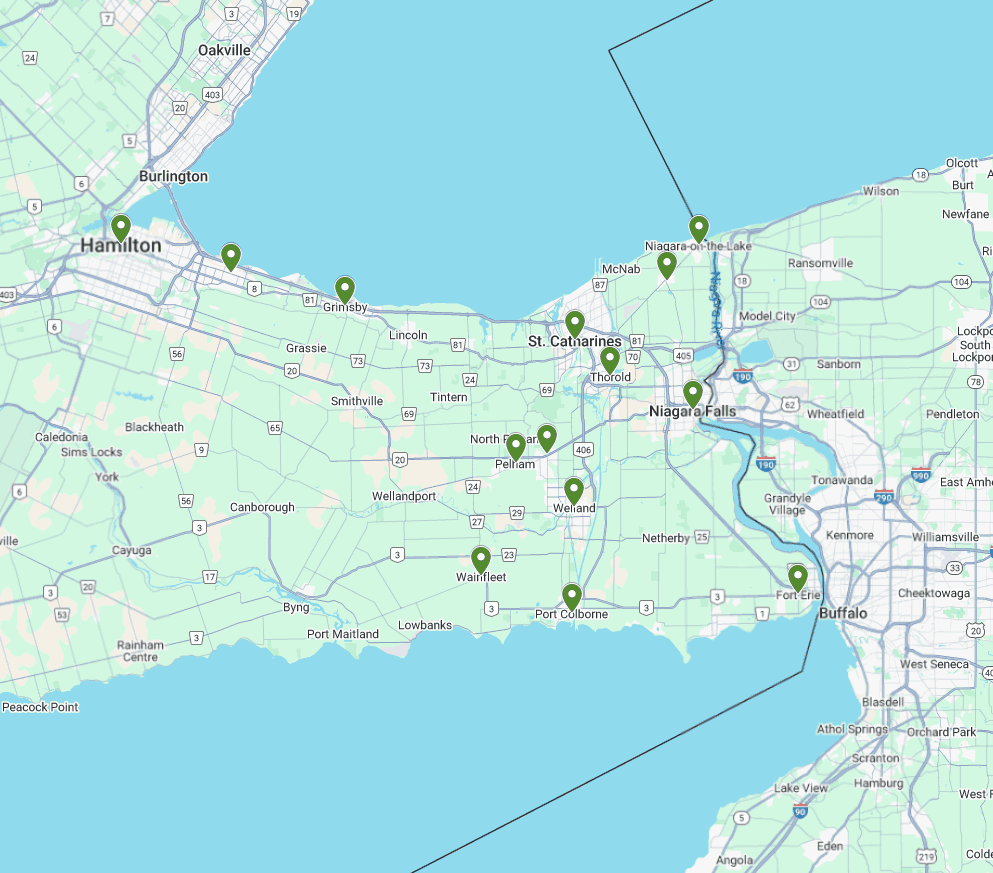
Our service areas encompass a wide range of locations, ensuring that we can meet the needs of our clients wherever they are. From bustling urban centers to serene rural landscapes, we are committed to providing top-notch services tailored to each unique environment.