



Port Colborne residents receive focused guidance on diagnosing and repairing heat pumps. The guide outlines common symptoms, likely causes, and a systematic diagnostic process, from visual checks to refrigerant evaluation. It details common parts and labor factors, emergency options, and realistic repair timelines and cost drivers. Practical preventive tips tailored to Port Colborne conditions help minimize future breakdowns, while explanations of safety, warranty considerations, and the value of timely repairs emphasize maintaining comfort and system efficiency.
.jpeg)
Heat Pump repair in Port Colborne, ON
A malfunctioning heat pump disrupts comfort and raises energy bills fast. In Port Colborne homes, where humid summers and cold, lake-influenced winters place extra strain on HVAC equipment, timely heat pump repair preserves efficiency, prevents secondary damage, and keeps your house comfortable year-round. It describes common symptoms and causes, the diagnostic and repair process, typical parts and labor considerations, emergency response options, expected repair timelines, cost factors, and preventive tips tailored to Port Colborne conditions.
Common heat pump symptoms and likely causes
Knowing the symptoms helps prioritize repairs and understand likely fixes.
- No cooling or no heating
- Causes: failed compressor, low refrigerant due to leak, faulty reversing valve, broken defrost control, or thermostat issues.
- Strange noises (clanking, grinding, hissing)
- Causes: loose fan or motor bearings, failing compressor, refrigerant leak, or debris contacting the coil or fan.
- Short-cycling (system turns on and off frequently)
- Causes: refrigerant imbalance, faulty control board or thermostat, oversized system, or electrical faults.
- Reduced airflow or weak heating/cooling
- Causes: clogged air filters, blocked outdoor unit, failing blower motor, or duct problems.
- Outdoor unit icing or frequent defrost cycles
- Causes: refrigerant issues, defective defrost sensor or control, poor airflow, or persistent wet/humid conditions.
- High electric bills with little temperature change
- Causes: inefficient compressor operation, low refrigerant, worn components, or bad controls.
Diagnostic and troubleshooting process
A professional diagnostic narrows down the issue quickly and avoids unnecessary parts replacement. Typical steps include:
Visual inspection
- Check outdoor unit for physical damage, debris, corrosion from lake salt, ice accumulation, and indoor cabinet for blockages.
Electrical checks
- Verify voltage, capacitor condition, contactor and relays, and control board signals.
Thermostat and control verification
- Confirm settings, call for heat/cool, and test sensors and safety switches.
Refrigerant system evaluation
- Measure pressures, check for leaks, and assess refrigerant charge and oil condition.
Airflow and duct inspection
- Evaluate blower performance, filter status, duct leaks or restrictions.
Functional test
- Run system through heating and cooling cycles and monitor defrost behavior, starting currents, and temperature lift.
Technicians document findings, explain the root cause, and recommend repair or replacement options based on system age, efficiency, and long-term value.
Typical parts and labor considerations
Common parts that may be replaced during repairs:
- Capacitors and contactors
- Fan motor or blower motor
- Reversing valve
- Compressor (repair or replace)
- Defrost control board or sensors
- Expansion device or metering components
- Refrigerant lines and leak repair materials
- Thermostat or control board
Labor considerations include:
- Diagnostic time to isolate the fault
- Access complexity (tight mechanical rooms or multi-level units)
- Time to recover, repair, evacuate, and recharge refrigerant safely
- Coordination for parts that require ordering or manufacturer-specific components
- Ensuring compliance with provincial regulations for refrigerant handling and system alterationsWarranty status and equipment age also affect the repair path. Older units may justify repair of minor components but may be better served by replacement if multiple major parts are failing.
Emergency response options and safety steps
Heat pump failures can leave homes uncomfortably hot or cold. Emergency response options typically include:
- Same-day service for safety-related failures or extreme comfort loss
- After-hours or priority appointments for severe heating loss in winter
- Temporary measures such as switching to auxiliary heat or safely isolating a leaking component until a permanent repair can be completed
Safety precautions homeowners should follow while waiting for service:
- Turn off the system if you smell refrigerant or suspect an electrical fault
- Do not attempt to open refrigerant lines or repair electrical components yourself
- Clear snow, ice, and debris away from the outdoor unit, but avoid chipping ice off the unit
- Keep pets and children away from the outdoor unit if it is making unusual noises
Expected repair times and cost factors
Repair times vary by the issue:
- Diagnostic visit and minor fixes (capacitor, contactor, thermostat) typically take 1 to 3 hours.
- Moderate repairs (fan motor replacement, defrost control repair, refrigerant leak patch and recharge) can take half a day to a full day depending on access and drying/evacuation needs.
- Major repairs (compressor replacement, reversing valve, extensive refrigerant line work) often require a full day or multiple visits if parts must be ordered.
Cost depends on several factors rather than a single price:
- Age and model of the heat pump
- Complexity of the repair and time required
- Parts required and whether specialty components are needed
- Refrigerant type and amount required
- Accessibility and whether additional labor (like conduit or duct access) is necessary
- Whether the system is still under warranty
Providing transparent estimates after diagnostics ensures you understand the options and long-term implications of repair versus replacement.
Preventive tips to avoid future breakdowns in Port Colborne
Port Colborne’s location on Lake Erie introduces specific maintenance needs. Follow these seasonal and routine tips:
- Schedule professional service at least twice a year: before the cooling season and before the heating season.
- Replace or clean filters monthly during heavy use to maintain airflow and system efficiency.
- Keep the outdoor unit clear of leaves, grass clippings, salt spray buildup, and snow. Rinse mild salt deposits gently in spring.
- Trim vegetation to maintain at least 60 cm clearance around the outdoor unit for airflow and service access.
- Watch for early warning signs: strange noises, longer run times, or uneven temperatures.
- Ensure proper defrost operation before winter; Port Colborne’s fluctuating temperatures and humidity increase the need for reliable defrost cycles.
- Consider a corrosion-resistant treatment or guard for outdoor coils if your property is exposed to lake-driven salt spray.
- Maintain attic and duct insulation to reduce system strain and improve overall performance.
Broader benefits of timely heat pump repair
Prompt, professional heat pump repair restores comfort, reduces energy waste, protects other system components from cascading failure, and helps preserve equipment warranties. In Port Colborne, where humidity and lake-effect weather increase HVAC stress, routine attention and informed repairs extend equipment life and deliver steady, efficient heating and cooling through seasonal extremes.

Customer Testimonials

I have used Niagara Home heating for multiple projects for over 16 years. John and his staff are absolutely the best. I tell all my friends and family about Niagara Home Heating because you won’t get any better service or pricing anywhere in Niagara. He has saved me thousands and thousands of dollars and has never let me down.

I had an issue with my hot water tank and called Niagara Home Heating. Their service was fantastic and reasonably priced—exactly how a business should be run!
I called John today at 2:pm as my AC was not working and I wasn’t expecting even a call back as I knew with this hot weather we have had he would be swamped with calls. Well he called me back and showed at 8:pm on the same day to fix my AC. That is just incredible service and how much John really cares about his clients. Thank you John !
Lifesavers!! The AC in our house decided to quit the day we were passing the keys to the new owners!! Instead of making a service call to the house, John coached me through the minor repair over the phone, saving me the money and time waiting for a repair person to come.Much appreciated! Thanks again John
We had an amazing experience getting our new furnace installed with Niagara Home Heating. The owner was very helpful, their quote was more then competitive and the technician who installed the unit was professional and friendly. I would recommend their services.
Very efficient company. I needed an old solar water heater removed from my roof. They were quick to book an appointment for the next day after I sent photos. They were very knowledgeable of the issue. The 2 guys that came were friendly and competent with the job, including removal of all parts.

Service Areas
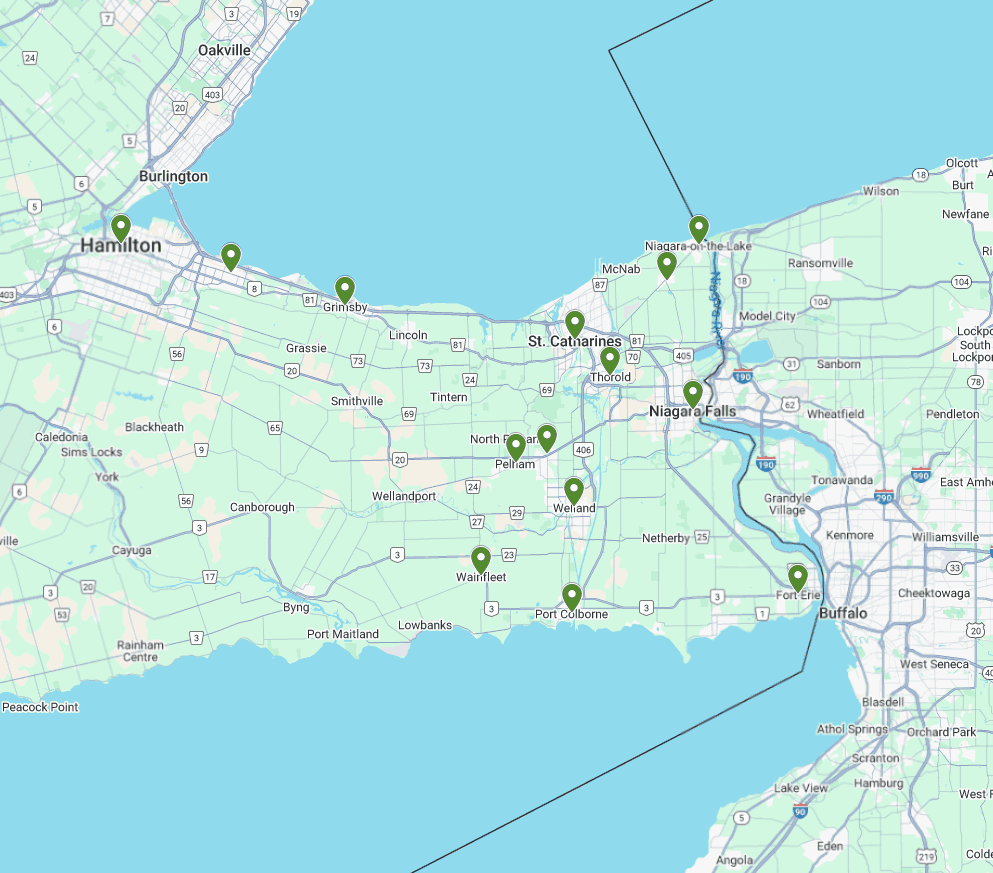
Our service areas encompass a wide range of locations, ensuring that we can meet the needs of our clients wherever they are. From bustling urban centers to serene rural landscapes, we are committed to providing top-notch services tailored to each unique environment.