



Fort Erie boiler installation covers on-site evaluations, precise heat-load calculations, and careful system selection to ensure safe, efficient heating. The guide describess common installation scenarios, permits, code compliance, and step-by-step procedures from pre-install prep through commissioning and post-installation walkthrough. It emphasizes proper venting, corrosion-resistant components, and accurate sizing to avoid energy waste. Warranties and maintenance plans are discussed to protect the investment, with clear timelines for site visits, permitting, installation, testing, and handover. Professional installation ensures lasting comfort and reliability.
.jpeg)
Boiler Installation in Fort Erie, ON
Upgrading or installing a new boiler is a major home investment for Fort Erie homeowners. Winters along the Lake Erie shore bring prolonged cold, wind and high heating demand, so choosing the right hydronic system and getting a professional installation matters for comfort, safety and energy costs. It describes the complete boiler installation process in Fort Erie, ON, what to expect during each step, common local issues we see, the commissioning checklist used to verify performance, and the warranties and maintenance plans that protect your investment.
Why a correct boiler installation matters in Fort Erie
- Fort Erie winters can be long and damp; an inefficient or undersized boiler struggles to maintain even heat and can raise energy bills.
- Many homes in the area have older cast-iron radiators or mixed piping that require careful compatibility checks.
- Proximity to the lake increases humidity and can accelerate corrosion in poorly vented or improperly drained systems. Proper condensate management and corrosion-resistant components are critical.
Common boiler installation scenarios in Fort Erie homes
- Replacement of an aging cast-iron or non-condensing boiler with a high-efficiency condensing model.
- Conversion from oil to natural gas where municipal service is available.
- Installation of a combi boiler to combine space heating and domestic hot water in smaller homes.
- Re-piping projects to convert single-pipe steam or gravity systems to modern pumped hot-water systems.
- Multi-zone systems for additions, renovated homes or separate living spaces.
Site evaluation and heat-load (heat-loss) calculations
A reliable installation starts with an on-site evaluation and accurate heat-loss calculation tailored to your Fort Erie home:
- Measure square footage, insulation levels, window types, and orientation relative to lake winds.
- Inspect existing piping, radiators or baseboard, boiler room clearances, venting routes and chimney condition.
- Calculate the heat-loss for each zone so the new boiler is correctly sized. Oversizing wastes fuel; undersizing leaves rooms cold during extreme weather.
System selection guidance
Selecting the right boiler balances efficiency, longevity and installation complexity:
- Condensing gas boilers: best efficiency in Fort Erie for long heating seasons. Require proper condensate drainage and stainless or PVC venting.
- Combi boilers: compact and efficient for smaller homes but may not meet peak hot-water demand in larger households.
- Cast-iron or modular boilers: useful for large older homes or multi-family units; modular boilers offer redundancy and staged firing.
- Fuel considerations: natural gas is common where available; propane or oil options exist for rural properties.
Permits and code compliance
Installations in Fort Erie must meet Ontario Building Code and local municipal requirements. A professional installation includes:
- Securing necessary permits and submitting installation plans when required.
- Ensuring venting, combustion air, flue termination and mechanical room clearances meet code.
- Gas line sizing and pressure testing to CSA standards where applicable. Licensed technicians handle these steps to protect safety and warranty.
Professional installation steps
- Pre-install prep: move equipment in, protect home surfaces and prepare temporary work areas.
- Remove old boiler and properly dispose of components, including safe handling of fuels and fluids.
- Install new boiler, venting, condensate trap and discharge, fuel connections and electrical controls.
- Tie into existing hydronic distribution or rework piping and zone controls as needed.
- Install or upgrade expansion tank, pressure relief valve and isolation valves for serviceability.
Testing, commissioning and performance verification
After physical installation, thorough testing ensures safe and efficient operation:
- Pressure and leak tests of the hydronic circuit.
- Combustion and flue gas analysis to verify safe draft and combustion efficiency.
- Verify pump operation, zone valve sequencing and thermostat communication.
- Check condensate drainage and neutralization if required.
- Balance zones and verify even heat distribution across radiators or baseboards.
Standard commissioning checklist
- Heat-loss calculation documented and final boiler size confirmed.
- Permits filed and inspections scheduled/completed.
- Venting route inspected and sealed.
- Gas pressure and supply verified.
- Hydronic system filled, deaerated and pressure tested.
- Combustion efficiency readings recorded.
- Thermostat and zone control function verified.
- Safety devices installed and tested: pressure relief valve, low-water cutoffs where applicable.
- Owner paperwork provided: manuals, warranty certificates and system settings.
Post-installation walkthrough for the homeowner
The final walkthrough ensures you understand your new system and how to care for it:
- Demonstration of thermostat programming, zone controls and how to read system pressure.
- Location and operation of emergency shutoffs for gas and power.
- Explanation of routine maintenance items: annual service, how to check pressure, and what noises or signs indicate a problem.
- Delivery of documentation: installation report, commissioning readings, warranty details and service plan options.
Warranties and maintenance plans
Protecting your boiler with proper warranty coverage and regular maintenance extends life and preserves efficiency:
- Manufacturer warranties typically cover heat exchangers and major components; labor warranties vary by installer.
- Recommend annual preventive maintenance to check combustion efficiency, flush and purge the system, inspect valves and controls, and catch small issues before they become failures in the coldest months.
- Maintenance plans often include priority service, seasonal tuneups, safety checks and discounted parts and labor for repairs.
Typical project timelines in Fort Erie
- Initial site visit and heat-loss calculation: same day to 48 hours.
- System selection and written proposal: 1 to 3 days.
- Permits and municipal approvals: typically 1 to 3 weeks depending on workload.
- Physical installation for a standard residential replacement: 1 to 3 days. More complex re-piping or multi-zone work may take longer.
- Testing, commissioning and walkthrough: half-day to one day following installation.
A professionally managed boiler installation in Fort Erie, ON ensures the system matches your home, meets code, and delivers reliable heat through long lake-effect winters. Proper sizing, careful venting and a thorough commissioning process are the difference between a system that struggles and one that operates quietly, efficiently and safely for years. Regular maintenance and clear warranty documentation complete the long-term picture for worry-free heating.

Customer Testimonials

Very efficient company. I needed an old solar water heater removed from my roof. They were quick to book an appointment for the next day after I sent photos. They were very knowledgeable of the issue. The 2 guys that came were friendly and competent with the job, including removal of all parts.

I called John today at 2:pm as my AC was not working and I wasn’t expecting even a call back as I knew with this hot weather we have had he would be swamped with calls. Well he called me back and showed at 8:pm on the same day to fix my AC. That is just incredible service and how much John really cares about his clients. Thank you John !
Lifesavers!! The AC in our house decided to quit the day we were passing the keys to the new owners!! Instead of making a service call to the house, John coached me through the minor repair over the phone, saving me the money and time waiting for a repair person to come.Much appreciated! Thanks again John
I had an issue with my hot water tank and called Niagara Home Heating. Their service was fantastic and reasonably priced—exactly how a business should be run!
We had an amazing experience getting our new furnace installed with Niagara Home Heating. The owner was very helpful, their quote was more then competitive and the technician who installed the unit was professional and friendly. I would recommend their services.
I have used Niagara Home heating for multiple projects for over 16 years. John and his staff are absolutely the best. I tell all my friends and family about Niagara Home Heating because you won’t get any better service or pricing anywhere in Niagara. He has saved me thousands and thousands of dollars and has never let me down.

Service Areas
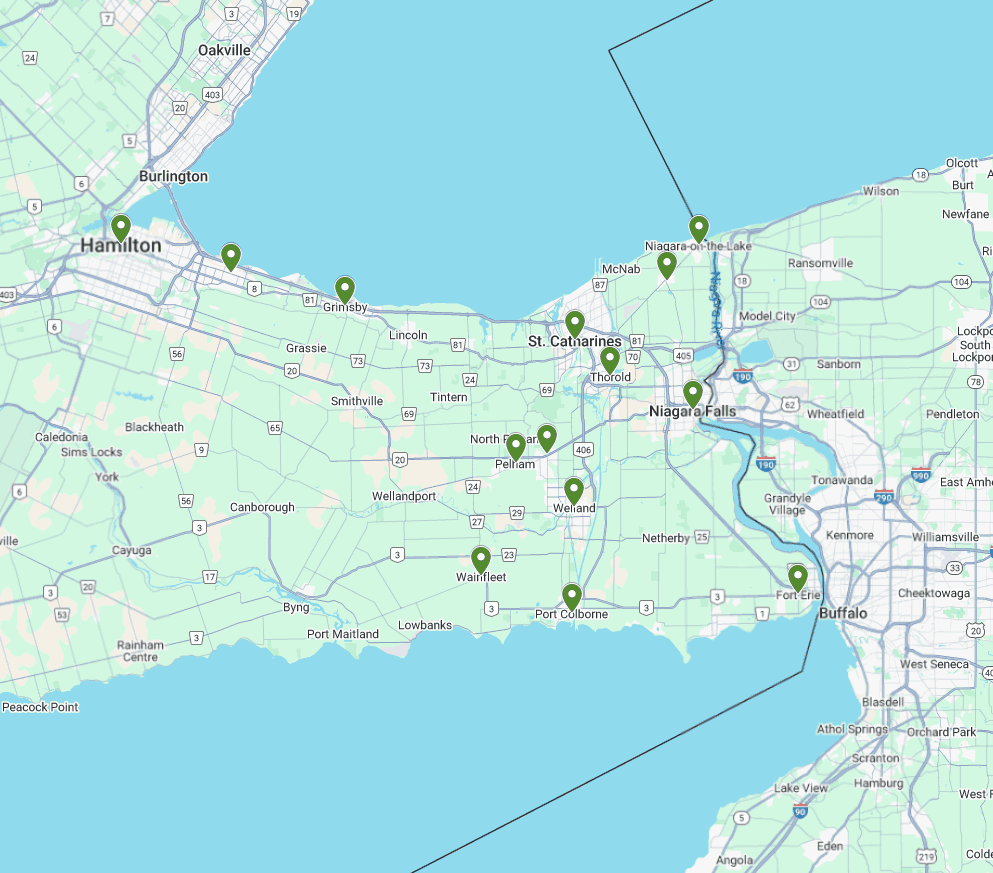
Our service areas encompass a wide range of locations, ensuring that we can meet the needs of our clients wherever they are. From bustling urban centers to serene rural landscapes, we are committed to providing top-notch services tailored to each unique environment.