



Boiler repair in Niagara Falls, ON is explained through a thorough overview of common problems, diagnostic approaches, and common parts replacements. The article details symptoms such as no heat, low pressure, leaks, unusual noises, ignition failures, and short cycling, and describes how technicians perform visual inspections, pressure tests, combustion analysis, and control testing to identify root causes. It outlines typical repairs, emergency response expectations, pricing factors, warranties, safety checks, and regulatory compliance to help homeowners plan and protect their heating systems.
.jpeg)
Boiler Repair in Niagara Falls, ON
Boilers are the backbone of home heating in Niagara Falls, ON, where cold winters and lake-effect weather can put heavy demand on hydronic systems. When a boiler falters it affects comfort, safety, and energy bills. This page explains the common boiler problems Niagara Falls homeowners face, how trained technicians diagnose issues, typical repairs and parts replacement, emergency response expectations, how pricing is determined, warranty and guarantee considerations, and the safety and compliance checks you should expect.
Common boiler problems and symptoms in Niagara Falls homes
- No heat or intermittent heating: The boiler won’t fire, or heat drops off. Symptoms include cold radiators, uneven temperatures, or a boiler that runs briefly then shuts down.
- Low boiler pressure: Pressure below the manufacturer’s recommended level causes poor circulation and cold spots. You may see 0–10 psi on a hot-water system gauge when it should be higher.
- Leaking water: Visible puddles, wet insulation, or corrosion on pipes and tank fittings indicate leaks that require immediate attention to avoid water damage and pressure loss.
- Strange noises: Kettling, banging, or loud clicking can signal scale build-up on the heat exchanger, trapped air, failing pumps, or steam problems in older systems.
- Pilot, ignition, or burner issues: Boilers that fail to ignite, or repeatedly lock out, point to faulty ignition modules, gas valves, or flame sensing problems.
- Short cycling: Frequent on/off cycles reduce efficiency and stress components; causes include oversized control settings, faulty thermostats, or pressure problems.
- High energy bills or poor efficiency: Decreased combustion efficiency, dirty burners, or a failing heat exchanger can drive up fuel use.
- Odours or CO alarm activation: Any suspicion of carbon monoxide or combustion byproducts is a critical safety symptom.
How technicians diagnose boiler problems
Technicians follow systematic diagnostics to find root causes, combining visual checks with specialized tests:
- Visual inspection: Check venting, flue condition, evidence of leaks, corrosion, and control panel errors.
- Pressure and temperature checks: Verify operating pressure, expansion tank condition, and differential temperatures across the boiler and distribution loop.
- Leak detection: Trace fittings, header connections, and radiators. Use dye or ultrasonic tools when needed.
- Combustion analysis: A flue gas analyzer measures CO, CO2, O2 and combustion efficiency to ensure safe fuel burning and correct burner adjustments.
- Electrical and control testing: Confirm proper operation of thermostats, control boards, safeties, and ignition systems.
- Pump and valve operation: Assess circulator pumps, zone valves, and check for air locks or failed actuators.
- System water quality and boiler interior: Inspect for scale, corrosion, and sediment; recommend flushing or chemical treatment if needed.
These steps ensure repairs address the underlying issue rather than symptoms, which matters most during Niagara’s heavy heating season.
Typical repairs and parts replacement
Common repairs encountered in the field include:
- Circulator pump replacement: Worn bearings or motor failure reduce flow and heat distribution.
- Expansion tank or pressure relief valve replacement: Restores correct system pressure and prevents overpressure events.
- Ignition module, gas valve, and burner servicing: Cleans and adjusts combustion components for reliable firing and efficiency.
- Heat exchanger repair or replacement: Cracked exchangers are a safety and efficiency risk; replacement is required for severe damage.
- Control board and thermostat replacement: Modern controls improve cycling and zone management.
- Zone valve and actuator repairs: Restore zoning control and eliminate cold rooms.
- System flushing and chemical treatment: Removes scale and sediment to restore flow and heat transfer.
- Pipe and fitting repairs: Address leaks and corroded sections, including radiator valves and steam traps on older systems.
Technicians will explain whether OEM or aftermarket parts are recommended and how each choice affects longevity and warranty coverage.
Emergency response and scheduling expectations
Niagara Falls winters create peak demand and occasional emergency scenarios. Expectations typically include:
- Prioritization of safety issues such as leaks, no heat during extreme cold, or CO concerns.
- Same-day diagnostic visits are often available during peak season, with emergency response windows for immediate hazards.
- Technicians arrive with diagnostic tools and common replacement parts to complete many repairs on the first visit.
- Service scheduling is affected by seasonal volume; planning annual checks before winter reduces emergency risk.
When arranging service, homeowners should be provided with an arrival window, technician credentials, and a clear scope of the diagnostic process.
Pricing guidance and what affects cost
Instead of flat rates, boiler repair costs reflect several factors:
- Age and condition of the boiler: Older boilers often need more extensive repairs or replacement parts that are harder to source.
- Type of repair: Simple part swaps (valves, thermostats) cost less than heat exchanger replacement or major piping work.
- Parts quality: OEM components and high-efficiency replacement parts carry different price and warranty profiles.
- Labor and access: Repair complexity, system location (basement vs. utility closet), and the time required affect labor charges.
- After-hours or emergency calls: Services outside normal business hours may have different pricing structures.
Expect transparent, written estimates that separate diagnostic fees, parts, and labor. Many providers apply the diagnostic fee toward the final repair if work proceeds.
Warranty, guarantees, safety and compliance checks homeowners should expect
Homeowners should expect both safety checks and compliance with Ontario regulations:
- Combustion safety and CO testing: Technicians perform flue and CO testing with a flue gas analyzer and verify proper draft and exhaust clearance.
- Pressure relief and safety device checks: Confirm PRV, low-water cutoffs, and expansion tanks are functional.
- Venting and chimney inspection: Ensure vents meet code and are free of obstruction or corrosion.
- Documentation and manufacturer warranty guidance: Repairs and parts should come with clear warranty terms. Labor guarantees are common for a defined period.
- Regulatory compliance: Work involving gas-fired equipment should comply with provincial safety rules and be performed by certified technicians under applicable fuel-safety authority standards.
- Permit and inspection coordination: For major work or replacements, expect discussion about permits and inspections where required.
Regular maintenance and seasonal inspections—particularly before winter—help prevent failures, maintain combustion efficiency, and preserve warranty coverage. In Niagara Falls, addressing scale and sediment is often part of long-term preservation because local water conditions can contribute to buildup.
Timely boiler repair in Niagara Falls not only restores comfort but prevents safety hazards, reduces energy waste, and extends equipment life. Understanding symptoms, the diagnostic process, likely repairs, and what affects pricing equips homeowners to make informed decisions and manage their heating systems through the cold months.

Customer Testimonials

I had an issue with my hot water tank and called Niagara Home Heating. Their service was fantastic and reasonably priced—exactly how a business should be run!

I have used Niagara Home heating for multiple projects for over 16 years. John and his staff are absolutely the best. I tell all my friends and family about Niagara Home Heating because you won’t get any better service or pricing anywhere in Niagara. He has saved me thousands and thousands of dollars and has never let me down.
Very efficient company. I needed an old solar water heater removed from my roof. They were quick to book an appointment for the next day after I sent photos. They were very knowledgeable of the issue. The 2 guys that came were friendly and competent with the job, including removal of all parts.
We had an amazing experience getting our new furnace installed with Niagara Home Heating. The owner was very helpful, their quote was more then competitive and the technician who installed the unit was professional and friendly. I would recommend their services.
Lifesavers!! The AC in our house decided to quit the day we were passing the keys to the new owners!! Instead of making a service call to the house, John coached me through the minor repair over the phone, saving me the money and time waiting for a repair person to come.Much appreciated! Thanks again John
I called John today at 2:pm as my AC was not working and I wasn’t expecting even a call back as I knew with this hot weather we have had he would be swamped with calls. Well he called me back and showed at 8:pm on the same day to fix my AC. That is just incredible service and how much John really cares about his clients. Thank you John !

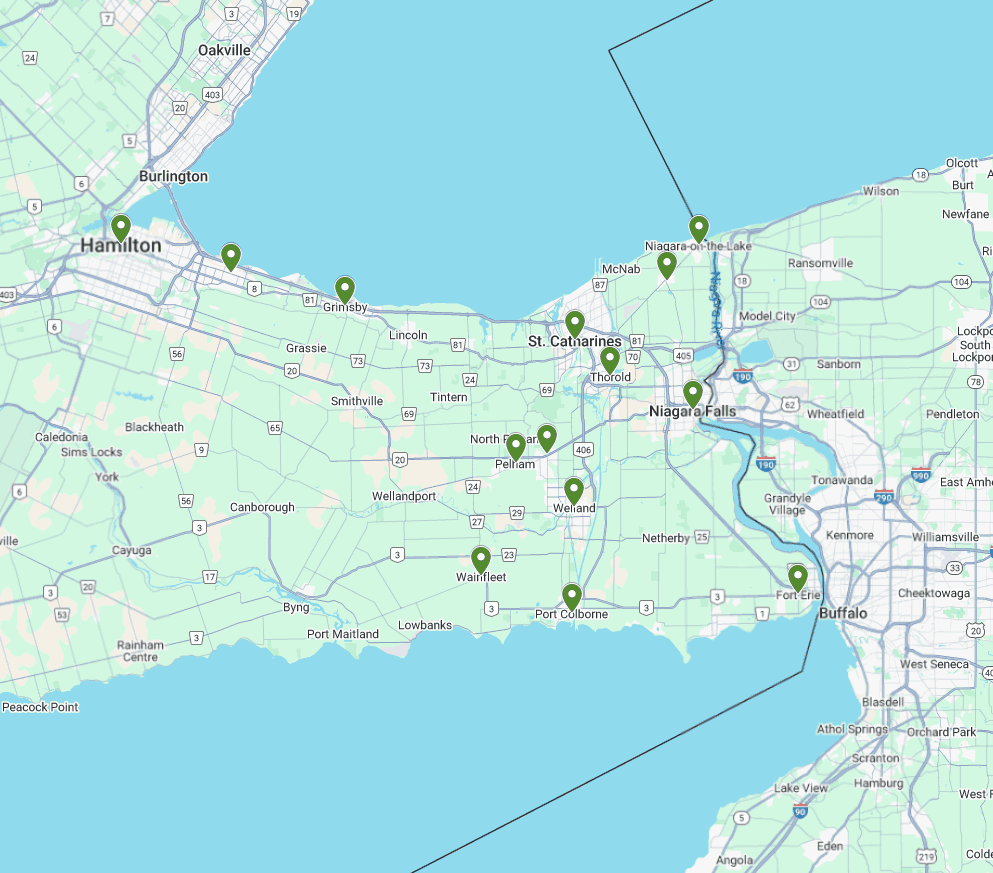
Service Areas
Our service areas encompass a wide range of locations, ensuring that we can meet the needs of our clients wherever they are. From bustling urban centers to serene rural landscapes, we are committed to providing top-notch services tailored to each unique environment.