



It describes expert furnace installation in Welland, ON, guiding homeowners through a thorough, code-compliant process. Emphasis is placed on accurate load calculations, proper equipment selection, and safe venting tailored to local gas availability and climate. The service covers permits, inspections, and commissioning to verify efficiency, comfort, and safety. From initial site assessment to system startup and warranty documentation, readers learn how professional installation minimizes downtime, enhances reliability, and delivers long-term energy savings for Niagara Region homes.
-min.jpeg)
Furnace Installation in Welland, ON
Upgrading or installing a new furnace is one of the most impactful home improvements for comfort, energy bills, and safety—especially in Welland where cold, damp winters put heavy demand on heating systems. Professional furnace installation in Welland, ON ensures the right equipment is chosen, sized, and installed to meet local code, natural gas availability, and your home’s layout so the system runs efficiently and reliably year after year.
Common reasons Welland homeowners choose furnace installation
- Old or unreliable furnace reaching end of life (frequent repairs, unstable operation)
- Rising energy bills from an inefficient unit (low AFUE rating)
- New or renovated space requiring upgraded heating capacity or revised ductwork
- Safety concerns such as cracked heat exchangers or recurring carbon monoxide trips
- Desire for improved comfort with multi-stage or variable-speed systems
Typical furnace installation issues in Welland and how we prevent them
- Undersized or oversized equipment causing short cycling or poor comfort: prevented by accurate load calculations.
- Improper venting or combustion air for high-efficiency units: addressed with correct vent material and intake sizing.
- Duct leaks and restricted airflow lowering efficiency: fixed by duct sealing and balancing during installation.
- Code and permit oversights: handled through permit submission and compliance with Ontario requirements and local municipal inspections.
Our furnace installation process in Welland, ON
We follow a systematic, code-compliant approach so your installation is safe, efficient, and built to last.
Site evaluation and home assessment
- Inspect existing heating equipment, ductwork, flue routing, and mechanical room access.
- Evaluate insulation levels, window performance, and typical winter comfort issues common in older Niagara Region homes.
- Note gas line location, meter capacity, and electrical availability.
Proper sizing and load calculation
- Perform a Manual J style heat-loss calculation to determine required BTU output.
- Consider room-by-room needs, ceiling heights, and southern exposure to avoid oversizing.
Equipment selection
- Discuss furnace types (condensing high-efficiency, mid-efficiency, modulating burners, two-stage) and blower options (ECM variable-speed motors) to match comfort goals and budget.
- Recommend compatible thermostats and zoning where beneficial.
Permits and code compliance
- Prepare and submit required municipal permits and ensure installations meet Ontario building and fuel gas codes.
- Coordinate any necessary inspections and documentation for safety and warranty validation.
Installation procedures
- Safe removal and disposal of the old unit with protective measures to keep your home clean.
- Duct and vent connections: properly sized supply and return plenums, sealing duct joints, insulating ducts where needed, and installing correct flue or PVC venting for condensing units.
- Electrical work: correct furnace circuit, grounding, and thermostat wiring; installation of safety controls and switches as required.
- Gas connections and leak testing performed to regulation standards.
System commissioning and efficiency testing
- Start-up checks include combustion efficiency or manufacturer's baseline testing, static pressure and airflow measurements, thermostat calibration, and verifying proper safeties.
- Confirm blower performance and cycle times to optimize comfort and efficiency.
Warranty registration and documentation
- Register equipment warranties per manufacturer requirements and provide you with clear warranty and maintenance instructions.
- Supply a copy of permits, inspection reports, and as-installed specifications for future service or resale.
Homeowner walkthrough
- Demonstrate system operation, explain filter access and replacement intervals, thermostat programming tips, and basic troubleshooting steps.
- Review safety items including carbon monoxide detector placement and signs of malfunction to watch for.
Financing and rebate assistance
- Outline common financing and rebate options available for high-efficiency furnace installations and guide you through documentation to claim provincial or utility incentives where applicable.
Types of furnaces and features to consider
- High-efficiency condensing furnaces (90%+ AFUE): best for maximum fuel savings; require PVC venting and condensate management.
- Mid-efficiency furnaces (up to ~85% AFUE): reliable balance of cost and performance for some installations.
- Two-stage and modulating furnaces: better temperature control, quieter operation, and improved humidity control in the Niagara climate.
- Variable-speed ECM blowers: enhance comfort with consistent airflow and reduced electricity use.
Local considerations for Welland homes
Welland’s climate—cold winters with periods of high humidity—makes proper sizing and humidity control important. Many homes in the area have older ductwork, compact basements, or limited mechanical space; planning for tight access, proper venting routes, and potential duct upgrades is common. Natural gas availability in the Niagara Region typically makes gas furnaces the preferred option, but electrical supply and venting constraints can influence the best solution for each property.
What to expect after installation and recommended maintenance
A professionally installed furnace will provide:
- Improved comfort with steady temperatures and fewer cold spots
- Lower heating bills when replacing an inefficient unit
- Quieter operation and better indoor air circulation
- Greater reliability and reduced emergency repairs
Post-install maintenance keeps the system operating at peak performance:
- Replace or clean filters every 1–3 months depending on filter type and household factors.
- Annual professional tune-up to check combustion, venting, electrical safety, and blower operation.
- Keep combustion air openings clear and ensure carbon monoxide detectors are tested regularly.
- Address duct leaks or insulation gaps discovered during the install to maximize savings.
Timely replacement and a code-compliant installation protect your household, extend equipment life, and maximize energy savings. For Welland homes, thoughtful sizing, proper venting for high-efficiency units, and attention to local building requirements make the difference between a satisfactory installation and a long-term heating solution that reliably keeps your home comfortable through Niagara winters.

Customer Testimonials

I have used Niagara Home heating for multiple projects for over 16 years. John and his staff are absolutely the best. I tell all my friends and family about Niagara Home Heating because you won’t get any better service or pricing anywhere in Niagara. He has saved me thousands and thousands of dollars and has never let me down.

Lifesavers!! The AC in our house decided to quit the day we were passing the keys to the new owners!! Instead of making a service call to the house, John coached me through the minor repair over the phone, saving me the money and time waiting for a repair person to come.Much appreciated! Thanks again John
Very efficient company. I needed an old solar water heater removed from my roof. They were quick to book an appointment for the next day after I sent photos. They were very knowledgeable of the issue. The 2 guys that came were friendly and competent with the job, including removal of all parts.
We had an amazing experience getting our new furnace installed with Niagara Home Heating. The owner was very helpful, their quote was more then competitive and the technician who installed the unit was professional and friendly. I would recommend their services.
I had an issue with my hot water tank and called Niagara Home Heating. Their service was fantastic and reasonably priced—exactly how a business should be run!
I called John today at 2:pm as my AC was not working and I wasn’t expecting even a call back as I knew with this hot weather we have had he would be swamped with calls. Well he called me back and showed at 8:pm on the same day to fix my AC. That is just incredible service and how much John really cares about his clients. Thank you John !

Service Areas
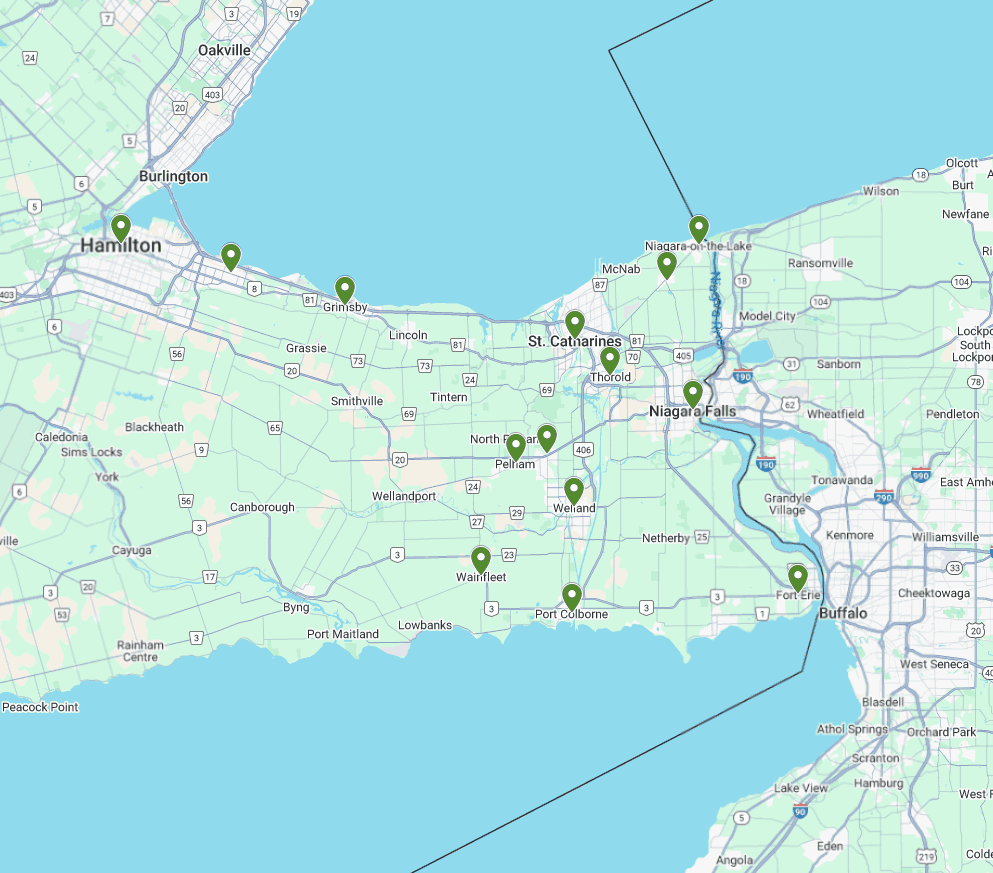
Our service areas encompass a wide range of locations, ensuring that we can meet the needs of our clients wherever they are. From bustling urban centers to serene rural landscapes, we are committed to providing top-notch services tailored to each unique environment.