



It describes professional tankless water heater installation in Grimsby, ON, from pre-installation evaluation and proper sizing to gas, electrical, plumbing, and venting requirements. It covers commissioning, testing, and safety checks, plus maintenance plans, warranty expectations, and rental options. Readers will learn how to assess space, water hardness, and code compliance, determine peak flow and temperature rise, and plan a scalable solution that delivers continuous hot water, energy savings, and improved room layout for Grimsby homes.

Tankless Water Heater Installation in Grimsby, ON
Switching to a tankless water heater can deliver continuous hot water, lower energy bills, and more space in your mechanical room—advantages that matter for Grimsby homes facing cold winters and seasonal tourism demands. the full professional installation process for tankless units in Grimsby, ON, including pre-installation evaluation, correct sizing, gas/electrical/plumbing and venting considerations, commissioning, maintenance recommendations, warranty and workmanship expectations, and rental options where applicable.
Why tankless makes sense in Grimsby, ON
- Grimsby’s cold winters increase the required temperature rise for incoming groundwater; properly sized tankless units handle higher temperature differentials without performance issues.
- Many Niagara Region homes have limited mechanical space; tankless units free up floor space and can mount on exterior or utility room walls.
- Local water tends to be moderately hard, which increases the need for professional water-treatment and descaling plans to protect tankless heat exchangers.
Common tankless water heater installation scenarios in Grimsby
- Replacing an aging storage tank with a condensing or non-condensing tankless unit
- New construction or renovation installs where space savings are a priority
- Switching from electric tank to gas tankless for lower operating costs
- Temporary rental tankless units during long lead-time replacements or prolonged repairs
Pre-installation site evaluation
A thorough site survey is essential to ensure a reliable installation:
- Measure available space, mounting options and clearances.
- Identify existing gas supply size and pressure or available electrical service and required breaker capacity.
- Locate water lines, drainage points for condensate, and optimum venting path (especially critical for condensing units).
- Check for water hardness and advise on filtration or softening to reduce scale buildup.
- Evaluate required permits and local code requirements (Ontario Building Code, TSSA regulation awareness).
Proper sizing and flow-rate calculations
Sizing a tankless unit is about two things: peak flow rate and required temperature rise.
- Estimate peak simultaneous demand by adding typical fixture flow rates:
- Shower: 6–10 L/min (1.5–2.5 GPM) depending on head type
- Kitchen faucet: 4–8 L/min (1–2 GPM)
- Dishwasher/laundry: assigned values depending on appliance
- Calculate required temperature rise: desired outlet temperature minus incoming ground water temperature (which can be below 10°C in winter in Grimsby).
- Convert the total peak flow and temperature rise into the unit capacity needed (kW for electric or BTU/hr for gas). Professional installers run these calculations to recommend a single high-capacity unit or multiple units in parallel for larger demand.
Gas, electrical, plumbing and venting requirements
- Gas-fired units: verify gas line size and pressure; many homes require an upgrade to a larger gas service to meet tankless peak BTU demands. Installation must follow TSSA and local code requirements for gas piping and shutoff locations.
- Electric units: confirm panel capacity and dedicated circuit sizing. Some whole-house electric tankless models demand very high amperage and may not be feasible without service upgrades.
- Plumbing: include proper isolation valves, pressure relief devices, and sediment or scale-preventing filters. Condensing units require condensate drains sized to code.
- Venting: condensing vs non-condensing matters. Condensing units often use PVC or stainless steel for low-temperature flue gases, and non-condensing units require stainless steel venting rated for higher exhaust temperatures. Proper termination distance from openings and roof or wall penetrations must meet code.
Professional installation steps
- Secure permits and ensure licensed trades are scheduled where required (licensed gas fitter/electrician/plumber).
- Prepare mounting surface and required supports; install water and gas or electrical connections per manufacturer and code.
- Install venting and condensate drains, including internal traps and neutralization if required.
- Set up water treatment or bypass loops where recommended to protect heat exchangers.
- Configure unit controls and any remote thermostats or recirculation interfaces.
Testing, commissioning and safety checks
- Verify gas manifold pressure, combustion if applicable, and electrical connections.
- Confirm outlet temperature stability at multiple fixtures and under simulated peak loads.
- Check for leaks in gas and water systems and ensure proper vent draft and termination clearances.
- Demonstrate safe operation and basic troubleshooting steps, and document installation settings and test results for warranty records.
Post-installation guidance and maintenance recommendations
- Hard water management: recommend scale prevention (softener or electronic descaler) and set up a descaling schedule. In Grimsby, annual descaling is common for untreated water; properties with higher hardness may need more frequent attention.
- Annual service should include flushing the heat exchanger, cleaning inlet filters, checking burner and ignition components (gas units), and verifying vent integrity.
- Keep a maintenance log to preserve manufacturer warranty and workmanship guarantees.
- Winter protection: for exterior-mounted units or seasonal properties, ensure freeze protection is in place to prevent damage during below-freezing temperatures.
Warranty, workmanship guarantees and code compliance
- Expect both manufacturer warranties on the unit and a separate workmanship guarantee from the installer covering proper installation. Detailed documentation of commissioning and maintenance is typically required to maintain full warranty coverage.
- Professional installs follow the Ontario Building Code and applicable provincial fuel safety standards. Licensed technicians perform all gas connections, and electrical work should be completed by certified electricians where required.
Rental and temporary hot-water options
- Rental tankless systems are often available for short-term needs—useful during prolonged replacement timelines or when awaiting home service upgrades. Rental programs typically include scheduled maintenance and may be an option for homeowners who prefer a temporary solution while arranging a permanent install.
Benefits and long-term value
- Continuous hot water and reduced standby losses produce energy savings and a smaller carbon footprint.
- Longer expected service life than traditional tanks when maintained properly.
- Improved home value and modern comfort, particularly important in Grimsby where cold seasons put extra demand on hot-water systems.
Many professional installers provide a free site evaluation and a written estimate as part of the decision process. A correct, code-compliant tankless installation tailored to Grimsby’s climate and water conditions maximizes performance, extends equipment life, and protects warranty coverage.

Customer Testimonials

I have used Niagara Home heating for multiple projects for over 16 years. John and his staff are absolutely the best. I tell all my friends and family about Niagara Home Heating because you won’t get any better service or pricing anywhere in Niagara. He has saved me thousands and thousands of dollars and has never let me down.

Lifesavers!! The AC in our house decided to quit the day we were passing the keys to the new owners!! Instead of making a service call to the house, John coached me through the minor repair over the phone, saving me the money and time waiting for a repair person to come.Much appreciated! Thanks again John
I had an issue with my hot water tank and called Niagara Home Heating. Their service was fantastic and reasonably priced—exactly how a business should be run!
I called John today at 2:pm as my AC was not working and I wasn’t expecting even a call back as I knew with this hot weather we have had he would be swamped with calls. Well he called me back and showed at 8:pm on the same day to fix my AC. That is just incredible service and how much John really cares about his clients. Thank you John !
Very efficient company. I needed an old solar water heater removed from my roof. They were quick to book an appointment for the next day after I sent photos. They were very knowledgeable of the issue. The 2 guys that came were friendly and competent with the job, including removal of all parts.
We had an amazing experience getting our new furnace installed with Niagara Home Heating. The owner was very helpful, their quote was more then competitive and the technician who installed the unit was professional and friendly. I would recommend their services.

Service Areas
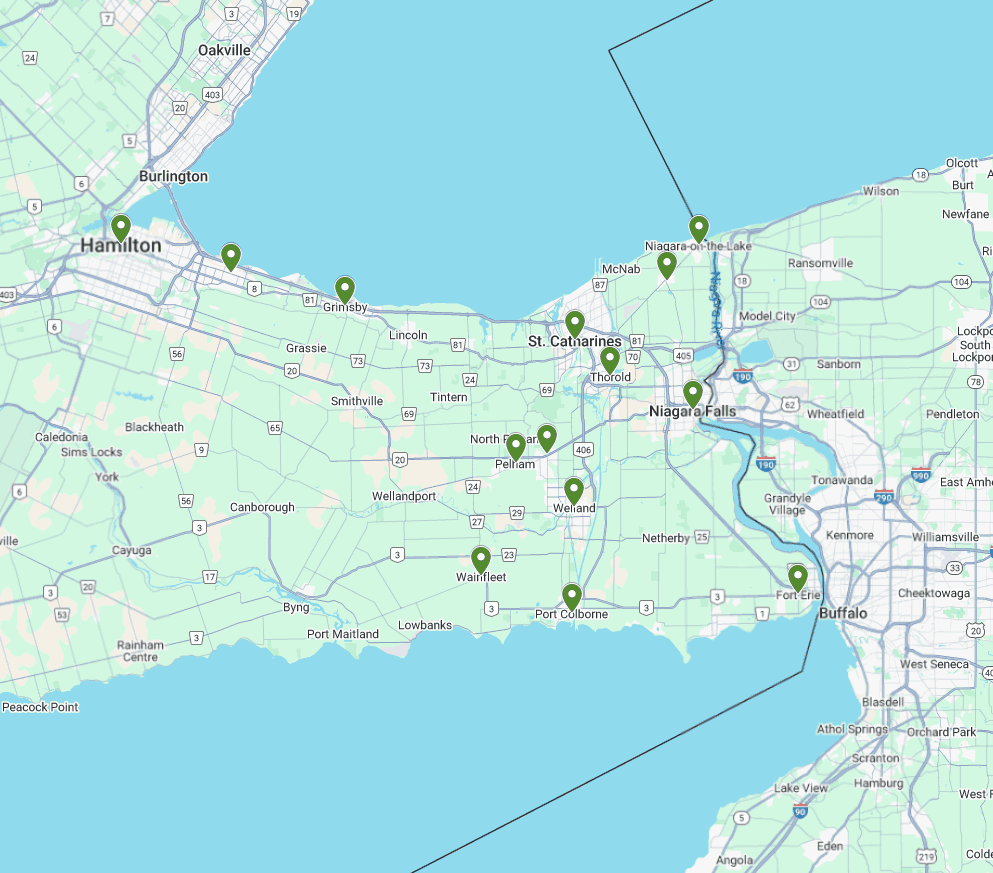
Our service areas encompass a wide range of locations, ensuring that we can meet the needs of our clients wherever they are. From bustling urban centers to serene rural landscapes, we are committed to providing top-notch services tailored to each unique environment.