



Water Heater Repair in Grimsby, ON offers expert on-site diagnosis and repair for both tank and tankless systems, addressing common issues like no hot water, leaks, ignition problems, sediment buildup, and short cycling. Our trained technicians inspect venting, controls, and heat exchangers, perform thorough tests, and provide clear estimates with repair or replacement options. We emphasize safety, emergency service when needed, routine maintenance, and warranty expectations to extend system life and maintain reliable hot water through Grimsbys cold seasons.
Water Heater Repair in Grimsby, ON
A reliable hot water supply is essential for comfort and daily routines in Grimsby, where cold winters and higher household hot-water use can strain water heaters. Professional diagnosis and repair for tank and tankless water heaters ensure problems are fixed safely and efficiently, reduce energy waste, and help you avoid unexpected replacements. common water heater issues in Grimsby homes, what an on-site technician will check, typical repairs and parts replaced, emergency service considerations, warranty expectations, and maintenance steps you can take to extend system life.
Common water heater problems in Grimsby homes
- No hot water or insufficient hot water: Often caused by failed heating elements, thermostats, a tripped breaker on electric units, or burner problems on gas models. Cold groundwater temperatures in Niagara Region increase the work your heater must do.
- Leaks and pooling: Corrosion at the tank bottom, loose plumbing connections, failed temperature and pressure relief (T&P) valves, or a cracked tank can produce leaks. Small external leaks sometimes hide larger internal failures.
- Pilot light or ignition problems (gas units): Faulty thermocouples, gas control valves, or blocked vents can prevent ignition or cause intermittent operation.
- Sediment buildup and scale: Hard water in the region contributes to sediment accumulation in tanks and scale on heat exchangers in tankless units, reducing efficiency and leading to overworking components.
- Strange noises: Popping or rumbling usually indicates sediment near the burner or heating element. Continuous clicking may signal ignition attempts or control board issues.
- Short cycling or frequent reheating: Often due to faulty thermostats, oversized units, or sediment causing temperature sensors to read inaccurately.
- Error codes and flow issues (tankless): Tankless systems will often display diagnostic codes for ignition failures, low flow, or overheating; clogged filters and scale are common culprits.
On-site diagnosis and homeowner troubleshooting
A trained technician follows a step-by-step diagnostic routine to identify root causes. Before a service visit, homeowners can safely check a few basic items:
- Verify power and gas: Confirm breakers are on and gas valves are open (do not attempt gas work).
- Check thermostat settings and hot water usage patterns: Ensure thermostats are set to recommended temperatures and that recent changes in usage aren’t misleading the diagnosis.
- Look for visible leaks or water around the base and plumbing connections.
- For pilot-lit gas units, note whether the pilot is lit — do not attempt to relight if you smell gas.
On arrival, the technician will:
- Inspect venting, combustion air supply, and exhaust for gas models (critical in tight Grimsby homes).
- Run tests on heating elements, thermostats, gas valves, pressure switches, and control boards.
- Measure inlet and outlet temperatures and check water pressure and flow rates.
- Flush a small trap or check inlet filters and screens on tankless units to identify flow restrictions.
- Evaluate the tank’s external and internal condition (if accessible) and test the T&P valve.
Typical repair procedures and parts commonly replaced
- Heating elements and thermostats (electric tanks): Replace faulty elements or thermostats after testing resistance and continuity.
- Anode rod replacement: A corroded anode accelerates tank deterioration; replacing it can extend tank life.
- Sediment removal and tank flush: Draining and flushing tanks removes sediment that causes poor heat transfer and noisy operation.
- T&P valve replacement: A leaking or stuck valve is replaced for safety.
- Gas burner assembly, thermocouple, or gas control valve repairs: Clean or replace components causing ignition or combustion problems.
- Dip tube replacement: A failed dip tube can cause cold water mixing and reduce usable hot water.
- Pressure relief and drain valve repairs: Replace leaking or nonfunctional valves and drains.
- Heat exchanger descaling or replacement (tankless): Descale to remove scale; severe corrosion may require exchanger replacement.
- Electronic control boards and flow sensors (tankless): Replace failed electronics that trigger error codes or prevent ignition.
When a tank is severely corroded, has internal failures, or a major leak, replacement is often the safer and more economical option than repair.
Tank vs tankless: what differs in diagnosis and repair
- Tank systems: Focus on elements, thermostats, anode rods, and sediment. Tank replacements are typically needed once the shell corrodes.
- Tankless systems: Common failures stem from scale buildup on heat exchangers, blocked inlet filters, ignition/igniter issues, and flow sensor failures. Regular descaling and filter cleaning are key repairs and preventive measures.
- Installation and venting matter more for gas tankless units; improper venting produces performance and safety concerns that a technician will test.
Emergency service and safety considerations
Water heater failures can create hazards: leaking gas, scalding water, flooding, or loss of hot water in freezing temperatures. Emergency service is critical for:
- Active gas leaks or strong gas odors
- Significant flooding from a ruptured tank
- Complete loss of hot water during extreme cold that risks frozen pipes
- Electrical smells or exposed wiring on electric units
Technicians prioritize safety: shutting off gas or power when necessary, isolating water supply to prevent flooding, and providing temporary safe solutions until repairs or replacements are completed.
Warranty coverage and what to expect
- Manufacturer warranties vary by brand and model; tanks often come with limited warranties on the tank itself and separate warranties on parts like heating elements or heat exchangers. Tankless units commonly carry multi-year heat exchanger warranties and shorter parts warranties.
- Labor warranties can be provided by service providers and typically cover workmanship for a defined period after repair. Always review warranty terms for coverage limits and maintenance requirements needed to keep warranties valid (for example, regular descaling for tankless units).
Maintenance tips to extend system life in Grimsby
- Annual inspection and service: Have a technician inspect burners, vents, controls, and electrical components yearly.
- Flush the tank annually (or more often with hard water) to remove sediment and improve efficiency.
- Replace the anode rod every 3 to 5 years or when significantly corroded; frequency depends on water quality.
- For tankless units, perform descaling annually (or per manufacturer guidance) if your home has hard water; clean inlet filters regularly.
- Insulate exposed hot water pipes and the tank (if safe and compatible) to reduce heat loss—beneficial during Grimsby’s cold months.
- Set water temperatures to a safe, efficient level (commonly around 49–54°C / 120–130°F) to balance scald risk and bacterial growth prevention.
What a typical service call looks like (scheduling and process overview)
- Appointment and arrival window: Service providers generally offer convenient appointment windows and may provide same-day or emergency options depending on availability.
- On-site inspection: The technician performs a thorough diagnostic, documents findings, and explains root causes in clear, non-technical language.
- Written estimate and options: You receive an estimate with repair options and recommendations for repair vs replacement where applicable.
- Repair or replacement: With authorization, the technician completes repairs using OEM-equivalent parts or proceeds with replacement if required. Work areas are typically protected and cleaned after service.
- Post-service checks: The system is tested, operational settings are verified, and warranty/maintenance advice is reviewed.
Professional diagnosis and timely repair can restore reliability, improve efficiency, and prevent water damage in Grimsby homes. Regular maintenance tailored to local water hardness and winter demands will maximize system life and performance.

Customer Testimonials

I called John today at 2:pm as my AC was not working and I wasn’t expecting even a call back as I knew with this hot weather we have had he would be swamped with calls. Well he called me back and showed at 8:pm on the same day to fix my AC. That is just incredible service and how much John really cares about his clients. Thank you John !

Very efficient company. I needed an old solar water heater removed from my roof. They were quick to book an appointment for the next day after I sent photos. They were very knowledgeable of the issue. The 2 guys that came were friendly and competent with the job, including removal of all parts.
I had an issue with my hot water tank and called Niagara Home Heating. Their service was fantastic and reasonably priced—exactly how a business should be run!
We had an amazing experience getting our new furnace installed with Niagara Home Heating. The owner was very helpful, their quote was more then competitive and the technician who installed the unit was professional and friendly. I would recommend their services.
Lifesavers!! The AC in our house decided to quit the day we were passing the keys to the new owners!! Instead of making a service call to the house, John coached me through the minor repair over the phone, saving me the money and time waiting for a repair person to come.Much appreciated! Thanks again John
I have used Niagara Home heating for multiple projects for over 16 years. John and his staff are absolutely the best. I tell all my friends and family about Niagara Home Heating because you won’t get any better service or pricing anywhere in Niagara. He has saved me thousands and thousands of dollars and has never let me down.

Service Areas
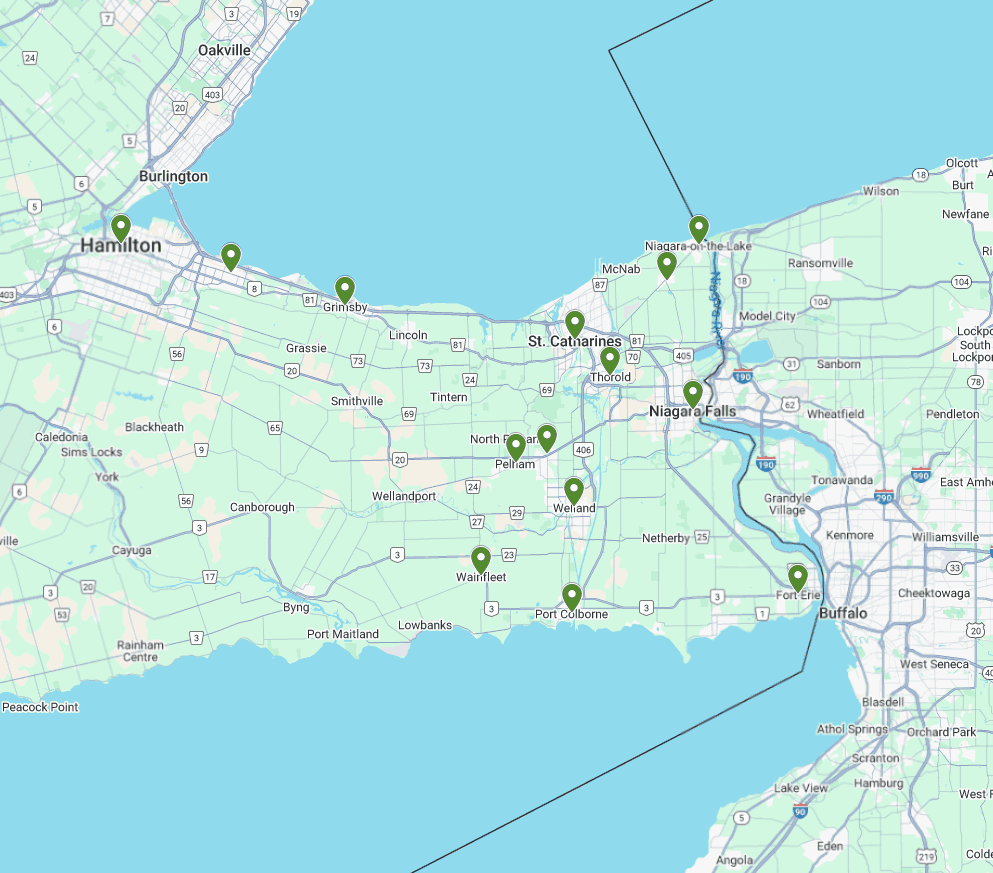
Our service areas encompass a wide range of locations, ensuring that we can meet the needs of our clients wherever they are. From bustling urban centers to serene rural landscapes, we are committed to providing top-notch services tailored to each unique environment.