



This service page describes expert tankless water heater repair in Grimsby, ON, including common failure modes, diagnostic steps, and practical repair strategies. Technicians emphasize timely intervention to prevent heat exchanger damage, reduce energy waste, and restore continuous hot water. The guide covers diagnostic flow, typical parts replacements, expected timelines and costs, emergency options, maintenance tips, and preventive measures to extend unit life. It presents a clear, location-specific approach designed to minimize downtime and protect homes from cold-water shocks.
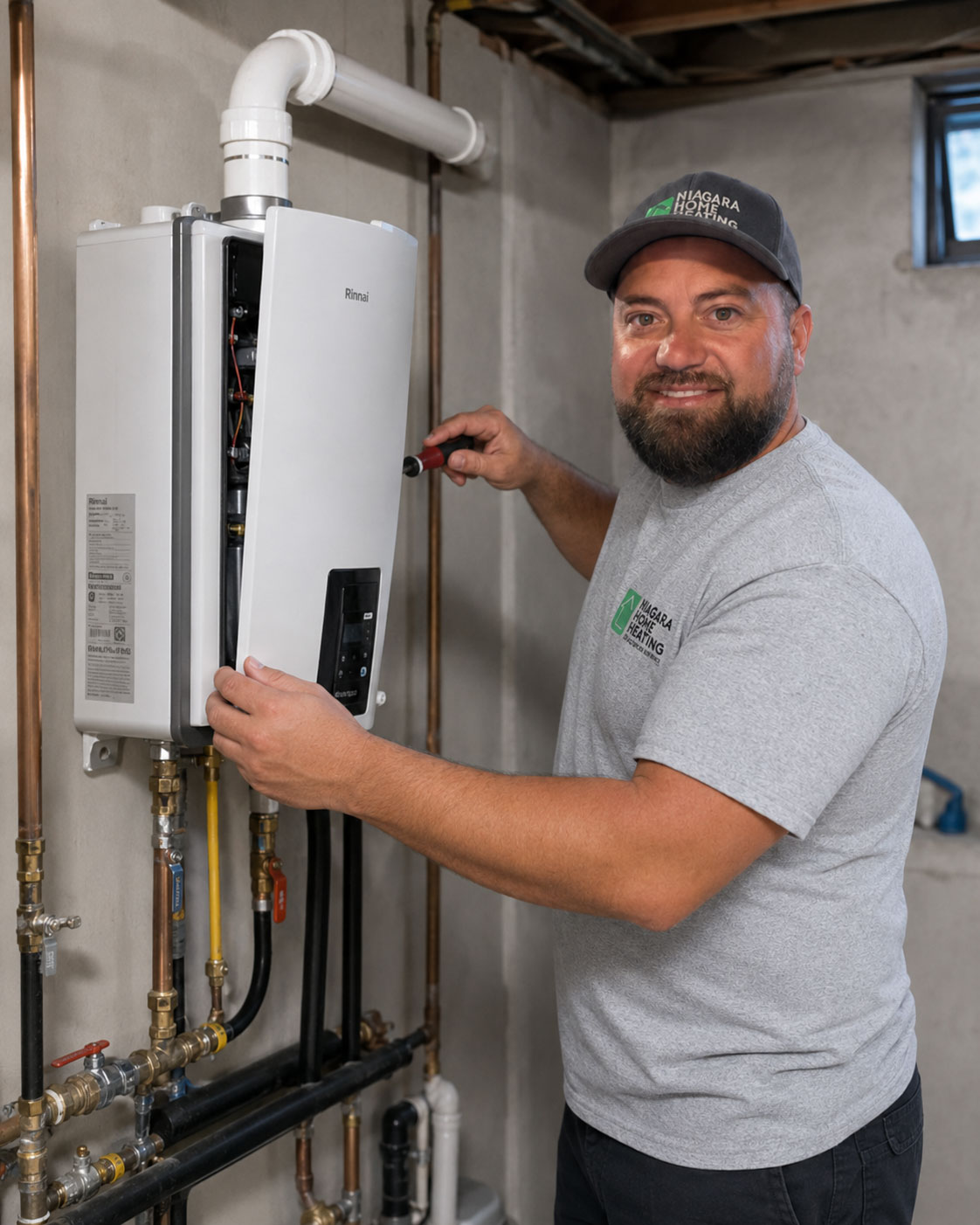
Tankless Water Heater Repair in Grimsby, ON
If your tankless water heater is underperforming, showing error codes, or suddenly stopped producing hot water, you need focused, professional repair that gets your home back to normal quickly. Tankless systems are efficient and compact, but they are sensitive to water quality, gas pressure and routine maintenance. common tankless water heater issues in Grimsby, ON, how technicians diagnose problems, typical repair solutions and parts replacement, what to expect for timelines and costs, emergency/rapid-response options, and practical steps to reduce future breakdowns.
Why timely tankless water heater repair matters in Grimsby
Grimsby’s seasonal temperature swings and local water mineral content make tankless units more susceptible to scale buildup and freeze-related stress. When a tankless unit fails, households lose continuous hot water on demand and may experience higher operating costs if the unit is running inefficiently. Prompt, expert repair prevents damage to expensive components like the heat exchanger and helps retain the unit’s energy-saving performance.
Common tankless water heater issues in Grimsby, ON
- Ignition problems or no burner flame: Caused by faulty ignitors, gas valve failures, or inadequate gas supply/pressure.
- Scale buildup on the heat exchanger: Hard water minerals reduce heat transfer, trigger error codes, and lower flow/temperature. Grimsby’s regional water hardness makes this a frequent cause.
- Flow sensor faults: If the system does not detect water flow correctly it may not fire, or it may overheat. Blocked or failed flow sensors are common.
- Heat exchanger leaks or corrosion: Slow leaks or cracking often require major repair or replacement. Corrosion is accelerated by poor water chemistry.
- Error codes and control board failures: Electronic faults can be intermittent and require diagnostic testing to isolate.
- Venting and combustion issues: Obstructed or improperly installed venting can cause shutdowns or unsafe operation.
- Frozen or burst condensate/drain lines: Cold snaps can damage external drains or pipes feeding the unit.
Professional diagnostic and inspection process
Technicians follow a structured diagnostic flow to identify the root cause rather than guessing:
Typical repair solutions and parts replacement
- Descale and flush service: Removes mineral buildup from heat exchangers and internal passages — restores efficiency and solves many heat-related errors.
- Flow sensor replacement: Replacing a failed flow sensor restores proper firing and temperature control.
- Ignitor, flame rod or gas valve replacement: Repairs to ignition components resolve no-fire and intermittent flame issues.
- Control board or electronics replacement: When diagnostics point to failed controls, replacement restores reliable operation.
- Heat exchanger repair or replacement: Minor leaks sometimes can be stabilized; larger cracks or corrosion typically require exchanger replacement or full unit replacement depending on age.
- Venting repairs or adjustments: Clearing obstructions, re-routing or repairing vent terminations to meet combustion air needs.
- Install inline filter or scale control: Adds protection to prevent future sensor and heat exchanger fouling.
Emergency and rapid-response options
Tankless failures can happen at any time. Rapid-response repair options typically include same-day diagnostics for system outages, temporary bypasses to restore hot water (where feasible), and prioritized parts replacement. Emergency availability depends on scheduling and parts on hand; technicians will triage to stabilize your system and explain next steps.
Estimated repair timelines and cost factors
- Most diagnostic visits take 30–90 minutes. Simple repairs such as sensor or ignitor replacement, or a flush and descale, are often completed the same day (1–4 hours).
- More extensive repairs like heat exchanger replacement or major control board work can require multiple hours and sometimes parts ordering; timeline typically ranges from a same-day repair to a few days depending on parts availability.
- Cost is influenced by: unit age and warranty status, severity of scale or corrosion, whether OEM parts are required, and whether venting or gas piping work is needed. Minor repairs are less costly than heat exchanger or full unit replacement. Technicians should provide a clear, itemized estimate after on-site diagnosis.
Warranty and service guarantees
Industry-standard practice is to back repairs with a workmanship guarantee and to honor remaining manufacturer warranties on parts. Workmanship guarantees commonly cover labour for a specified period after service, while replacement parts are covered by the parts manufacturer’s warranty. Ask for a written summary of what’s covered, the warranty period for labour and parts, and any conditions that could void coverage (such as unaddressed hard water issues).
Preventive care to avoid repeat breakdowns
- Annual descaling and maintenance: At minimum, tankless units in Grimsby benefit from yearly descaling to remove mineral deposits. High-mineral areas may require more frequent service.
- Install a sediment/inline filter: Captures particulate matter that can foul flow sensors and internal passages.
- Consider a water softener or scale inhibitor: Reduces hardness to protect the heat exchanger and sensors.
- Flush condensate and drain lines before cold weather: Prevents freeze damage during Grimsby’s winter months.
- Follow manufacturer-recommended service intervals: Keeps control electronics and combustion components within spec and prolongs equipment life.
Scheduling service (what to prepare)
When arranging a repair visit, have the tankless unit’s make, model, serial number, approximate age, recent symptoms and any error codes ready. Note when the problem started and whether it is constant or intermittent. This information speeds diagnostics and helps technicians bring appropriate parts and tools.
Regular maintenance and rapid repairs extend the life of tankless water heaters and protect your home from unexpected cold-water shocks. Proper diagnosis, targeted repairs, and preventive measures tailored for Grimsby homes will keep your tankless system delivering reliable, efficient hot water on demand.

Customer Testimonials

I had an issue with my hot water tank and called Niagara Home Heating. Their service was fantastic and reasonably priced—exactly how a business should be run!

Lifesavers!! The AC in our house decided to quit the day we were passing the keys to the new owners!! Instead of making a service call to the house, John coached me through the minor repair over the phone, saving me the money and time waiting for a repair person to come.Much appreciated! Thanks again John
I called John today at 2:pm as my AC was not working and I wasn’t expecting even a call back as I knew with this hot weather we have had he would be swamped with calls. Well he called me back and showed at 8:pm on the same day to fix my AC. That is just incredible service and how much John really cares about his clients. Thank you John !
I have used Niagara Home heating for multiple projects for over 16 years. John and his staff are absolutely the best. I tell all my friends and family about Niagara Home Heating because you won’t get any better service or pricing anywhere in Niagara. He has saved me thousands and thousands of dollars and has never let me down.
Very efficient company. I needed an old solar water heater removed from my roof. They were quick to book an appointment for the next day after I sent photos. They were very knowledgeable of the issue. The 2 guys that came were friendly and competent with the job, including removal of all parts.
We had an amazing experience getting our new furnace installed with Niagara Home Heating. The owner was very helpful, their quote was more then competitive and the technician who installed the unit was professional and friendly. I would recommend their services.

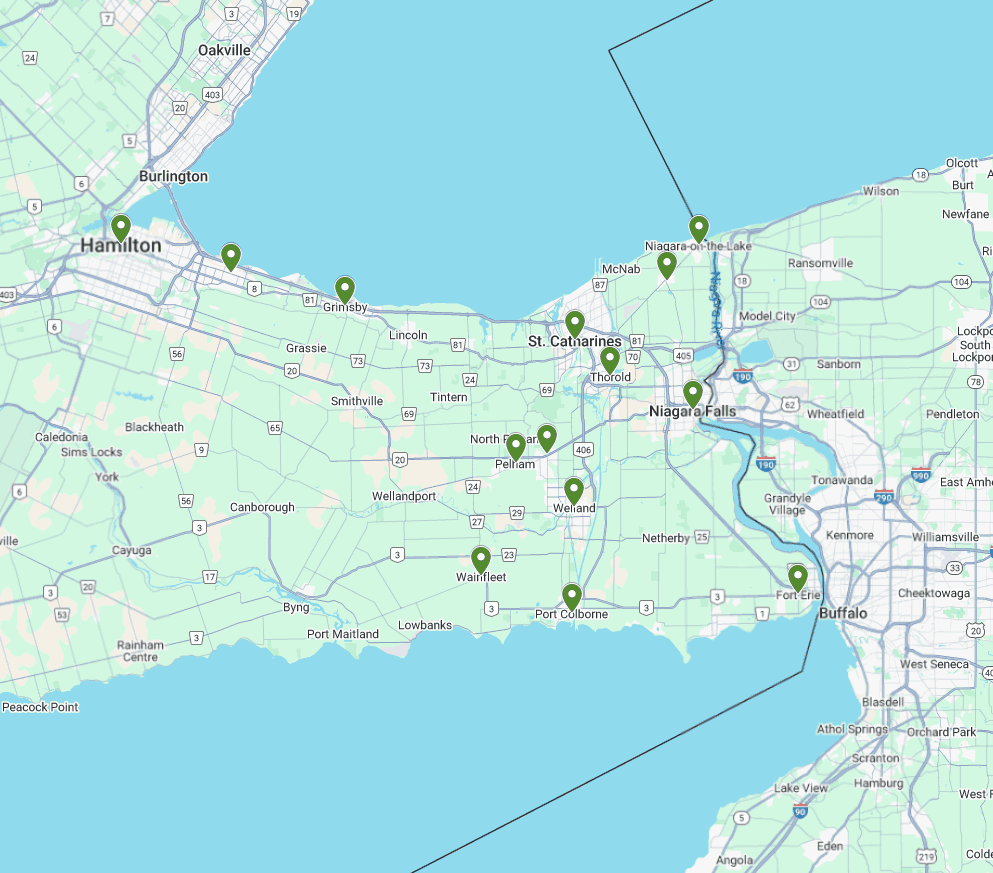
Service Areas
Our service areas encompass a wide range of locations, ensuring that we can meet the needs of our clients wherever they are. From bustling urban centers to serene rural landscapes, we are committed to providing top-notch services tailored to each unique environment.