



Fort Erie water heater repair guidance describes how home service teams diagnose and fix failures in both tank and tankless systems, with on-site testing, leak checks, and safety inspections aligned to Ontario standards. It covers common symptoms, emergency steps, expected timelines, and cost factors, plus maintenance tips like flushing, anode checks, and valve testing to extend life. It emphasizes professional, on-site repairs, upfront parts guidance, and options to replace when efficiency or safety warrants a longer-term solution.
.jpeg)
Water Heater Repair in Fort Erie, ON
An unexpected hot water outage or a leaking tank disrupts daily life fast. In Fort Erie homes, reliable water heater repair is essential year-round — winters are cold, summers bring high use, and local water with higher mineral content can accelerate wear. common water heater problems in Fort Erie, how professional diagnostics and on-site repairs work, differences between tank and tankless systems, emergency options, realistic timelines, warranty and maintenance guidance, and what to prepare when arranging service.
Common symptoms of a failing water heater in Fort Erie
- No hot water or inconsistent temperatures: complete loss or fluctuating hot water, often caused by failed heating elements, thermostats, or ignition problems.
- Leaks around the tank or fittings: corrosion, failing valves, or loose connections. Even small drips signal a risk of major failure.
- Strange noises: banging, popping, or rumbling usually mean sediment buildup on the bottom of tanks, reducing efficiency and causing stress. Fort Erie’s mineral-rich water increases this risk.
- Pilot light or ignition failures (gas units): pilot outages, repeated ignition attempts, or safety lockouts point to thermocouple, gas valve, or control module issues.
- Discolored or foul-smelling water: rust or bacteria from a deteriorating tank or corroded anode rod.
- Low water pressure or reduced hot water flow: scale, blocked dip tubes, or failing flow sensors on tankless units.
Diagnostic procedures: what a technician checks
A methodical diagnosis pinpoints the underlying cause rather than treating symptoms. Typical checks include:
- Visual inspection for leaks, corrosion, or venting issues.
- Verifying power supply and breakers for electric units; checking gas supply and pressure for gas units.
- Measuring water temperature, pressure, and thermostat settings.
- Testing heating elements, thermostats, ignition systems, thermocouples, and gas valves with industry-standard tools.
- Flushing and inspecting interior for sediment, anode rod condition, and dip tube integrity.
- For tankless units, testing flow sensors, ignition modules, heat exchanger condition, and running error-code diagnostics.
- Safety checks of pressure relief valves and venting to Ontario safety standards.
On-site troubleshooting and parts replacement
Once the problem is identified, most repairs are completed on site the same day when parts are available. Common on-site services include:
- Replacing heating elements, thermostats, thermocouples, ignitors, and gas valves.
- Swapping out pressure relief valves, drain valves, dip tubes, and anode rods.
- Repairing or replacing leaks at fittings, unions, and nipples; tightening or replacing sacrificial anode.
- Flushing tanks to remove sediment and restore efficiency.
- Descaling and cleaning heat exchangers, inlet screens, and filters on tankless units.
- Replacing flow sensors, control boards, or entire burners/heat exchangers for serious tankless failures.
Technicians will explain whether OEM or compatible aftermarket parts are recommended and how part choices affect longevity and warranty coverage.
Tank vs tankless water heater repairs — key differences
- Tank water heaters: common failures include heating elements (electric), thermostats, tank corrosion, sediment buildup, and leaks. Repairs are generally straightforward and frequently completed the same day. Regular flushing and anode inspection extend life.
- Tankless water heaters: issues often involve scale buildup on the heat exchanger, flow sensor or ignition problems, and blocked venting. Descaling and sensor replacement are common; if the heat exchanger is damaged, repairs can be more complex and may require ordering parts or a longer service window.
Emergency response and homeowner safety steps
For sudden leaks, gas smells, or no hot water during freezing weather, immediate safety steps can limit damage:
- For leaks: shut off the cold-water supply to the unit and the electrical breaker for electric heaters. Drain remaining water if safe to do so.
- For gas odor: do not operate electrical switches. Open windows, leave the home, and contact your gas utility and a licensed technician.
- For complete loss in freezing temperatures: try to maintain minimal water flow through external faucets to prevent pipe freezing and protect property.
Many service providers offer 24/7 emergency response; expect a priority dispatch protocol, on-site triage, and temporary measures to restore hot water or prevent damage until a full repair is possible.
Expected repair timelines
- Minor repairs (thermostat, element, valve, ignition module): often completed same day.
- Moderate repairs (anode rod replacement, sediment flush, sensor replacements, descaling tankless units): typically scheduled within 24 to 48 hours.
- Major repairs (heat exchanger replacement, extensive tank corrosion, complex gas component replacement): may require ordering parts and take several days to a week depending on availability.
Timelines depend on part availability, unit age, and access to the installation.
What affects repair cost (no pricing listed)
Repair cost is influenced by:
- Type and age of water heater (tank vs tankless, tank capacity, brand).
- Nature of the problem (minor component vs major heat exchanger or tank failure).
- Parts required (OEM parts generally cost more but preserve warranty).
- Accessibility of the unit and any safety or code upgrades needed during repair.
- Local labor standards and any required permits or inspections.
Technicians will explain whether repair or replacement is the more cost-effective, long-term solution based on unit age, condition, and energy efficiency considerations.
Warranty, safety, and maintenance recommendations
- Inspect anode rods every 1 to 3 years; replace when significantly corroded to prevent tank failure.
- Flush tank water heaters annually to remove sediment; in Fort Erie, more frequent flushing may be needed due to mineral content.
- Test temperature-pressure relief valves yearly and ensure set temperature is within safe limits (typically 120 F/49 C recommended for safety and energy savings).
- For tankless units, schedule descaling and inlet filter cleaning every 1 to 2 years depending on local water hardness.
- Keep records of maintenance and repairs; many manufacturer warranties require documented service to remain valid.
- Ensure gas appliance work is performed by certified technicians and that venting and combustion air are compliant with Ontario safety standards.
Preparing to schedule service
When arranging a repair visit, have the following ready to streamline diagnostics:
- Unit make, model, and age if known.
- A clear description of symptoms and when they began.
- Any visible error codes or indicator lights.
- Accessibility details (basement, utility closet, outdoor tank) and whether stairs or tight spaces are involved.
A well-documented history and easy access help reduce time on site and speed repair.
ConclusionPrompt, professional water heater repair protects your home from damage, restores daily comfort, and can extend the life of your system. In Fort Erie, where cold weather and mineral-rich water increase stress on systems, preventive maintenance and timely diagnostics make a tangible difference in performance and reliability. Regular inspections, targeted repairs, and adherence to local safety requirements will keep hot water flowing when you need it most.

Customer Testimonials

We had an amazing experience getting our new furnace installed with Niagara Home Heating. The owner was very helpful, their quote was more then competitive and the technician who installed the unit was professional and friendly. I would recommend their services.

I called John today at 2:pm as my AC was not working and I wasn’t expecting even a call back as I knew with this hot weather we have had he would be swamped with calls. Well he called me back and showed at 8:pm on the same day to fix my AC. That is just incredible service and how much John really cares about his clients. Thank you John !
Very efficient company. I needed an old solar water heater removed from my roof. They were quick to book an appointment for the next day after I sent photos. They were very knowledgeable of the issue. The 2 guys that came were friendly and competent with the job, including removal of all parts.
Lifesavers!! The AC in our house decided to quit the day we were passing the keys to the new owners!! Instead of making a service call to the house, John coached me through the minor repair over the phone, saving me the money and time waiting for a repair person to come.Much appreciated! Thanks again John
I had an issue with my hot water tank and called Niagara Home Heating. Their service was fantastic and reasonably priced—exactly how a business should be run!
I have used Niagara Home heating for multiple projects for over 16 years. John and his staff are absolutely the best. I tell all my friends and family about Niagara Home Heating because you won’t get any better service or pricing anywhere in Niagara. He has saved me thousands and thousands of dollars and has never let me down.

Service Areas
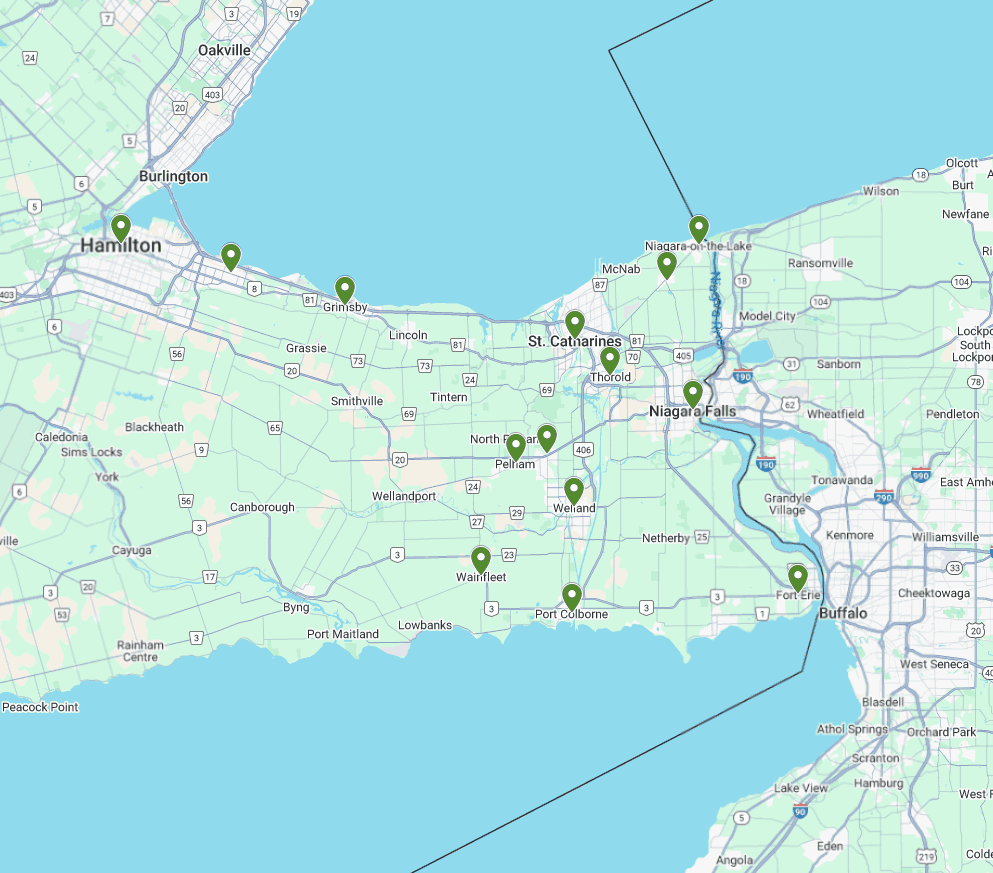
Our service areas encompass a wide range of locations, ensuring that we can meet the needs of our clients wherever they are. From bustling urban centers to serene rural landscapes, we are committed to providing top-notch services tailored to each unique environment.