



Water Heater Repair in Thorold, ON provides a comprehensive overview of diagnosing and repairing both tank and tankless systems, with local considerations like hard water and cold winters. The guide lists common symptoms such as lack of hot water, fluctuating temperatures, leaks, and noisy units, then details an on-site diagnostic process, realistic repair timelines, and emergency response priorities. It also covers technician qualifications, warranties, transparent pricing, and maintenance steps to extend equipment life in this region.

Water Heater Repair in Thorold, ON
When your hot water stops working in the middle of winter or a visible leak threatens flooring, prompt, professional water heater repair protects your home and prevents costly secondary damage. Water Heater Repair in Thorold, ON covers both traditional tank systems and modern tankless units. This service page explains common symptoms, how on-site diagnosis works, realistic repair options and timelines, emergency response considerations, technician qualifications, warranty expectations, pricing transparency, and maintenance steps to extend the life of your equipment — with local factors like Niagara Region water hardness and cold Ontario winters in mind.
Common water heater problems in Thorold homes
Recognizing symptoms early helps avoid complete failure. Common water heater repair issues in Thorold include:
- No hot water or intermittent hot water
- Causes: failed heating element, burned-out gas control valve, ignition failure (tankless and gas tanks), thermostat problems, or sediment insulation.
- Hot water runs out quickly or fluctuating temperatures
- Causes: sediment build-up, failing dip tube, undersized unit, or control failure.
- Leaks or pooling water around the tank
- Causes: corroded tank, loose plumbing connections, failing pressure relief valve.
- Strange noises (popping, rumbling, gurgling)
- Causes: sediment accumulation at the bottom of tank-type heaters causing localized boiling.
- Pilot light or ignition issues (gas tanks and tankless)
- Causes: faulty thermocouple, blocked pilot orifice, ignition module failure, or gas supply problems.
- Reduced flow or frequent shutdowns on tankless units
- Causes: scale build-up on heat exchanger, clogged inlet filters, failing flow sensor.
- Discolored or metallic-tasting hot water
- Causes: corroded anode rod or rusting inside tank.
- Frequent cycling or high energy bills
- Causes: poor insulation, failing thermostat, or inefficient older unit.
Thorold and the broader Niagara Region commonly experience moderately hard water. Mineral scale accelerates element and heat exchanger wear, so scale-related problems are among the most frequent local repair causes.
On-site diagnostic process
A clear diagnostic approach ensures accurate recommendations and efficient repairs. Typical diagnostic steps:
Typical on-site diagnostics take 30 minutes to 90 minutes depending on system access and complexity.
Repair options and estimated timelines
Repairs range from quick component swaps to full system replacements. Typical repair options and realistic timelines:
- Replace heating element or thermostat (electric tank) — 1 to 2 hours.
- Replace anode rod or dip tube — 1 to 2 hours.
- Repair or replace gas control valve or thermocouple (gas tank) — 1 to 3 hours.
- Replace leaking valves, fittings, or TPR valve — 0.5 to 2 hours.
- Descale, purge, or replace scale-prone components (tankless or tank) — 1 to 3 hours.
- Repair ignition module or burner assembly (tankless) — 1 to 3 hours.
- Minor plumbing repairs for leaks and pipe replacements — 1 to 4 hours.
- Full tank replacement — typically a half-day to a full day depending on removal, new unit installation, venting, and permits.
- Tankless replacement or installation — generally a half-day to a full day, depending on gas line upgrades, venting, or electrical requirements.
Part availability and the age of the unit influence timelines. For units beyond typical service life (tank: roughly 8 to 12 years; tankless: 15 to 20 years), replacement is often the more cost-effective and reliable long-term option.
Emergency response and safety
Gas leaks, active flooding, visible electrical arcing, or loss of hot water during a deep freeze create urgent risk. Emergency water heater repair services prioritize safety issues and critical failures. Prompt intervention in Thorold prevents frozen pipes, water damage to finished floors, and unsafe combustion conditions during cold months. Emergency response times vary with local demand and weather but are structured to address life-safety concerns first.
Technician qualifications and standards
Reliable repairs require certified, experienced technicians. Expect technicians to be:
- Gas licensed and trained to Ontario safety and fuel code standards for combustion appliances.
- Factory-trained or experienced with major water heater brands and both tank and tankless technologies.
- Insured, background-checked, and equipped with modern diagnostic tools.
- Knowledgeable about local building codes, venting, and municipal permit requirements.
- Able to provide clear, written estimates and explain repair vs replacement trade-offs.
Technicians should also respect your home, follow job-site protection practices, and document repairs with parts and labour details.
Warranty and pricing information
Transparent warranty and pricing practices matter at decision time. Typical warranty elements include:
- Manufacturer warranties on new units and major components (ranges vary by model and brand).
- Labour warranties from service providers that often cover workmanship for a specified period (commonly 30 to 365 days depending on policy).
- Written estimates that break out parts, labour, and whether permits are included.
Pricing models vary: many repairs are quoted as flat rates for specific parts and labour, while more complex diagnostics or commercial systems may use hourly rates plus parts. Always request a written estimate and warranty details before work begins.
Maintenance tips to extend equipment life in Thorold
Regular maintenance reduces repair frequency and improves efficiency, especially in areas with hard water:
- Flush tank-type water heaters every 6 to 12 months to remove sediment; more frequently if water is very hard.
- Replace the anode rod every 3 to 5 years or when significantly corroded.
- Test the TPR valve annually to confirm it opens and reseals properly.
- For tankless units, perform annual descaling/purging and clean inlet filters; consider a water softener or descaler if scale is severe.
- Insulate exposed hot water pipes and the first 2 meters of tank piping to reduce heat loss.
- Keep combustion air and venting clear of obstructions; inspect vents yearly.
- Set water temperature appropriately: Ontario guidance often recommends 60 degrees Celsius for safety against bacteria, balanced with a mixing valve at fixtures to prevent scalding and reduce energy use.
Timely maintenance and informed repairs help Thorold homeowners maximize system life, lower operating costs, and avoid disruptive failures during cold weather.
Repairing a malfunctioning water heater quickly and correctly protects your home, conserves energy, and restores comfort. Understanding symptoms, realistic repair timelines, and preventive care specific to Thorold’s climate and water conditions empowers you to make the best long-term decision for your hot water needs.

Customer Testimonials

I had an issue with my hot water tank and called Niagara Home Heating. Their service was fantastic and reasonably priced—exactly how a business should be run!

We had an amazing experience getting our new furnace installed with Niagara Home Heating. The owner was very helpful, their quote was more then competitive and the technician who installed the unit was professional and friendly. I would recommend their services.
I called John today at 2:pm as my AC was not working and I wasn’t expecting even a call back as I knew with this hot weather we have had he would be swamped with calls. Well he called me back and showed at 8:pm on the same day to fix my AC. That is just incredible service and how much John really cares about his clients. Thank you John !
Lifesavers!! The AC in our house decided to quit the day we were passing the keys to the new owners!! Instead of making a service call to the house, John coached me through the minor repair over the phone, saving me the money and time waiting for a repair person to come.Much appreciated! Thanks again John
I have used Niagara Home heating for multiple projects for over 16 years. John and his staff are absolutely the best. I tell all my friends and family about Niagara Home Heating because you won’t get any better service or pricing anywhere in Niagara. He has saved me thousands and thousands of dollars and has never let me down.
Very efficient company. I needed an old solar water heater removed from my roof. They were quick to book an appointment for the next day after I sent photos. They were very knowledgeable of the issue. The 2 guys that came were friendly and competent with the job, including removal of all parts.

Service Areas
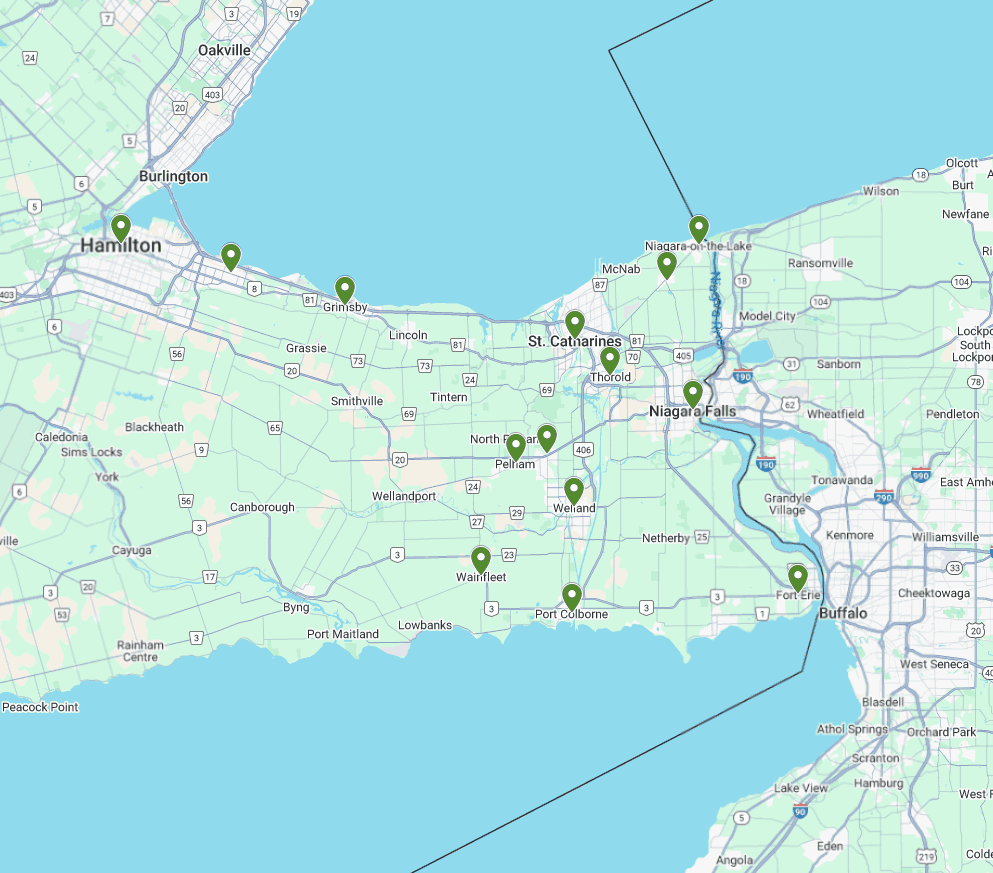
Our service areas encompass a wide range of locations, ensuring that we can meet the needs of our clients wherever they are. From bustling urban centers to serene rural landscapes, we are committed to providing top-notch services tailored to each unique environment.