



It describes furnace replacement in Thorold, ON, detailing why upgrading matters for comfort, safety, and efficiency in cold winters. It describes the full process—from on-site assessment and Manual J load calculations to professional removal, installation, venting updates, and commissioning—ensuring a properly sized, code-compliant system. It covers selecting make, model, and AFUE, financing options, warranties, and required testing, as well as maintenance tips to maximize performance and reliability for Thorold homes. Expect improved comfort, lower bills, and long-term protection through professional oversight.
-min.jpeg)
Furnace Replacement in Thorold, ON
Replacing a furnace is one of the biggest decisions for home comfort, energy bills, and safety. In Thorold, ON, where winters can be long and temperatures dip well below freezing, a properly sized, professionally installed furnace keeps your home safe and affordable to heat. This page explains the full furnace replacement process — from on-site assessment and load calculation to final testing and warranty handoff — so you know what to expect and can choose the right system for your Thorold home.
Why replace your furnace now
- Older furnaces lose efficiency and become more expensive to run.
- Frequent breakdowns, rising repair costs, and unreliable heating during cold snaps create risk.
- Modern high-efficiency furnaces reduce fuel consumption and improve indoor comfort.
- Replacement improves safety by eliminating carbon monoxide and venting risks tied to aging equipment.
Common furnace replacement reasons in Thorold, ON
- Furnace is more than 15 years old and approaching end of useful life.
- Repeated repairs or parts no longer available.
- Rising natural gas or electricity costs make efficiency upgrades economical.
- Uneven heating or rooms that never get warm because the system is undersized or ductwork is compromised.
- Safety warnings: rusted heat exchanger, persistent carbon monoxide alerts, or frequent limit trips.
On-site assessment and load calculation
A correct replacement starts with a professional on-site assessment. Key steps:
- Visual inspection of furnace, ductwork, vents, and combustion air pathways.
- Review of existing thermostat, zoning, and any compatibility concerns.
- Detailed Manual J load calculation to determine the exact heating capacity your home needs, accounting for:
- Square footage, ceiling height, insulation levels, window types, and air infiltration.
- Thorold-specific climate factors such as typical winter lows and humid summer transitions.
- Recommendations for ductwork upgrades, airflow improvements, or zoning if needed.
A properly sized furnace avoids short-cycling, reduces energy waste, and extends equipment life.
Choosing the right make, model, and efficiency rating
Selecting equipment is about matching performance to your home and budget:
- Efficiency rating: AFUE percentages indicate how much fuel converts to heat. Modern furnaces commonly range from mid-80s AFUE to mid-90s AFUE. Higher AFUE saves energy but costs more up front.
- Modulation and staging: Two-stage or variable-speed furnaces run at lower outputs most of the time for better comfort and efficiency versus single-stage units.
- Fuel type: Natural gas is common in Thorold; propane or electric options exist depending on your home’s infrastructure.
- Sizing: Use the Manual J result; upsizing to “just in case” increases costs, short cycling, and wear.
- Compatibility: Ensure the furnace works with your existing thermostat, air cleaner, humidifier, or heat pump components if present.
Comparing common brands and product categories
When evaluating brands, consider:
- Reliability and parts availability in the Niagara Region.
- Local service network and warranty support.
- Energy efficiency and noise performance.
- Typical options by category:
- Value-oriented single-stage furnaces — lower cost, reliable for budget installs.
- Mid-range two-stage furnaces — better comfort and savings.
- High-efficiency modulating furnaces — best comfort, lowest operating cost, higher initial investment.
Ask for objective comparisons focused on lifecycle cost, not just purchase price.
Financing and rebate options in Thorold, ON
Replacing a furnace often qualifies for financing or incentives that reduce upfront cost:
- Manufacturer financing plans and low-interest options through lenders.
- Provincial or federal energy efficiency rebates and incentives for high-efficiency equipment or home retrofits (eligibility varies; documentation is required).
- Utility programs or local incentives that support reduced energy demand.
- Tax credits or loan programs tied to energy upgrades.
Confirm eligibility before purchase and keep installation invoices and equipment serial numbers for rebate applications.
Professional removal and installation: step-by-step
A professional installation follows strict safety and code requirements:
Important ductwork and venting considerations:
- Leaky ducts reduce system performance and increase costs; sealing and insulating may be recommended.
- Incorrect vent sizing or degraded flues are safety hazards; replacement or rework may be required.
- Condensing high-efficiency furnaces require proper condensate drainage.
Timeline expectations
- On-site assessment and written proposal: typically same day or within a few days.
- Scheduling installation: depends on parts availability and season; many Thorold homeowners schedule before deep winter to avoid delays.
- Typical installation time: 4 to 8 hours for a standard replacement; more for complex duct or vent upgrades.
- Larger jobs (new duct layouts, structural work, or multi-system integrations) may take 1–3 days.
Warranty, documentation, and maintenance handoff
After installation you should receive:
- Manufacturer warranty information for the furnace and components.
- Installer workmanship warranty covering labor and any installation-related issues.
- A package of documents: equipment model and serial numbers, operating instructions, and maintenance schedule.
- Recommendations for an annual tune-up to maintain efficiency and warranty compliance.
Before-and-after testing for safe, efficient operation
Professional installers complete a final testing sequence to confirm performance:
- Carbon monoxide and combustion efficiency tests to verify safe exhaust.
- Measured supply and return airflow checks and static pressure readings.
- Temperature rise across the heat exchanger to confirm proper operation.
- Thermostat calibration and verification of staging/modulation settings.
- Demonstration of operation and a review of filters and maintenance tasks with the homeowner.
These tests ensure your new furnace operates safely, efficiently, and delivers the comfort intended.
Long-term benefits and maintenance tips for Thorold homes
- Expect improved comfort, lower fuel bills, and reduced repair frequency with modern high-efficiency equipment.
- Seasonal maintenance extends service life: change filters regularly, schedule annual inspections, and keep surrounding areas clear of stored items.
- Address duct sealing and insulation in older Thorold homes to capture maximum efficiency gains.
A clear assessment, professional installation, proper venting and ductwork attention, and documented testing leave you with a safe, efficient heating system suited to Thorold’s climate. This approach protects your investment, reduces operating costs, and keeps your home reliably warm through Ontario winters.

Customer Testimonials

I called John today at 2:pm as my AC was not working and I wasn’t expecting even a call back as I knew with this hot weather we have had he would be swamped with calls. Well he called me back and showed at 8:pm on the same day to fix my AC. That is just incredible service and how much John really cares about his clients. Thank you John !

We had an amazing experience getting our new furnace installed with Niagara Home Heating. The owner was very helpful, their quote was more then competitive and the technician who installed the unit was professional and friendly. I would recommend their services.
Very efficient company. I needed an old solar water heater removed from my roof. They were quick to book an appointment for the next day after I sent photos. They were very knowledgeable of the issue. The 2 guys that came were friendly and competent with the job, including removal of all parts.
I have used Niagara Home heating for multiple projects for over 16 years. John and his staff are absolutely the best. I tell all my friends and family about Niagara Home Heating because you won’t get any better service or pricing anywhere in Niagara. He has saved me thousands and thousands of dollars and has never let me down.
I had an issue with my hot water tank and called Niagara Home Heating. Their service was fantastic and reasonably priced—exactly how a business should be run!
Lifesavers!! The AC in our house decided to quit the day we were passing the keys to the new owners!! Instead of making a service call to the house, John coached me through the minor repair over the phone, saving me the money and time waiting for a repair person to come.Much appreciated! Thanks again John

Service Areas
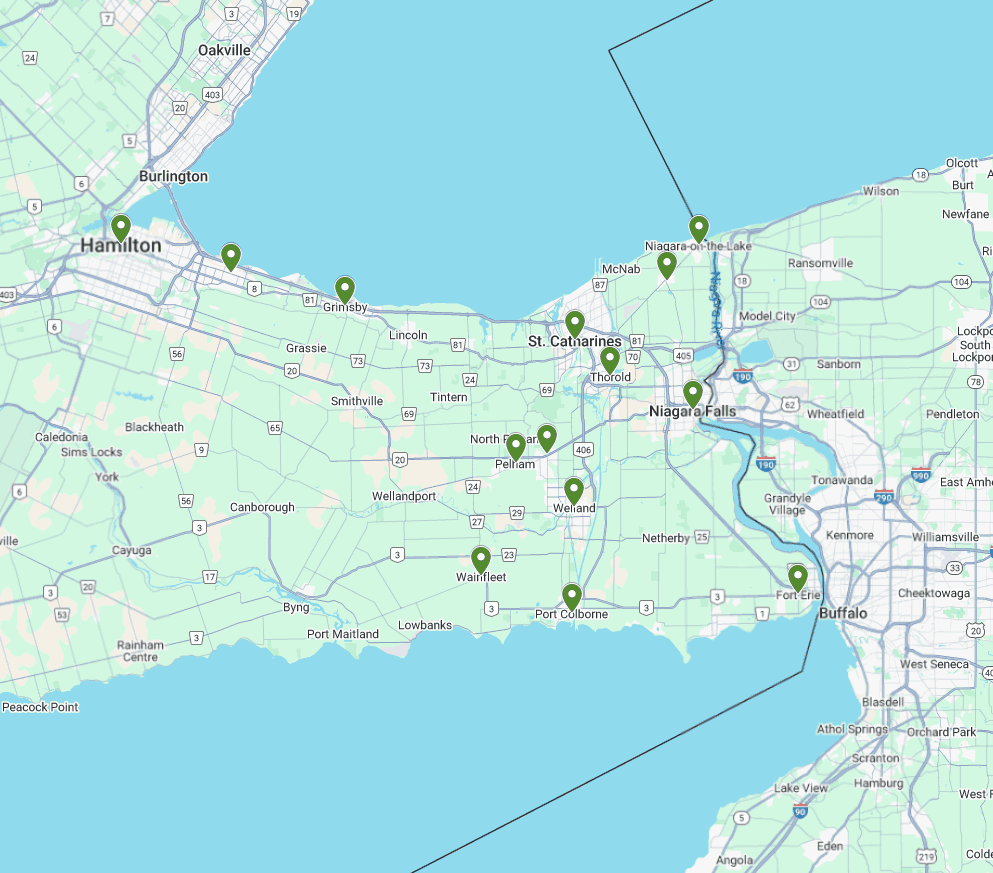
Our service areas encompass a wide range of locations, ensuring that we can meet the needs of our clients wherever they are. From bustling urban centers to serene rural landscapes, we are committed to providing top-notch services tailored to each unique environment.