



Water heater replacement in Stoney Creek, ON offers a tailored assessment to choose between tank, tankless, or hybrid systems based on household demand, water quality, and climate. The process begins with a site survey, sizing calculations, and clear cost and warranty comparisons. Homeowners benefit from improved reliability, energy efficiency, and lower long-term operating costs. The timeline covers evaluation, permits if needed, installation, and commissioning, with attention to venting, gas or electrical requirements, and proper disposal.
.jpeg)
Water Heater Replacement in Stoney Creek, ON
Replacing a water heater is one of the most impactful upgrades you can make for comfort, energy savings, and long-term reliability in Stoney Creek homes. Whether your current tank is failing, your household hot water demand has grown, or you want lower operating costs, a planned water heater replacement reduces emergency breakdown risk and helps you choose the right technology for Niagara Region conditions.
Why replace now? Common signs and local factors
If you live in Stoney Creek, ON, seasonal demands and local water quality affect water heater performance. Watch for:
- Age over 10–12 years (typical tank) or frequent service calls
- Rusty or discolored hot water, slow recovery, or diminished capacity
- Strange noises (sediment build-up causing popping or rumbling)
- Leaks or pooling around the unit
- Higher than normal energy bills tied to hot water use
Stoney Creek’s colder winters and moderately hard water in the Niagara Region accelerate corrosion and sediment buildup. Tankless systems are sensitive to scale; tanks accumulate sediment that shortens life. Those local realities influence the best replacement choice.
Types of replacements: tank vs tankless vs hybrid
- Traditional tank water heaters
- Best for lower upfront cost and simple replacement of an existing tank location.
- Choose capacity by household size: 40–50 gal for 1–2 people, 50–80+ gal for families.
- Typical lifespan: 8–15 years depending on maintenance and water quality.
- Tankless (on-demand) water heaters
- Provide continuous hot water and save space; ideal if you want a long-term reduction in operating costs.
- Sized by flow rate (GPM) and temperature rise; common whole-home units range 6–12+ GPM.
- May require upgraded gas line, venting, or electrical circuit in older Stoney Creek homes.
- Lifespan: often 15–25 years; sensitive to scale—recommended if you address hard water.
- Heat pump (hybrid) water heaters
- Highly energy efficient in moderate-temperature spaces (basements).
- Larger upfront price but significant operating savings in Ontario’s electricity context.
- Consider if your basement has enough clearance and moderate ambient temperature.
System evaluation and recommendation process
A professional water heater replacement begins with a site evaluation:
- Tank: match first-hour rating and capacity to peak use.
- Tankless: size for required GPM and local incoming water temperature.
Explain expected operating costs, warranty differences, and maintenance needs.
This tailored assessment prevents common pitfalls in Stoney Creek homes, such as undersized tankless units or inadequate venting that performs poorly in cold weather.
Step-by-step replacement timeline
Typical timeline for a straightforward replacement:
- Pre-installation evaluation and equipment selection: 1 visit, 30–90 minutes
- Permits and preparation (if required by local codes): 1–7 business days
- Removal and disposal of old unit: 30–90 minutes
- Installation of new unit (tank replacement): 2–4 hours
- Installation of tankless or hybrid (may require gas/electrical/venting upgrades): 4–8+ hours, sometimes 2 visits
- Commissioning, leak check, and user orientation: 30–60 minutes
Complex conversions (e.g., electric-to-gas, or adding larger gas piping/venting) add time. Permit processing time depends on municipal requirements in Hamilton/Stoney Creek jurisdiction.
Removal, disposal and safety
Professional replacement includes:
- Draining the old unit and disconnecting gas, water, or electrical safely
- Proper disposal and recycling of metal components and refrigerant-containing parts (for hybrids)
- Testing for gas leaks and ensuring venting safety on new install
- Leaving the installation area clean and protected
Proper disposal meets Ontario environmental and municipal regulations and minimizes property risk.
Brands, warranties and quality considerations
Common, reliable options include major tank and tankless manufacturers (examples across industry): Rheem, Bradford White, A.O. Smith, Rinnai, Navien, Bosch, and others. Key warranty differences:
- Tank units: typical manufacturer tank warranty ranges from 3 to 12 years for the tank; parts may have shorter warranties.
- Tankless units: heat exchanger warranties often run 10–15 years; parts commonly 3–5 years.
- Hybrid units: warranties vary but inspect compressor and tank coverage separately.
Always compare what the warranty covers (parts vs heat exchanger vs labor) and whether registration or professional installation is required to keep the warranty valid.
Financing and rebates (what to consider)
Replacing a water heater can be financed or supported through incentives:
- Federal and provincial energy-efficiency programs sometimes include rebates or incentives for high-efficiency electric heat pump water heaters or whole-home efficiency upgrades. Eligibility depends on program dates and criteria.
- Local utilities or energy-efficiency initiatives in Ontario may offer rebates for qualifying high-efficiency models or demand-reduction programs.
- Manufacturers and financing partners commonly offer installment plans: short-term 0% options or longer low-interest loans for equipment and installation. Read terms, fees, and total cost over time.
Always verify current program availability and eligibility before purchase; programs and offerings change periodically.
Expected costs, savings and benefits
- Upfront cost: traditional tanks have lower purchase and installation costs; tankless and hybrid models cost more initially but can cut operating costs.
- Operating savings: a high-efficiency tank or a properly sized tankless unit can reduce energy use; hybrids deliver the largest electricity-based savings where suitable.
- Lifespan and value: tankless and well-maintained hybrids typically outlast conventional tanks, lowering lifecycle cost per year.
- Additional benefits: increased hot water reliability, reduced risk of catastrophic tank leaks, space savings (tankless), and potential increases in home comfort and resale appeal in Stoney Creek’s local market.
Maintenance and longevity tips for Stoney Creek homes
- Flush tanks annually to reduce sediment and extend life.
- Install scale prevention for tankless units in hard-water areas or schedule descaling service every 12–24 months.
- Inspect anode rods on tanks every 2–3 years; replace as needed to prevent corrosion.
- Keep vents, combustion air, and clearances unobstructed, especially for gas units in unheated basements.
Replacing a water heater is both a technical choice and a long-term investment in your home’s comfort and energy use. With the right evaluation, sizing, and consideration of Stoney Creek-specific factors like winter temperatures and water hardness, homeowners can choose a solution that balances upfront cost, reliability, and lifetime energy savings.

Customer Testimonials

I had an issue with my hot water tank and called Niagara Home Heating. Their service was fantastic and reasonably priced—exactly how a business should be run!

We had an amazing experience getting our new furnace installed with Niagara Home Heating. The owner was very helpful, their quote was more then competitive and the technician who installed the unit was professional and friendly. I would recommend their services.
I called John today at 2:pm as my AC was not working and I wasn’t expecting even a call back as I knew with this hot weather we have had he would be swamped with calls. Well he called me back and showed at 8:pm on the same day to fix my AC. That is just incredible service and how much John really cares about his clients. Thank you John !
Lifesavers!! The AC in our house decided to quit the day we were passing the keys to the new owners!! Instead of making a service call to the house, John coached me through the minor repair over the phone, saving me the money and time waiting for a repair person to come.Much appreciated! Thanks again John
I have used Niagara Home heating for multiple projects for over 16 years. John and his staff are absolutely the best. I tell all my friends and family about Niagara Home Heating because you won’t get any better service or pricing anywhere in Niagara. He has saved me thousands and thousands of dollars and has never let me down.
Very efficient company. I needed an old solar water heater removed from my roof. They were quick to book an appointment for the next day after I sent photos. They were very knowledgeable of the issue. The 2 guys that came were friendly and competent with the job, including removal of all parts.

Service Areas
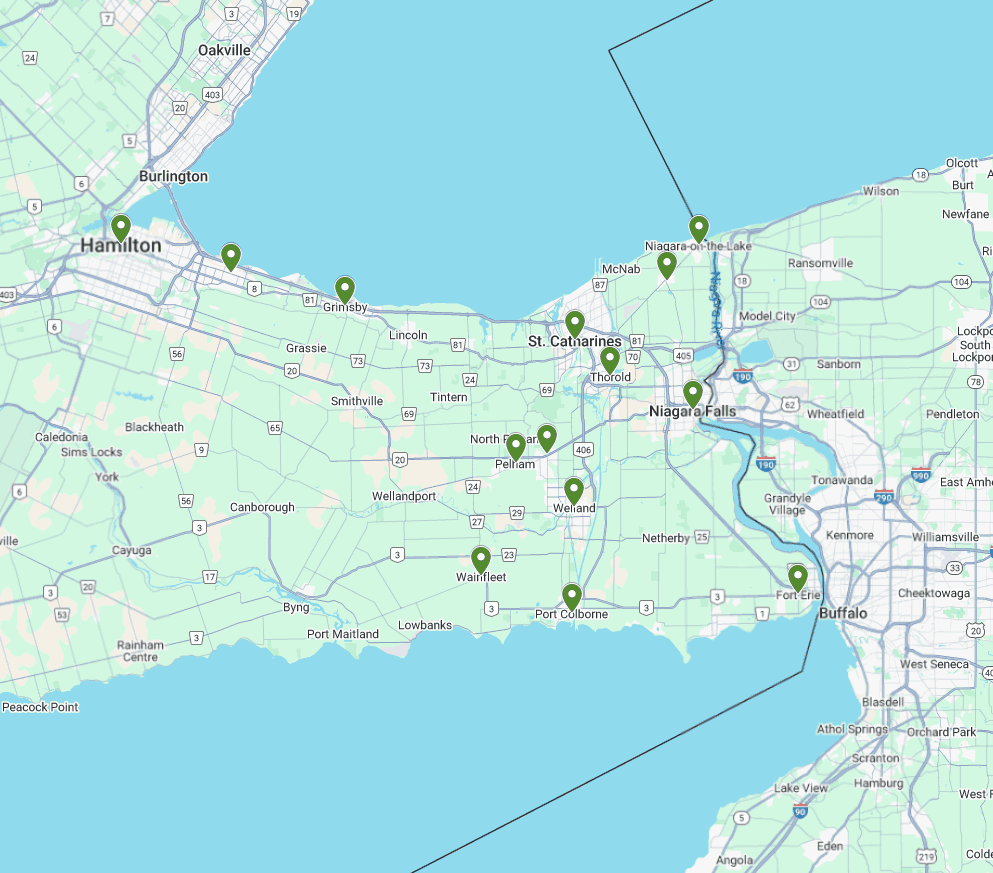
Our service areas encompass a wide range of locations, ensuring that we can meet the needs of our clients wherever they are. From bustling urban centers to serene rural landscapes, we are committed to providing top-notch services tailored to each unique environment.