



Heating replacement in Niagara On The Lake delivers a practical guide to evaluating when to upgrade, what a professional assessment covers, and how furnaces, boilers, and heat pumps compare in efficiency and long-term value. It describes a thorough replacement and disposal process, warranty and rebate considerations, and realistic timelines and costs. The guidance emphasizes proper sizing, code-compliant installation, and post-install maintenance to maximize comfort, energy savings, and reliability suited to Niagara On The Lake homes.
-min.jpeg)
Heating Replacement in Niagara On The Lake, ON
Upgrading your home heating system is a major decision—especially in Niagara On The Lake, where cold, lake-effect winters and a mix of historic and newer homes make reliable, efficient heat essential. It describes how to know when a replacement is needed, what a professional assessment covers, the pros and cons of furnaces, boilers, and heat pumps (with typical efficiency measures), how a professional replacement and disposal are handled, and what to expect for warranties, rebates, timelines, and outcomes specific to Niagara On The Lake homes.
Signs your heating system needs replacement
If you recognize any of the following in your home, replacement may be the most cost-effective, long-term solution:
- Age and reliability: Systems older than 15–20 years or with frequent breakdowns often cost more in repairs and lost efficiency.
- Rising energy bills: A steadily increasing heating cost despite regular maintenance usually points to declining system efficiency.
- Uneven heating or cold spots: Inadequate capacity or failing components can create rooms that never reach set temperatures.
- Poor indoor air quality or excessive dust: Leaks, rust, or degraded heat exchangers and ductwork can worsen air quality.
- Noise and cycling: Loud operation, short cycling, or longer warm-up times indicate system stress or improper sizing.
- Safety indicators: Persistent pilot or ignition problems, carbon monoxide alarms, or visible corrosion on combustion equipment require immediate attention and often replacement.
These issues are common across the Niagara region but are often more pronounced in older cottages and heritage homes in Niagara On The Lake where insulation and duct systems vary widely.
Assessment and load-calculation process
A proper replacement begins with a professional assessment that goes beyond simply swapping equipment:
- Visual inspection of the existing unit, venting, combustion components, and distribution system (ducts or radiators).
- Measurement of home envelope characteristics: square footage, insulation levels, window types, orientation, and air leakage.
- Heat loss (or heat gain for dual-purpose systems) calculation using industry-standard methods to determine the correct capacity—this prevents oversizing (short cycling, inefficiency) and undersizing (insufficient comfort).
- Review of fuel type availability and utility rates (natural gas, oil, electricity) and consideration of future electrification plans.
- Examination of distribution systems: duct sizing and condition for forced-air systems, piping and radiators for hydronic systems, and electrical capacity for heat pumps.
A detailed load calculation is essential in Niagara On The Lake because lakeside winds and seasonal humidity can change heating loads compared with inland properties.
Recommended system options — efficiency ratings and pros/cons
Choosing between a furnace, boiler, or heat pump depends on your home’s design, fuel availability, and priorities. Key efficiency measures to watch are AFUE for combustion systems and HSPF/SEER for heat pumps.
- Furnaces (natural gas or propane)
- Typical efficiency: Look for high-efficiency models with AFUE ratings of 90%+.
- Pros: Reliable, high heat output in cold weather; straightforward installation in homes with existing ductwork.
- Cons: Combustion-based systems produce onsite emissions; efficiency gains taper off if ducts are leaky or poorly sized.
- Boilers (hot water or steam)
- Typical efficiency: High-efficiency condensing boilers provide AFUE ratings in the 90%+ range.
- Pros: Quiet operation, excellent for radiator or in-floor systems common in older Niagara On The Lake homes; long service life.
- Cons: Higher upfront complexity for retrofits; may require upgrades to piping and controls to achieve promised efficiencies.
- Heat pumps (air-source, cold-climate, or ground-source)
- Typical efficiency: Seasonal metrics like HSPF and SEER indicate heating and cooling performance; modern cold-climate air-source heat pumps perform reliably well below freezing.
- Pros: Electrically driven, high efficiency (often 200–400% effective compared to electrical resistance), provides both heating and cooling—valuable with humid summers in the Niagara region.
- Cons: Performance can drop at extreme cold without supplemental heat; ground-source systems require more site work but offer consistent efficiency year-round.
Consider hybrid systems (heat pump paired with a high-efficiency furnace) for Niagara On The Lake: they deliver electric efficiency in mild weather and reliable combustion backup on the coldest days.
Professional replacement and disposal process
A professional replacement follows a controlled, code-compliant workflow to protect your home and ensure long-term performance:
- Pre-install review and permit acquisition where required by local codes.
- Site protection (floor coverings, drop cloths) and safe disconnection of existing equipment.
- Proper refrigerant recovery for heat pump systems in compliance with environmental regulations.
- Gas line, venting, and combustion air checks for furnaces and boilers; electrical upgrades where required.
- Correct mounting, duct or piping adjustments, and sealing—addressing any necessary duct repairs or insulation improvements while on site.
- System commissioning: airflow balancing, thermostat calibration, combustion analysis (for combustion appliances), and demonstrating operation and controls.
- Responsible disposal or recycling of old equipment in accordance with provincial regulations.
This end-to-end process reduces the risk of callbacks and helps ensure your new system delivers the expected efficiency gains in Niagara On The Lake’s climate.
Warranties, rebates and financing options
Understanding coverage and incentives improves long-term value:
- Warranties: Manufacturers typically offer heat exchanger or compressor warranties (long-term on components) and shorter parts warranties; labor warranties are separate and vary by installer. Confirm what is covered, any required maintenance obligations, and transferability.
- Rebates and incentives: Homeowners in Ontario may qualify for federal or provincial energy incentives, utility programs, or heat pump specific rebates. Incentive eligibility often depends on equipment efficiency, installation quality, and sometimes home energy assessments.
- Financing: Many homeowners use financing plans to spread upfront costs, especially for high-efficiency or ground-source heat pump projects. Financing terms and options vary; evaluate total cost of ownership including energy savings.
Estimated timeline and cost considerations
Timelines and costs depend on system type and home specifics:
- Typical timeline: From assessment to completion, a straightforward furnace or boiler replacement can often be completed in a day or two once permits are in place. Heat pump installations or projects requiring ductwork, electrical upgrades, or structural changes may take longer—several days to a few weeks including inspections.
- Cost drivers: System type, efficiency level, required modifications to ducts or piping, electrical or gas upgrades, and any improvements to insulation or controls all affect overall cost. Investing in proper sizing and quality installation limits operating expenses over the system’s life.
Avoid short-term savings that compromise sizing, venting, or commissioning; proper installation typically delivers better long-term value in our climate.
Before and after outcomes and maintenance guidance
After a professionally sized and installed replacement you can expect:
- Improved comfort and more even temperatures throughout the home.
- Noticeable reduction in energy use if upgrading to a high-efficiency furnace, condensing boiler, or heat pump with appropriate controls—especially when coupled with air sealing and insulation improvements.
- Quieter operation and better indoor air quality when ducts, filters, and ventilation are addressed during replacement.
- Longer equipment life and fewer emergency repairs when the system is properly commissioned.
To protect your investment, schedule regular maintenance: annual tune-ups for combustion systems and seasonal checks for heat pumps, monthly filter changes as required, and periodic duct or piping inspections.
If you live in Niagara On The Lake, the right replacement balances the seasonal realities of lake-effect winters and humid summers with the character of your home—resulting in consistent comfort, lower energy use, and reliable performance for years to come.

Customer Testimonials

Lifesavers!! The AC in our house decided to quit the day we were passing the keys to the new owners!! Instead of making a service call to the house, John coached me through the minor repair over the phone, saving me the money and time waiting for a repair person to come.Much appreciated! Thanks again John

Very efficient company. I needed an old solar water heater removed from my roof. They were quick to book an appointment for the next day after I sent photos. They were very knowledgeable of the issue. The 2 guys that came were friendly and competent with the job, including removal of all parts.
I have used Niagara Home heating for multiple projects for over 16 years. John and his staff are absolutely the best. I tell all my friends and family about Niagara Home Heating because you won’t get any better service or pricing anywhere in Niagara. He has saved me thousands and thousands of dollars and has never let me down.
I called John today at 2:pm as my AC was not working and I wasn’t expecting even a call back as I knew with this hot weather we have had he would be swamped with calls. Well he called me back and showed at 8:pm on the same day to fix my AC. That is just incredible service and how much John really cares about his clients. Thank you John !
We had an amazing experience getting our new furnace installed with Niagara Home Heating. The owner was very helpful, their quote was more then competitive and the technician who installed the unit was professional and friendly. I would recommend their services.
I had an issue with my hot water tank and called Niagara Home Heating. Their service was fantastic and reasonably priced—exactly how a business should be run!

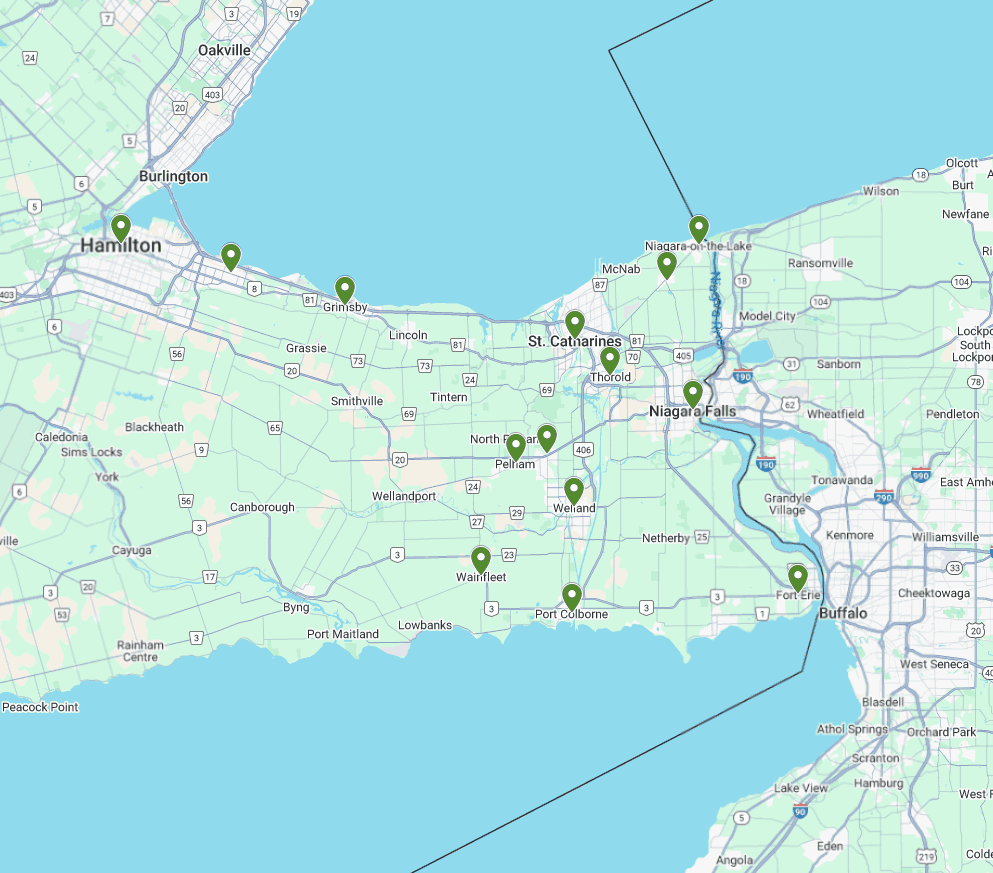
Service Areas
Our service areas encompass a wide range of locations, ensuring that we can meet the needs of our clients wherever they are. From bustling urban centers to serene rural landscapes, we are committed to providing top-notch services tailored to each unique environment.